Your Custom Text Here
Fix Your Plantar Fasciitis-Episode 8 How to Improve Your Gait
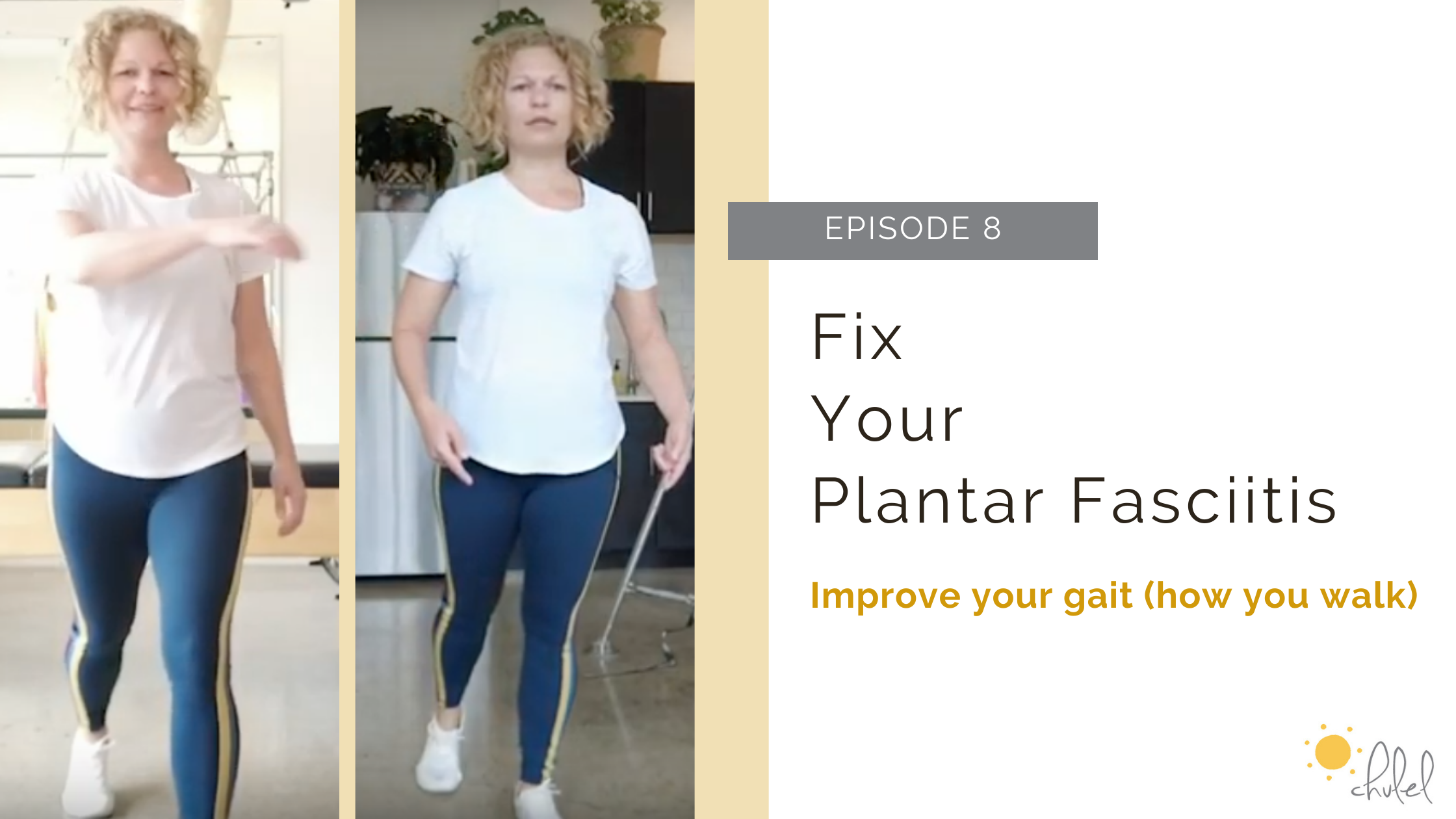
Over the years I’ve taken several workhops and read many books on how to fix your gait (how you walk/run) to correct several injuries I’ve had to my lower leg—including being hit by a car in a crosswalk.
This video highlights some of my favorite exercises I’ve learned that can be done from anywhere.
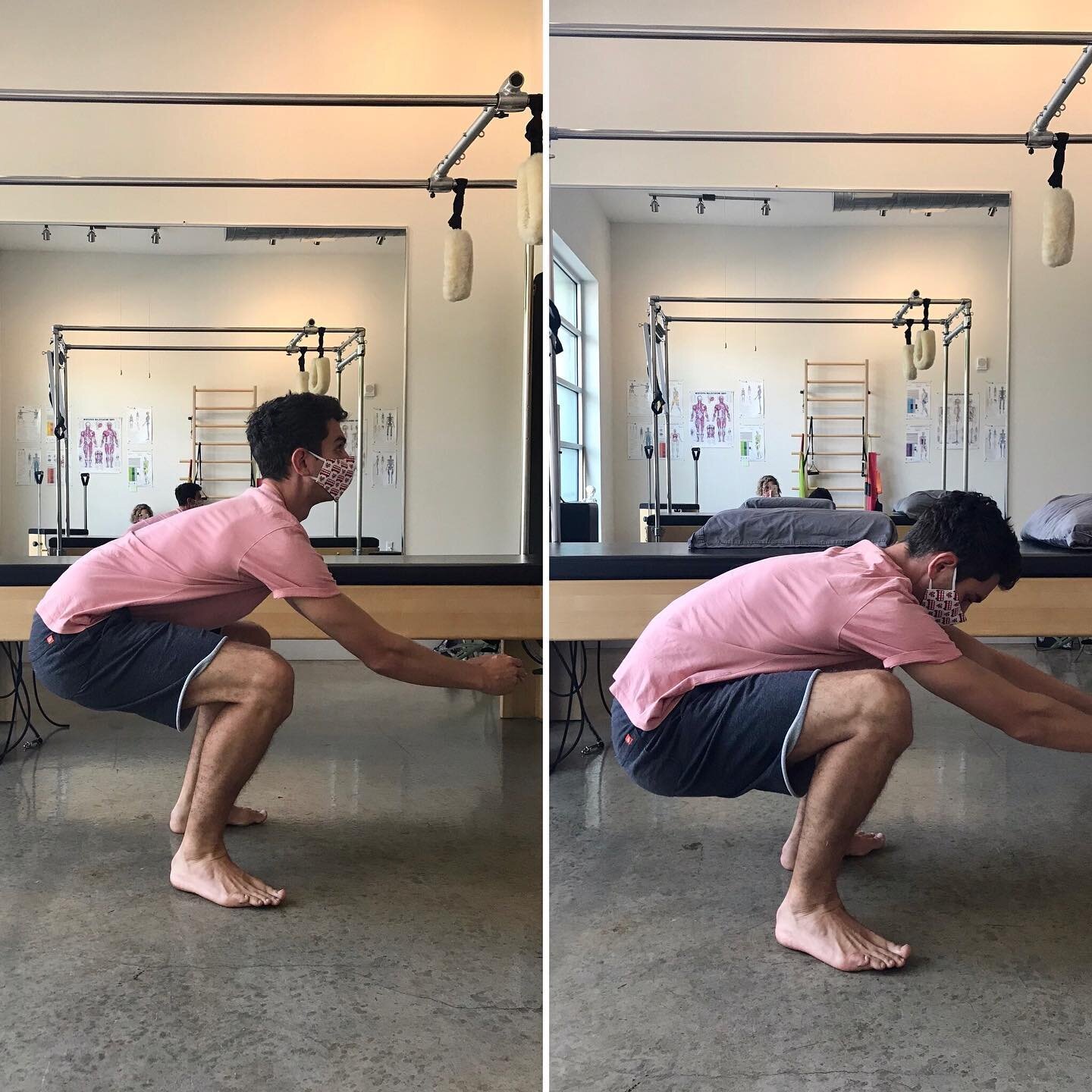
The first is from an Aston Patterning workshop that trains your body how to transfer weight from one leg up through the pelvis to the other leg. I always liken it to feeling like you have a slinky momentum as you walk. I’ve noticed that those with plantar fasciitis, tight feet, even bunions and Morten’s neuroma don’t fully roll through their midarch when they roll through their foot. It’s more of a heel-toe clomp. This simple exercise can help your body improve balance and change that pattern.
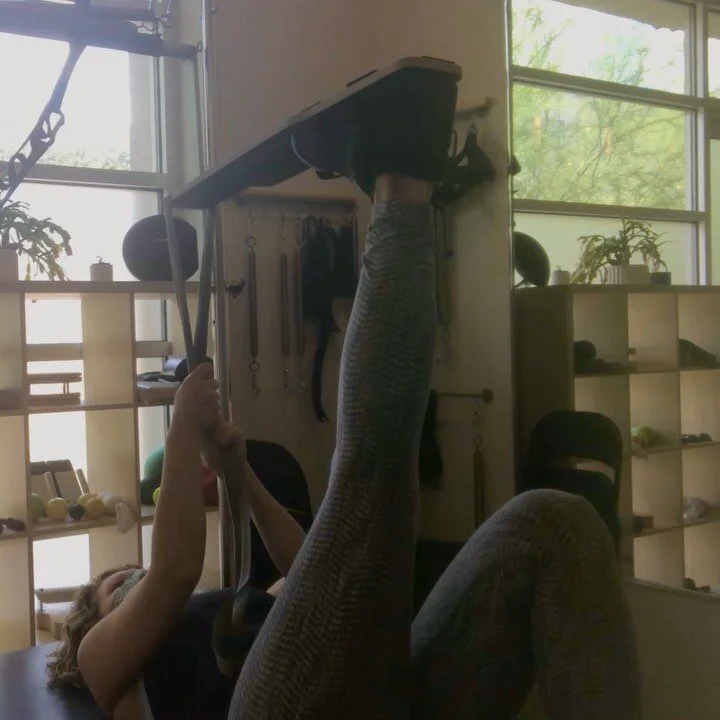
The next couple of exercises are from a workshop I took with James Earls who wrote a book called Born to Walk. They emphasize a fascial spring to walking and really hone in on the rotation aspect of walking. This is another plantar fasciitis thing—that gait pattern can often be more of a waddle instead of there being a subtle twist of the upper body on the lower body with each stride.
Lastly, we look to deepening the feeling of that twist with a connection to the diaphragm. This is a good, little balance challenge.
I recommend doing these on a longer walk or a run to let your tissues get into the flow and so that the new pattern can set into your tissues.
Fix Your Plantar Fasciitis-Episode 2

We’re starting the work of this series, as I always do, distal to proximal. In the case of plantar fasciitis, that means starting at the head and even (!) the forearms! Yes, tight triceps can also, sometimes, play a part in tight feet and foot pain.
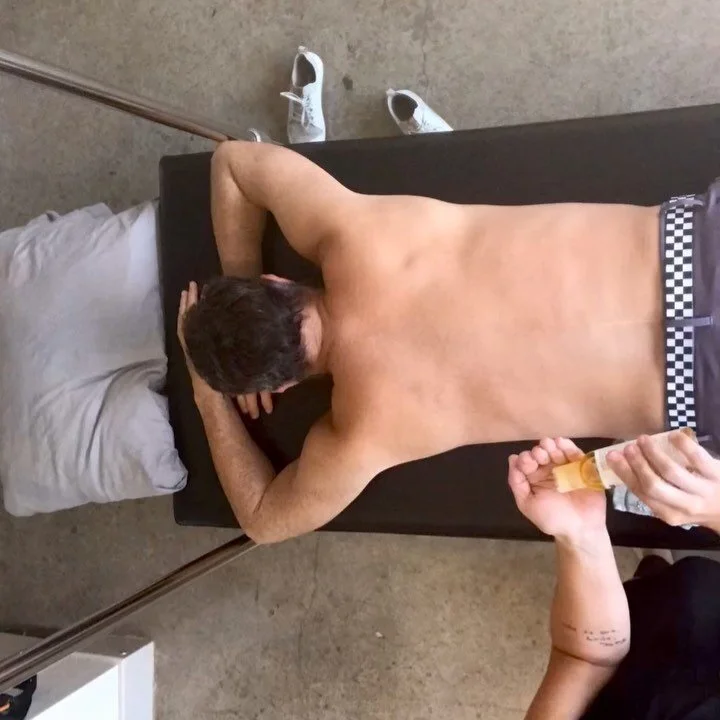
Massaging your forearms is super simple with this little tool from Amazon for about $10. Then we move into rolling the triceps out, which are the secret gnarly place that no one ever thinks to massage—it helps alleviate shoulder and neck tension. In the video I use this roller, but you can use any other type of roller/massager you like.
From there, there’s a yummy little head massage. The fascial line we’re dealing with in this episode is primarily the upper aspect of the spine and how it wraps around the head into the eyebrows. Therefore, we want to get some head and forehead relaxation so that it flows downward towards the feet.
Top this all off with some stretching of the shoulder blades, (there’s an easy tip in the video to make this common stretch more intense) and then getting some form of whole, spinal stretch. You could lay over a big yoga ball, but I choose to go propless in this video and do a version of yoga plow pose.
Lastly, we do a simple neck stretch with a hand towel. This is a great, simple exercise for training the neck muscles to ‘chillax’ and that they can rest as though cradled in a hammock.
Next episode we’ll get into how plantar fasciits and tight feet are wrapped up with a tight diaphragm. Everything always connects back to the breath!!
Common Cause of Knee & Ankle Pain
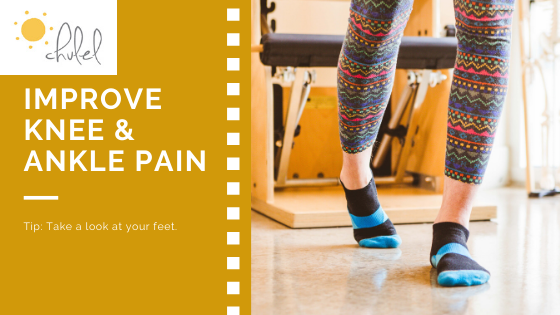
TIGHT TOES! Take a little walk—long enough to get your stride and pace going and notice if you feel your ankle roll out to the side just a little bit as you push off. You may even feel a twinge of pain in your ankle or knee. Another option is to get someone to video you (maybe even in slow motion) and see if you can watch yourself doing it. It will look like a little ankle whip around as you propel forward as in the picture below.

How would the toes get tight?
The top two reasons from my experience with clients are shoe selection and not breathing fully. Any shoe that encourages a toe scrunch would create a situation where your body would start tighten when walking instead of being wide and open (I refer to this preferred state as ‘Frodo Feet’). This isn’t just the easy scapegoat of high heels and pointy shoes, flip flops or any shoe that is so loose that your toes have to work to keep them on would create tight toes. Wearing shoes that are too small or lacing shoes too tightly would cause similar footing.
Next, hold your breath and feel how your feet tighten up a bit (all your muscles, really). We all have a tendency to shallow breathe when we feel stressed, so being under prolonged stress or if you’re in a job/school environment where you heavily focus day-to-day, usually means that you’re holding your breath. I often see that if someone grew up in an environment where they were often afraid or anxious (this could also translate into present-tense adulthood) the toes also scrunch as a response to that fear factor. I call it the Bird-on-a-Wire grip whereas that Frodo Foot is grounded and open…calm.
How should I walk?
This goes with a bit of an * in that we’re all shaped differently and have varied movement/injury backgrounds so there isn’t one for sure right way. That said, the first two toes (big toe and second toe) should more or less line up with your shin bone and thigh bone. This may be difficult if you have flat arches or have had other lower leg injuries. These bones are considered your weight-bearing bones so your body weight is centered over the mid-line of your body. Your weight centered here would naturally allow your core and posture muscles to support you as you walk or run. Lack of weight-centering can cause weight to shift to the outer or lateral lines of the body in walking, which could be a factor in a tight IT band, lower back pain, knee pain and ankle issues.
As you take a step forward, the foot should roll through the mid arch to push off with the ball of foot and then the toes. If you have a tight first or second toe and/or a bunion, you are likely not pushing off of that foot correctly and you may be rolling to the outside of the foot as shown in the picture above.
An exercise to stretch your toes and allow for proper toe push off.
This simple stretch can be done with a rolled up towel or a tennis/lacrosse ball against a wall. In the video, my model is demonstrating it with one of my favorite foot stretching and release tools, the Yamuna Foot Savers. Here’s another way they can be used to release foot tension and help with plantar fasciitis. You can easily purchase them online through Amazon and they last forever. Take them with you when you travel because they take up virtually space and really help loosen the feet after sitting in a car or being in a plane for long periods of time. If you do have a bunion and this stretch feels uncomfortable, you can stretch your big toe off to the side and focus on your second toe. No need to do more than about 10ish repetitions on any given toe and only about once per day at most.
Happy, grounded feet=better balance and core stability!
Latest Instagram Posts