Your Custom Text Here
Pelvic Floor Rehab-Glutes and Hamstrings

Continuing on in all-the-things-connected to the pelvic floor journey, we arrive at the derrière and hamstrings. Since this sit cradled in a chair for days and years, it’s incredibly common that adults have underachieve and weak muscles in these areas. The pathway I’m recommending to get them back on…
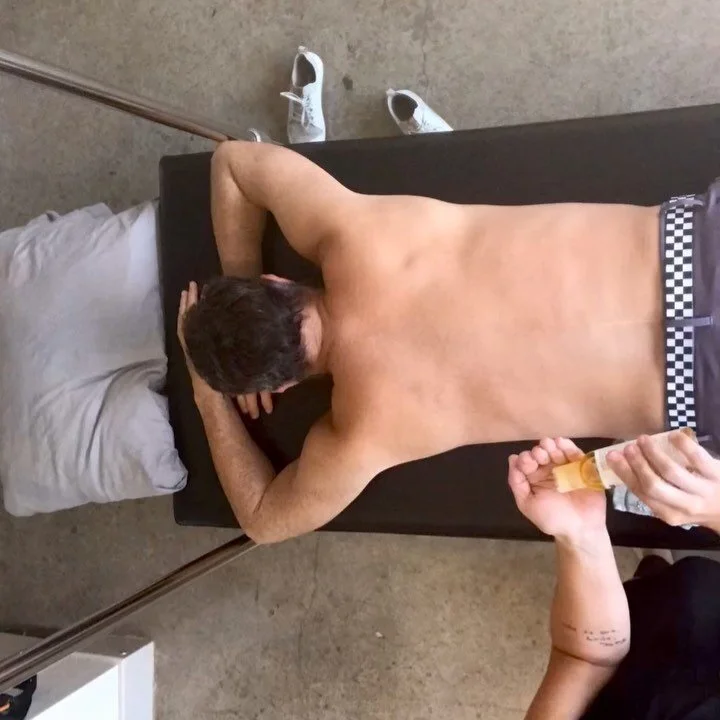
Massage
In short, foam roll just about everything. Hit up your calves, hamstrings, quads, glutes and back first. Tight adductors (groin) is a super common reason the glutes don’t fire correctly, we covered them in the last episode. Here’s a link to a shorter version of how to foam roll those.
Another crazy connection I’ve seen over the years is the opposite shoulder blade being an issue in glute/hamstring recruitment. The body balances itself on diagonals. Think about your footprints in sand, they’re not in a tightrope-like line, they zig zag. In proper gait (how you walk), the upper body should rotate over the forward leg. When working with clients, this element is often off, leading to a kind of waddle instead of a swagger. These folks are often in my studio because of back pain, knee pain and neck tension. All of it can connect to this diagonal element being lost in their walk and instead they pogo stick side-to-side. So, massaging the shoulder blade is critical as well before we get into trying to activate the rear end.
Stretch
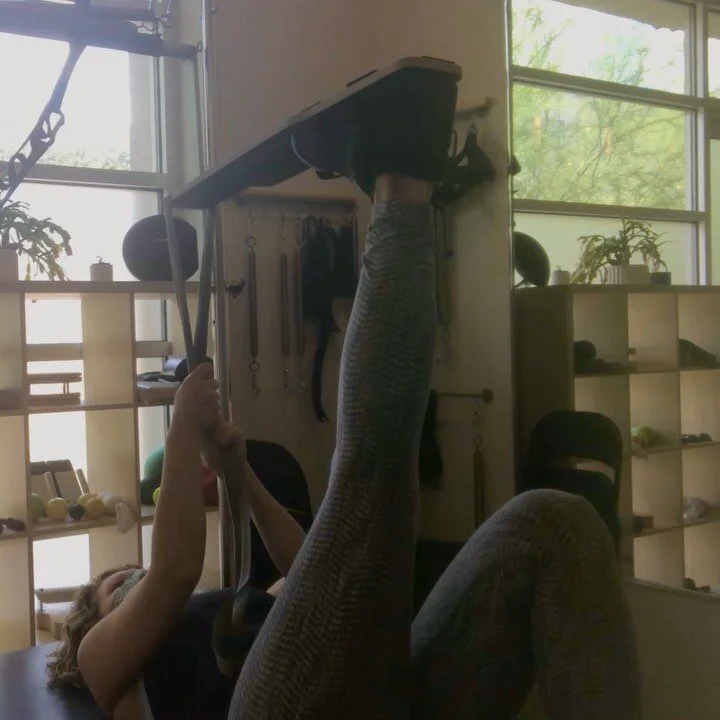
The video details a couple approaches to stretching the hamstrings to start—we stretch the muscle as well as the fascial chain. What’s the difference? Stretching the muscle means working the joint in its full range of motion, versus the fascial chain is more like stretching the skin. Someone who taught a training I once attended likened it to if you were wearing jeans or a wetsuit—if there’s greater pull on the fabric, that’s more like a fascial stretch.
The action of the hamstrings is to bend the knee. Therefore, stretching the hamstring muscle would mean actively pulling open the knee like a clamshell. We have 3 hamstrings muscles, so stretching at different angles means we can target each one.
When most of us think about stretching the hamstrings, we think about a pike stretch or putting a leg out and leaning over it. This is our fascial stretch. Something easy like putting your foot up on a chair and leaning over it, while waving your leg side-to-side to pick up those 3 hamstrings will do the trick.
For the glute and the deeper hip rotational muscles, pigeon pose is a straightforward and good bang for your buck in terms of what it hit and the time you’re in the stretch. There’s a few options in this video to add the active stretch element to pigeon as well as some different fascial components.
Activate
We then move into a couple of simple activations you could even do pre-walk or run. To activate the glute max, gently press your foot into a wall. Make sure your thighs are parallel or have the active thigh slightly behind the standing leg. Feel your rear tone up as you press.
The hamstrings bend the knee, so have the same thigh orientation as above and then pull your heel to your bum. Taking the leg and foot at different angles will help to activate the different hamstring muscles. This is all explained in the video and you can fast forward to 20:23 for details. You can do the same exercise lying on your stomach and it will automatically keep your thighs in that parallel position, making it harder to cheat in the motion.
Lastly, we do a simple hip rotation activation of internal rotation and then external. It’s a gentle exercise, yet deceptively difficult. Another option is the clam series, which you can find here.
I always say my primary concern when doing this work is aging well and not necessarily the biceps and bikini-body. That said, I’m all for a butt-tastic body if it motivates you for some post-Covid fun as well as keeping your hips strong. 🍒
Pelvic Floor Rehab-Abductors & Adductors

As we travel up from the feet and ankles towards the pelvic floor, we hit the adductors and abductors (inner & outer thighs). These are the balance muscles of your legs, the I’m-falling-and-I-can’t-get-up muscles. The inner thighs run contiguous to the pelvic floor and core muscles. AND pretty much everyone is weak in these groups.
Massage
Par for the course of this Pelvic Floor Rehab series, we release, then re-engage. You have a few options for that here. The most cost effective is to purchase a foam roller. I always advocate buying a 36” roller as they are more versatile for things like core work in addition to release work. You have the standard density option (which can be pretty intense for certain areas of the body) or a less dense, softer version. Amazon has everyone beat that I ever see in terms of price, a link to purchase here. And here’s a link to a previous video on how to use a foam roller on the inner thighs as well as a trigger point release for the pubic bone.
You can also use a theragun or other self-massager. Two of my favorite options are here for a more affordable version and here for a more versatile version, particularly for when we get into the pelvic floor releases in a couple episodes. There are attachments to the latter massager that make it easier to access smaller muscles and yield a more pinpointed release.
Lastly, I love cupping the outer thighs/IT band. It’s an easy thing to do as you watch TV and is not rocket science. Here’s a link to the cupping set I’ve used for years. Alternatively, you can foam roll your IT band, link on tips for that here.
So, massage/roll/cup the inner and outer thighs. We also do some work on the Quadratus Lumborum (QL) in this video. This muscle causes a lot of issues for a lot of people and is often tightened up on just one side, lending someone to be crooked. I find that it becomes that way, in part, because of weakness in the muscles targeted in this video.
Stretch
You can easily stretch your IT band/abductors by putting a towel around your foot and pulling your leg across your body. Alternatively, you can put one foot on a surface like a chair or couch and then twist your body over that extended leg. Try to drop the targeted butt cheek towards the floor as you stretch.
For the inner thighs/groin, here is a shortened version of my favorite stretch that is also in this video.
To stretch the QL, stand inside of a doorway, bring your inside leg forward and grab onto the doorframe—you’re bending over the direction of whichever leg is forward. So, right foot in front, you’re bending to the right to grab onto the doorframe. You can gradually add a twist of your chest towards the doorframe and you may feel this stretch go all the way down your back.
Activate
My preferred way to activate the abductors is a simple side leg lift, a la Jane Fonda. I find that this isolates them better than doing a side squat walk with a band around the thighs. In a squat walk, I feel like people load more into the quads. Here’s a link to a shorter version of what I’m talking about.
For the inner thighs, you can adduct the legs (bring them together) with them up on a wall or in the air. Here’s a version in the air, which works the core more. If your hamstrings are super tight, the wall might be better. You can also start with a more gentle version like this with the knees bent.
The QL is the ‘hip hiker’ muscle. If you stand on an elevated surface like a curb or even a yoga block, you would pull the hip up directly to your ear on that respective side. You’ll know which side is your weaker if that motion feels completely foreign to your brain.
Having good stability in these muscles is a critical piece to balance and therefore aging well. This means aging well for all genders. Some of my male clients talk about these machines in the gym and refer to them as the ‘chick machines’. Balance is for everyone, so don’t forget to target these just as much as squats and lunges in your workouts—stability in these muscles will make things like lunges easier. And, these are the struts to the pelvic bowl, so inner outer thigh strength is pelvic floor strength. Channel your inner Jane Fonda, y’all.
Pelvic Floor Rehab-Feet & Ankles

Foot and ankle tension, weakness and inflexibility can be a huge piece of pelvic and hip pain. If your gait pattern, how you walk and take a step, is compromised on one side, it very often reverberates up the chain into knee, hip and/or lower back pain. So what do we do about it?
Loosening the Feet
There are some simple products that can help here in addition to your hands.
If you want to go all in, this foot massager is lovely. It’s around $100 and it has a heat function. Visualize warm foot rubs in increments of 15 minutes with coffee/tea in hand. My personal favorite is 2 sessions in a row. I have felt like my own gait pattern is normalizing as I do this and then go for a conscious walk.
Trigger point releasers for the feet. I own 2 pairs of these (one that is 10 years old that I have in the studio, so these are durable). This is a newer version that I have personally not tried, but seems similar and is about half of the price of the ones I own.
Yoga toes for stretching out the feet. You can also use those inserts they give you after a pedicure. Or, put your fingers in between your toes and move your ankle around.
Here is a self-massage. There’s another version I do in the video on this page.
Loosening the Ankles
Using a towel or a theraband, you can stretch out the back of your ankles (read: calves). There’s also a version in this video where I combine down dog with a front of ankle stretch—no props needed. That said, this calf boot stretcher is a game changer and I highly recommend the investment. You can stretch the calves and shins using it. This is another case where I own 2—one for home and another for studio.
Rocking your body side-to-side helps work the lateral stability of the ankles. You can also invert/evert your ankle as you stretch it with a band.
Strengthening the Feet & Ankles
In the featured video, I show a simple arch and dorsiflexor exercise. I also demo a simple way to work your foot inverters/everters. You could add resistance with a theraband or resistance band.
There’s also an explanation of 3 versions of a calf raise and how the ankles connect into the pelvic floor muscles. I find this prop to be super helpful to get the right muscles deep in the calves to work and/or place it up at the base of the spine for loose pelvic floors to get those muscles to lift. It’s not on Prime, but it’s seriously the best size and density ball I’ve ever found for this.
Having supple feet and strong ankles is a huge part of aging well. The image I always give here is that of a ballerina. All that strength comes through the foot and is a huge part of the solid core engagement of a dancer. As we age, folks tend to waddle, which is an easy tip over into breaking something. Take care of your feet and ankles and walk sexy!
Purchasing from the links listed on this page helps support my small, woman-owned business.
FREE Pelvic Floor Rehab Course

What is the pelvic floor?
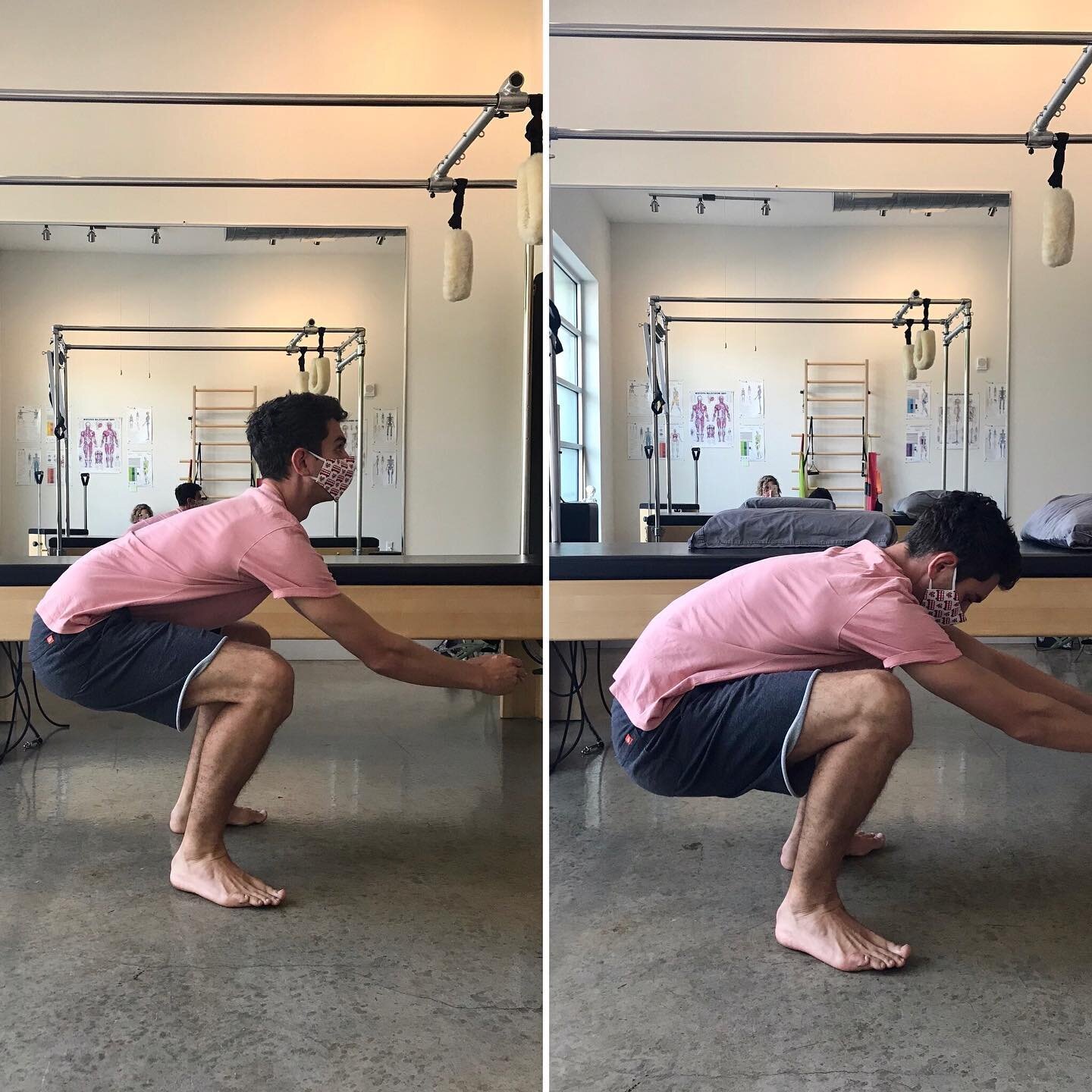
I define the pelvic floor as more than just the elimination muscles—I see it as anything that touches brief underwear lines. If you think about it, those are in contact with a chair for hours a day (for the average person), so they atrophy over time. Then as we age we’re dumbfounded as to why it can be challenging to do day-to-day tasks like squatting down, lifting things off of the floor, getting up off of the floor or even balancing.
I don’t see stand up desks as a cure all for this. I’ve worked on many people with pelvic floor issues who use standing desks. Chances are you were sitting for years professionally or in school before you started using one. So, those imbalances can already be there.
Why is pelvic health important?
These are your falling-and-I-can’t-get-up muscles! They’re critical for aging well and having solid balance and stability. And, they’re often small muscles, so just because you work out, doesn’t necessarily mean that they’re one and strong.
It’s also critical to have good strength here for proper elimination long-term and to head off pelvic organ prolapse and prostate issues.
The pelvic floor also plays a critical role with the breath. Belly breathing is great for relaxation and yogic techniques, but the bandas have to relax and expand for true health in the pelvis. So, I find that a LOT of people need to work on expanding the pelvic floor, yes even moms, because their pelvic floors are tight from improper breathing. For this reason, pelvic floor health and strength isn’t just a postpartum or post-hysterectomy issue, it’s for men and women.
Structure and format of this course
This is not a course on Kegels! I find Kegels to be a constipation view of pelvic floor health and not encouraging dynamic strength that we need there to do things like lifting and balancing.
We’ll start distal (away) from the pelvis and work our way in. We’ll look at common, faulty neuromuscular pathways I’ve seen over the last decade and try to correct those patterns. The modules will have a release then stretch then re-engage format and then I’ll also include some basic as well as intermediate exercise sequences. At that point, you’re free to go about your way in a regular exercise class, hopefully with these areas more engaged.
Why I’m passionate about this content
You can find out more about this in my bio. Long story short, I had an intense and painful bout of piriformis syndrome for about a year and a half after my dad unexpectedly passed away. Thing is, it never got diagnosed as such. I was super active and 28 at the time. MRI came back negative for disc issues and every doctor kept wanting to label it as sciatica, which it wasn’t. After thousands spent on physical therapy/massage/chiropractic/acupuncture, I started studying anatomy and biomechanics and figured out it was the piriformis. I looked up ‘piriformis problems’ and the web said it was common for people who ran a lot and who sat at a desk for a living. That was me to a T!
Thing is, the pain didn’t get better with just the biomechanics. The holistic folks kept saying it was my internalized grief. I was crying all the time, so I didn’t see anything internalized about it. That said, the more I dug into the deeper feelings about how my dad died, the pain started to change. This is why I bring this approach into my work with clients. If something has stuck around for months or years, there’s a good chance you’re holding some deeper stress and emotions around it. I’ll bring in some of the things I’ve researched over the years re:emotions and the pelvis into this course as well.
Another reason why pelvic health is so important to me…my grandmother has had chronic UTIs for 25 years. At this point, she’s pretty much immune to all antibiotics. I can’t help but think if she started doing things like this in her 50s and 60s she wouldn’t have suffered so much and have this risk in her 80s.
Internal pelvic floor physical therapists in Austin
This course is not meant to be a substitute for proper, internal physical therapy. In Texas, you typically need a doctor referral. Here are some of my favorite folks in Austin.
Can CranioSacral Therapy Help Multiple Sclerosis?
Last fall I set out to do a case study on a friend who has advanced Multiple Sclerosis (MS). His health took a more steep dip in 2020 to the point where he found day-to-day activities like walking and showering more challenging. CranioSacral Therapy (CST) has helped me immensely in healing from severe head trauma as a child, and I’ve seen it do wonders for my clients with histories of physical as well as emotional trauma. I wanted to see if it would help my friend and his symptoms related to MS.
Multiple Sclerosis is an autoimmune condition without a known cure where the immune system attacks the myelin sheath of the body’s nerves. Common symptoms include chronic pain, difficulty moving, vision and speech issues as well as anxiety/depression. CranioSacral Therapy (CST) is a gentle, hands-on technique that seeks to improve the function of the Central Nervous System and other body systems that relate to it, including the Immune System. If the Sympathetic Nervous System remains activated for long periods of time (as it would with chronic stress and/or trauma), it also affects the ability of the Immune System to do its job properly. Side note that this is why so many folks with autoimmune conditions also have trauma/PTSD backgrounds, or that a stressful event(s) triggers a condition. So, can and did CST help my friend and his pain?
A little background on my study subject: 63 year-old-male, diagnosed with MS in 2010 in tandem with optical neuritis and vertigo. We did the basic, 10 Step CST protocol, administered 8 weeks in a row, with steps in the same order over the course of a 60-minute session. I used the McGill Pain Questionnaire, a self-reported survey, which delineates different types of pain and ascribes a number for an individual’s pain level—that way we could quantify whether or not the work helped him. Maximum possible score is 78; the higher the number, the more pain the individual is experiencing.
When we began the study, he reported a pain level of 62 out of 78 and most acutely felt pain in the lower back and hip regions with spasticity. He also felt a concentration of pain in how his mental health was impacted, experiencing fear as well as intense to unbearable pain (these were boxes on the questionnaire).
After 8 weeks, he reported a 60% improvement in pain (37 of 78) with less tension and numbness. How the pain affected his mental health was the most significant area of improvement. Initially, he selected adjectives such as agonizing and dreadful (higher on the pain scale) whereas in the second evaluation he only selected nagging (the lowest). In general, he felt more calm, less anxious and was experiencing better quality of rest. Another note here, we did this study in the 8 weeks preceding the election. So, the fact that he had a greater sense of ease is even more telling of the work and how it can help you or someone you know.
A lot of massage therapists and chiropractors are trained in this technique. If you have a history of anything I mentioned: PTSD, trauma, concussion and/or autoimmune issues, try a few sessions of CranioSacral to see if it helps your mental and physical health. It’s super relaxing—promise you’ll have a good sleep that night.
Latest Instagram Posts