Your Custom Text Here
Fix Your Plantar Fasciitis-Episode 3

In this chapter of the Fix Your Plantar Fasciitis online course, we look at how the foot relates to your (poor) posture and breath.
The body is a series of archways or diaphragms and they all kind of mirror one another. This means that the archway of your foot reflects tension that is in the archway of your breath diaphragm.
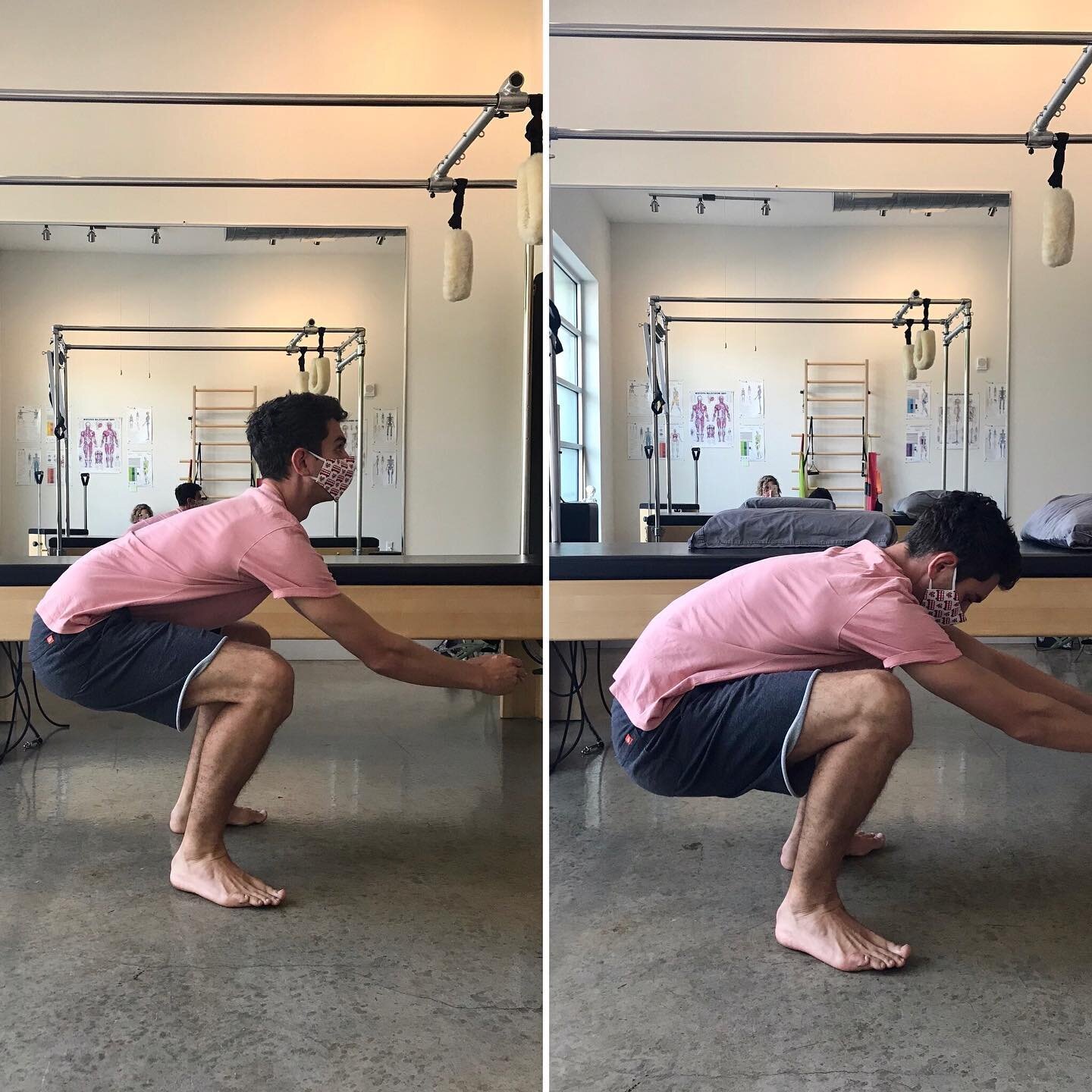
In this video we do a simple diaphragm release or breath opener and then look at some simple ways to approach both sitting and standing posture. I find that most people tend to try too hard and that makes them rigid read:tight. By following some simple guidelines around posture and the breath makes finding your best posture for the day, or moment, easier.
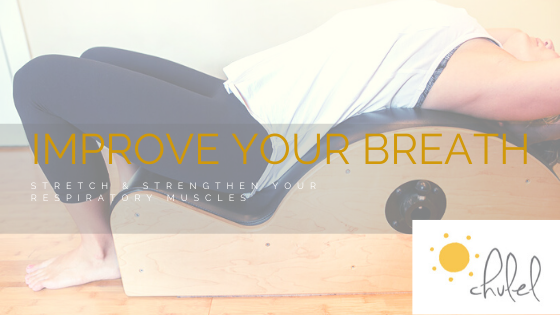
How strong are your respiratory muscles?

Take a moment and start counting the duration of your inhalation and exhalation. Does the pace at which you're breathing feel like your normal? Is it easier to inhale or exhale? Where do you find the breath entering and exiting? Does it most easily move in and out of your belly or your upper chest? Do your lower ribs move when you exhale? I find that most people don't move their lower ribs in the respiratory cycle, which means they're missing out on a full breath. This can go on for years and impacts pretty much every other system in your body, including your digestive and nervous systems.
How does the breath cycle work?
The diaphragm acts as a plunger system, pulling air into our bodies and filling our lungs (fun fact: the lungs are kind of like origami-folded tissue that unfolded are the size of a tennis court). The diaphragm is a muscle, so it has a full range of motion like any other muscle, yet most of us only 'exercise' it in a very short range. We shallowly breathe due to stress and holding a posture that we think is 'good', more on that in a moment. If you consider how the diaphragm typically works in this short cycle, it would be like doing thousands of tiny bicep curls all day long--sounds kind of funny when you think about it that way, right? The diaphragm is the main breathing muscle, yet there are several other secondary muscles that help out. One of my favorite groups is the intercostals. These muscles glide in beteeen each rib and help to expand and contract our rib cage. They are, however, weak for most folks.
How do the intercostals weaken and why should I take ever loving care of them?
As previously mentioned, most of us breathe shallowly as a stress-holding pattern. For some, this means weak and tight intercostals, so it's hard to inhale and expand them. For others, they're weak and puffed out (barrel-chested) and it's harder to exhale. In the latter case, I find that people assume this posture thinking they have good and confident posture--yet you can't breathe. Another way this pattern can occur is from sucking the stomach in or wearing restrictive clothing. Try sucking your stomach in right now and you'll feel your rib cage puff. Either way, we want these guys to be able to expand and contract fully, just like our biceps.
Strong intercostals and respiratory muscles help massage your stomach as you breathe, enabling your digestive system to do its thing. They also help to keep your nervous system at ease and not in fight-or-flight mode. As an added bonus, you're strethening your core muscles, which will give you organic, proper posture. If you're active, tapping into a full breath cycle, including the plunger power of your diaphragm, will take your athletic abilities to the next level.
How do I strengthen my respiratory muscles?
To start, be more conscious of your breath. I love the count breath. Try to equal out your inhalation and exhalation and then gradually add another count. Say you start at a 4 count, can you gradually reach your way to an 8? As you continue to add time, focus on squeezing the air out of your rib cage during the exhalation, contracting your intercostals.
You can also try these exercises over a towel, ball, pillow or foam roller.
I integrate breath work into my sessions with clients so that you can grow these muscles, bettering your digestive and nervous systems, while improving your posture and core. In finding your breath, you find your power!
Why is my body tight?

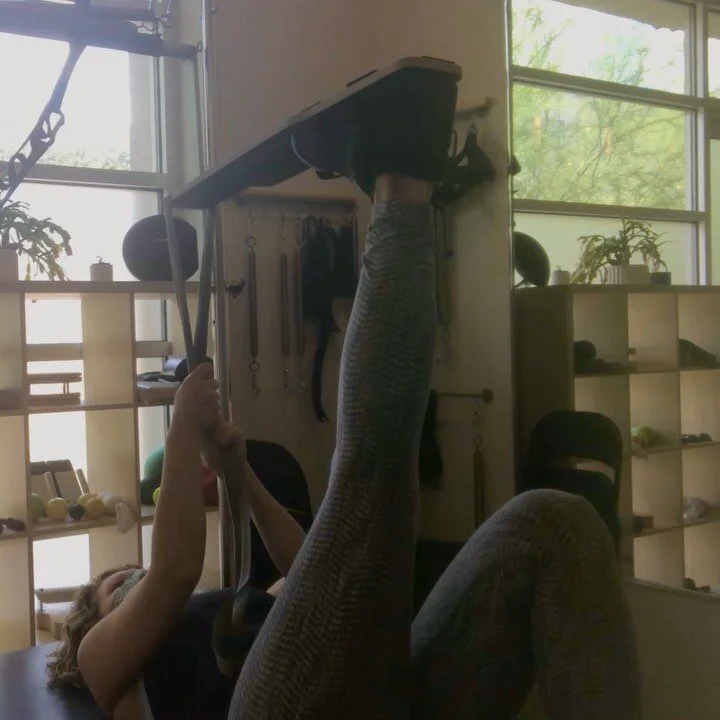
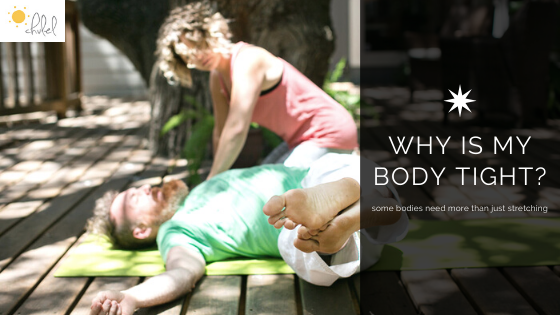
Full body, active Ki Hara stretching! Soooo yummy!
This is a question I'm often asked and believe that we have to look at more than just range-of-motion or trigger points for a good explanation. Some clients immediately tell me that their body is tight because it runs in their family, like they have an inflexiblity gene and traditional stretching just doesn't work for them. I see body tightness that runs in families as a cultural way that the family deals with stress and how we then handle stress as adults. Are things shoved under the rug or not acknowledged? Or, are things discussed and worked through together? Do you feel overwhelmed and overburdened by responsibility? Or, are you able to shift your perspective and carve out some self-care time?
The nervous system automatically charges up to help when we're stressed (sympathetic nervous system). One result when it kicks in is that the muscles tighten to prepare for action--we can see this in animals. When they perceive a threat, the breath cycle shortens, their whole body tightens and is ready to pounce. When we, as humans, hold in this way everyday, it leads to chronic body tightness and fatigue.
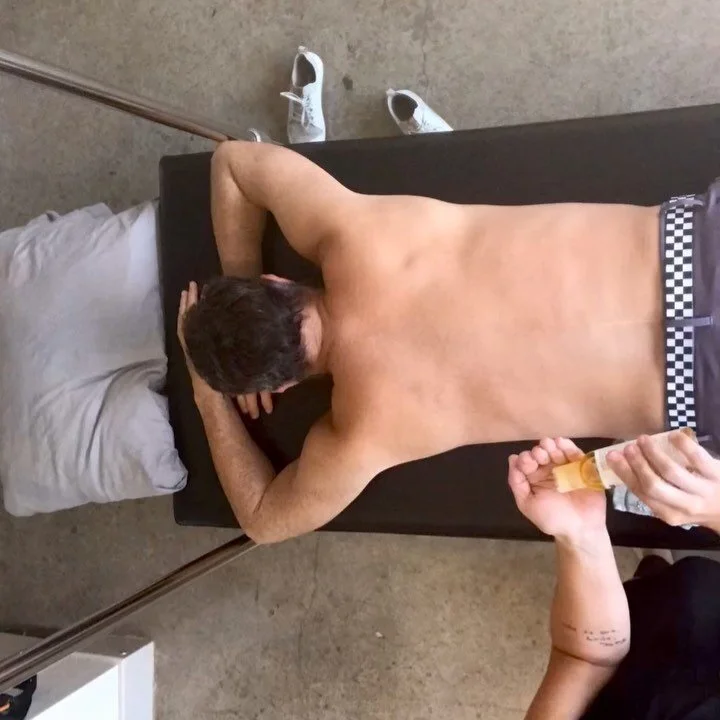
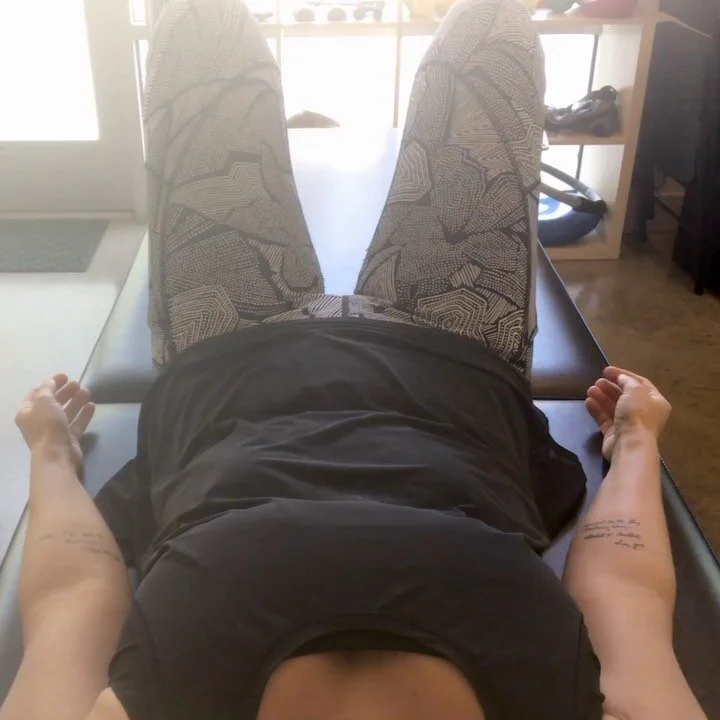
To offset this stress from a movement perspective, we most often think exercise. Yet, how many of us hold our breath when we try to burn off some steam? Muscles can't relax if they're being starved of oxygen. As someone who is also prone to this, I've started doing some diaphragm releases to connect with my breath before I intentionally move. This is my favorite diaphragm release to do pre-workout.
Ki Hara active stretching unwinds tension from the body, creating space for more breath. Clients always stand up at the end of a session saying they feel more alive, relaxed and have more blood flowing through their body. We target the areas you personally hold tension and dynamically release muscle tension there. Full body stretching like in the photo above, allows for the body to have a feeling of flow over bracing. To learn more, click here.
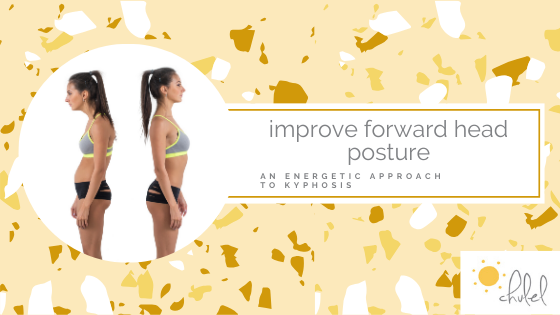
Tips to Improve Forward Head Posture
Forward head posture is pretty ubiquitous in the 21st century. There's plenty of resources online about how to fix it from a purely physical approach, but I think the long-term solution is much more of a personal one.
Some common suggestions for correcting forward head posture include simply moving the head backward, which I feel does more immediate harm than good. If the head is forward, the shoulders are usually rounded as well (aka kyphosis). So, shifting the head back with this type of body shape collapses the breath by cutting off air flow through the throat. Another 'fix' is bringing the shoulder blades together, which most people find by arching their mid back in a way that the spine is not shaped, generating a lot of unnecessary tension and/or pain in their back and neck. I find that apporaching alignment from an energetic perspective brings faster change without ticking off another part of the body.
How does forward head posture have an energetic connection?
As the head drops forward, there's also a fold at the diaphragm or solar plexus (where the rib cage splits). From an Eastern perspective, this is where the third chakra is located. This area represents our personal power and autonomy, our sense that we have volition and agency in our life.
What causes restriction at the third chakra?

Pretty much anything that compromises our ability to truly be ourselves and love ourselves. This can be events in our past and it can also be aspects of our present life. You may have not have grown up in a family culture of complete love and acceptance for your true self. Maybe you now feel burdened by responsibility and you're unhappy in your job/relationship/life. If this rings true, you may not feel like you have personal power or ability to change the parts of your life you're dissastisfied with.
Shame shuts off flow through the third chakra and limits our ability to fully embody our power. It wasn't until coming across Brene Brown's work several years ago that I realized how much shame I've held onto--I don't think I fully understood what that word meant before reading her book. Shame=all of the ways you don't feel like you're enough. For me this came in sneaky ways....maybe I didn't say 'I'm not attractive,' when looking in the mirror, but I did hold myself to a super high standard and compared myself to my percpetion of others. Shame lies on the other side of all of that because I could never be or do enough. Finding self-love has been a beautiful thing!
Some of us self-sabotage as a part of being constricted in this area. Maybe we put too many things on our plate and have a tough time saying 'no' to commitments. Others procrastinate and feel shame for doing so. Regardless of our personal habits, we can find ourselves in the midst of a big ol' shame snowball.
So how does all this connect to posture again?
Basically, forward head posture, just like everything else in the body, is more than just you looking at your phone too much. It's also a relfection of feeling burdened and not enough.
What helps?
The third chakra is located at the diaphragm, so doing more things to connect with your breath and lift through that space will help. Here's a video to help explain that in a seated position.
In addition to connecting with your breath, start noticing how you treat yourself. Do you belittle yourself or have a harsh inner critic? Do you take on more than you can reasonably accomplish without feeling stressed? How do you approach your responsibilities? Is there a way to visualize the best possible outcome over feeling overwhelmed?
Allow yourself to feel more over thinking. We value thought over feeling as a culture and that contributes to the head falling forward--we decapitate ourselves from the rest of the body. Taking a moment to feel and appreciate something in your day can show you how much power you already have.
And that's always a good place to start. :)
Latest Instagram Posts