Your Custom Text Here
Fix Your Plantar Fasciitis-Episode 6 Release the Plantar Fascia
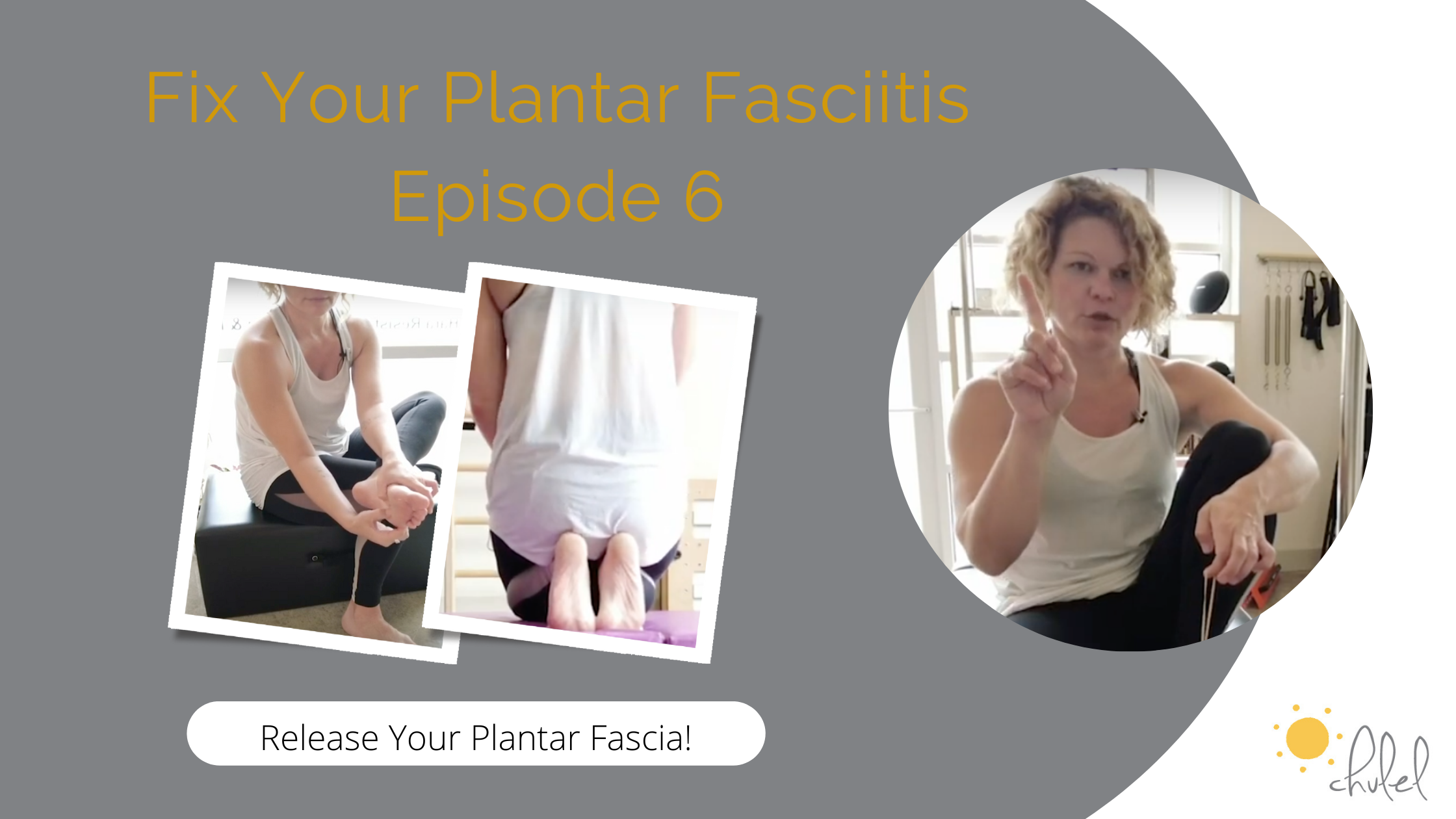
We’re finally at the plantar fasciia aspect of this plantar fasciitis course! I start with a couple of my favorite products you may want to invest in—one being a lovely foot massager. Imagine working on your plantar fasciitis by getting a foot massage with coffee or tea in hand!
We then go to some more esoteric ways of releasing your foot fascia in different directions to also loosen up the intrinsic muscles of the feet. Specifically, I have found that a lot of people don’t have proper bone alignment through the heel bones. The massage I show in this video is gentle and you can actually start to re-align those bones yourself. It will take time and your touch will sensitize so you’ll be able to feel those places better the more you try it.
After the self-massage, there’s several examples of how to fascially stretch your plantar fascia as well as the fascia of your toes!
Lastly, I suggest some ways to start engaging the deep muscles of your feet and arches. You may get some foot cramps initially, but I promise it gets better. Over the years I have found that those with plantar fasciitis leverage through tight skin to use their feet instead of tapping into the deeper muscles of the feet. This is extra important to work on, not just for pain relief, but because the feet muscles mirror the core muscles. Plus, strong feet and ankles mean you’re aging well and not shuffling your feet, which could lead to a fall. Who knew that feet could be the secret to a bathing suit body as well as keeping you from a falling-and-you-can’t-get-up situation?!
Fix Your Plantar Fasciitis-Episode 1

Welcome! This is the first episode of a course designed to help loosen up tight feet, alleviate foot pain and heal plantar fasciitis symptoms. In my decade of experience, there can be reasons for tight feet that arise from other places in the body, including emotional stress.
The top reason I’ve seen over the years is tightness along the backside of the body, what Tom Myers, author of Anatomy Trains, calls the Superficial Back Line. This fascial or connective tissue line goes from the sole of the foot, all the way up that respective side of the spine and connects into the eyebrow. This line primarily gets tight from sitting, but it can also be from lack of rotation in walking and movement (we’ll cover that in a later episode of the course). In other words, your head and forehead tension, is related to your tight feet.
Another aspect to this Superficial Back Line is when people try to hard too have good posture. Pinching your shoulder blades together, a common cue we’re given, tightens the mid-back and can play a part in tensing this line down to the feet. I’ve actually come across this more since the pandemic as people are trying to look a certain way while on screen.
Tightness in the opposite forearm can also (!) be a factor. I see this pattern less from folks typing and more from old sports or injury patterns from childhood. If you played things like golf, tennis, lacrosse, archery or an instrument, that too can play a part in the opposite foot being more tight and prone to plantar fasciitis. The body is crazy.
And, because it’s our body, the breath always plays a part. Short breath cycles or holding the breath, also create tension in the feet. If you try holding your breath now, can you feel that in your own feet? Maybe you feel your head tense? This is always an underlying aspect of plantar fasciitis and contributes to the emotional component of the condition. If you’re stressed, you’re probably holding your breath and then we have the tense, ungrounded feet.
Hope you enjoy and please subscribe on YouTube for alerts on this course as well as future courses and updates on how to improve your body in terms of pain and performance.
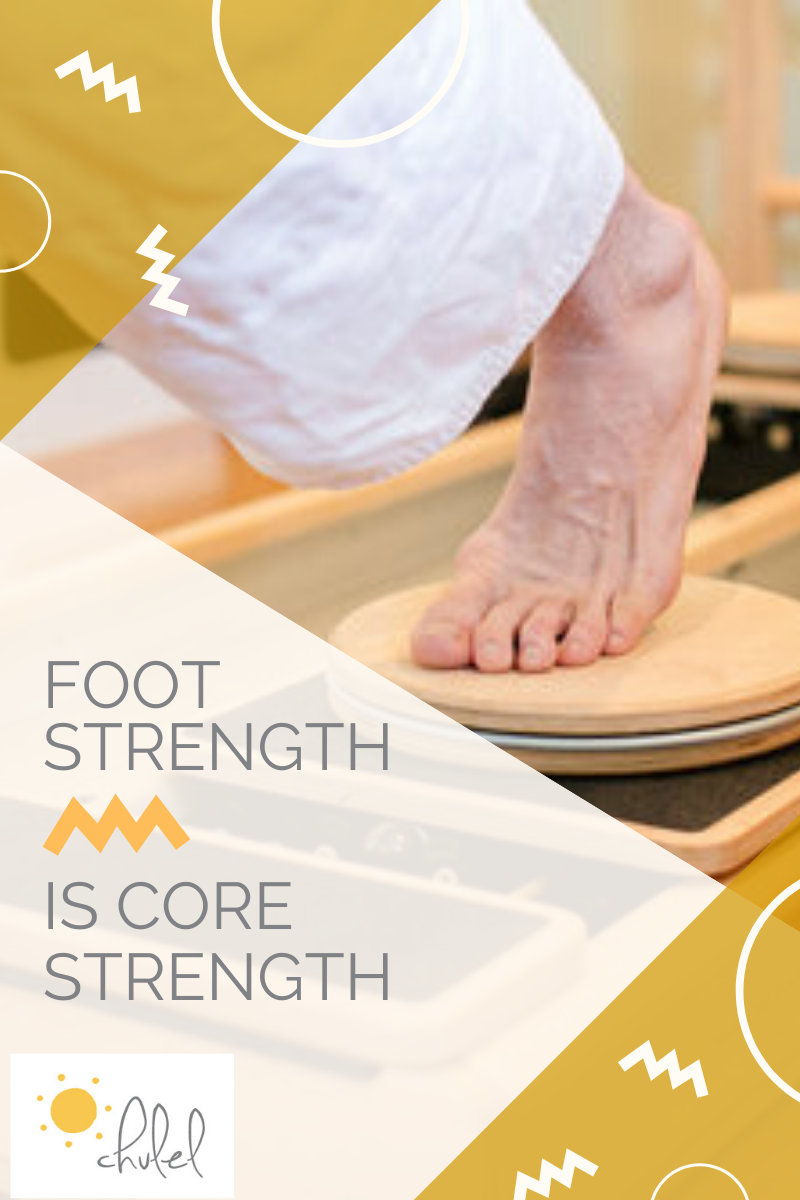
Flexible, Grounded Feet=A Strong Core
Until I got really nerdy about my running stride 10 years ago, I was quite foot phobic. We pay for others to touch our feet or hope for a little love from our significant other on the couch, but most of us don't consciously massage our feet like we foam roll our legs or actively strengthen our feet like we do our arms. It's funny because our feet are our main mode of transport yet they're low on the self-care totem pole.
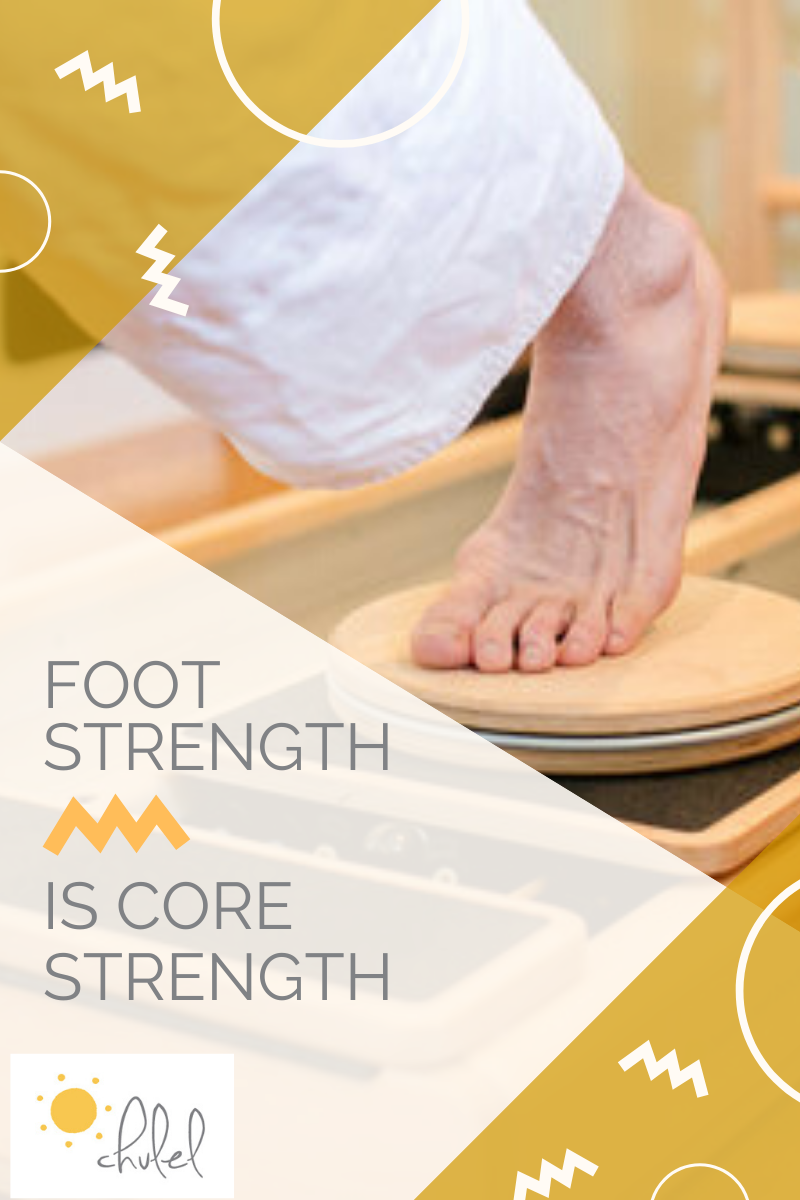
Grounded feet help with balance.
How are the feet related to core stability and strength?
The feet aren't what I call Hollywood Muscles. No one is going to eye you up at the pool for your toe muscles. Yet, the feet mirror our core muscles and help to support deep, instrinsic movement from the core with every step. The feet are the first in a series of archways to the body that act as suspension bridges and shock absorbers as we move. Two of those other archways, or diaphragms, are the pelvic (read: pelvic floor) and breathing diaphragms. If you've read some of my other posts, you already know how much I love talking about these diaphragms, more about that here and here...because, they are the real foundation to core strength! Yes, people, I know most of you out there probably hate ab exercises. Good news is, if you keep your feet relaxed and open, you're always exercising your core muscles.
The feet should act as little trampolines as we walk, but they often become more like bricks of ice because of the types of shoes we wear (more about that here) and from breath holding--once again, you hold in one diaphragm, the others are affected.
Open feet are grounded feet.
Keeping the feet loose and open, has an impact on shoulder tension as well. When our body feels supported by the earth, we cease to put the weight of the world on our shoulders. All of that goes into the ground, also known as grounding or earthing. :)
Here is a simple way to open your feet, even while you watch tv.
Once your feet are relaxed, you can get even deeper into strengthening them. I love this set of exercises, because it helps to restore the motions our feet most often forget, spreading and using the sole of the foot. Kind of like how our pelvic muscles atrophy sitting in a chair all day, the sole of the foot weakens from wearing shoes all the time. This is a small sample of a series of exercises I do with my clients to wake up their feet and consciously connect that feeling to their core as they walk and move. Afterward my clients often say they feel like their feet are wider and that they can sense the pads of their feet. I call it Frodo feet!
The new sensory awareness from open feet will not just help you ground, it will also help your balance in other activities like yoga, martial arts and dance, not to mention walking. For a more personalized connection to those activities, including gait, make an appointment to come to the studio. In the meantime, opening and grounding your feet will have you using your core in a deep and profound way without even trying!
Latest Instagram Posts