Your Custom Text Here
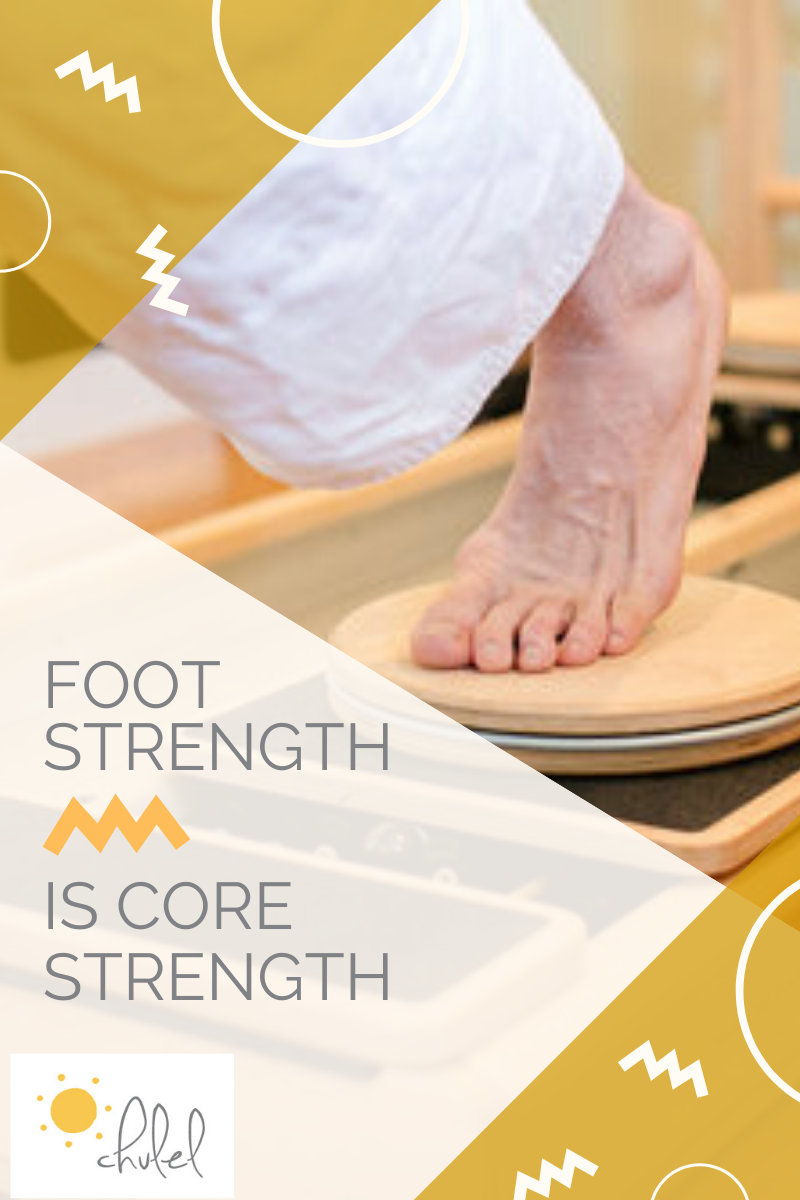
Flexible, Grounded Feet=A Strong Core
Until I got really nerdy about my running stride 10 years ago, I was quite foot phobic. We pay for others to touch our feet or hope for a little love from our significant other on the couch, but most of us don't consciously massage our feet like we foam roll our legs or actively strengthen our feet like we do our arms. It's funny because our feet are our main mode of transport yet they're low on the self-care totem pole.
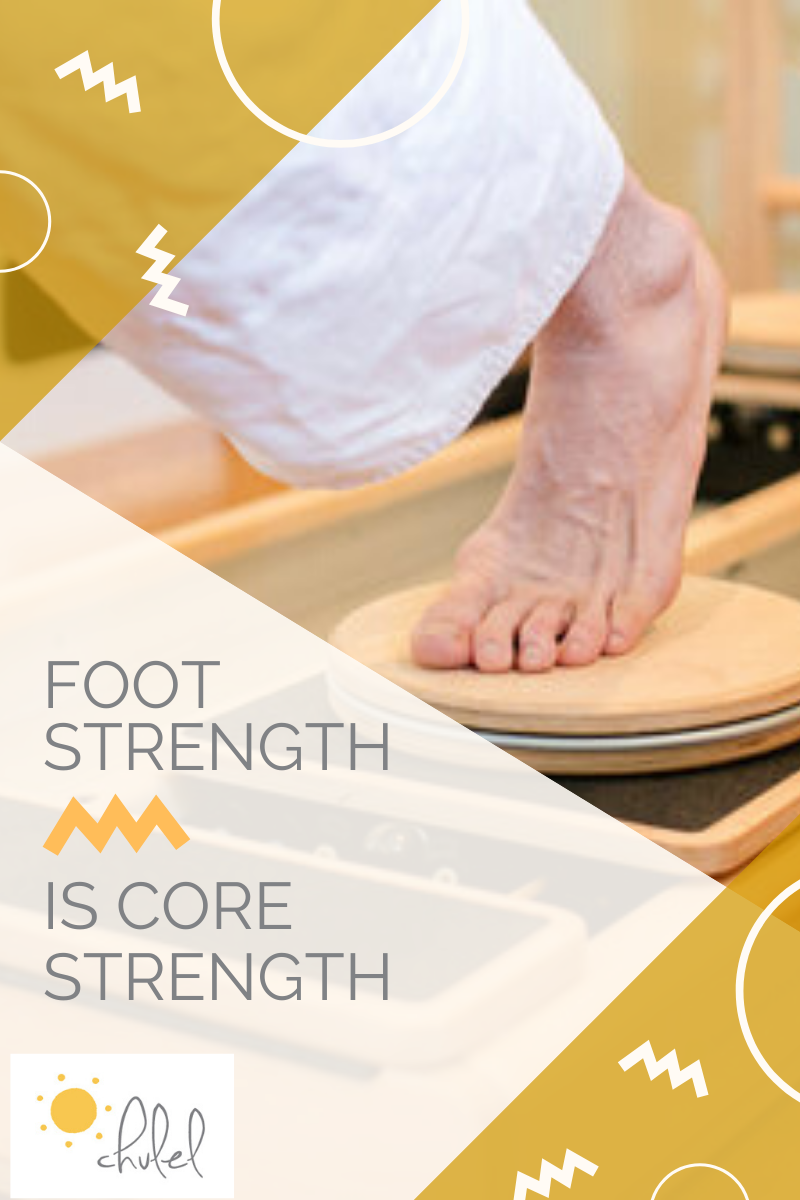
Grounded feet help with balance.
How are the feet related to core stability and strength?
The feet aren't what I call Hollywood Muscles. No one is going to eye you up at the pool for your toe muscles. Yet, the feet mirror our core muscles and help to support deep, instrinsic movement from the core with every step. The feet are the first in a series of archways to the body that act as suspension bridges and shock absorbers as we move. Two of those other archways, or diaphragms, are the pelvic (read: pelvic floor) and breathing diaphragms. If you've read some of my other posts, you already know how much I love talking about these diaphragms, more about that here and here...because, they are the real foundation to core strength! Yes, people, I know most of you out there probably hate ab exercises. Good news is, if you keep your feet relaxed and open, you're always exercising your core muscles.
The feet should act as little trampolines as we walk, but they often become more like bricks of ice because of the types of shoes we wear (more about that here) and from breath holding--once again, you hold in one diaphragm, the others are affected.
Open feet are grounded feet.
Keeping the feet loose and open, has an impact on shoulder tension as well. When our body feels supported by the earth, we cease to put the weight of the world on our shoulders. All of that goes into the ground, also known as grounding or earthing. :)
Here is a simple way to open your feet, even while you watch tv.
Once your feet are relaxed, you can get even deeper into strengthening them. I love this set of exercises, because it helps to restore the motions our feet most often forget, spreading and using the sole of the foot. Kind of like how our pelvic muscles atrophy sitting in a chair all day, the sole of the foot weakens from wearing shoes all the time. This is a small sample of a series of exercises I do with my clients to wake up their feet and consciously connect that feeling to their core as they walk and move. Afterward my clients often say they feel like their feet are wider and that they can sense the pads of their feet. I call it Frodo feet!
The new sensory awareness from open feet will not just help you ground, it will also help your balance in other activities like yoga, martial arts and dance, not to mention walking. For a more personalized connection to those activities, including gait, make an appointment to come to the studio. In the meantime, opening and grounding your feet will have you using your core in a deep and profound way without even trying!
Why I Hate Kegels

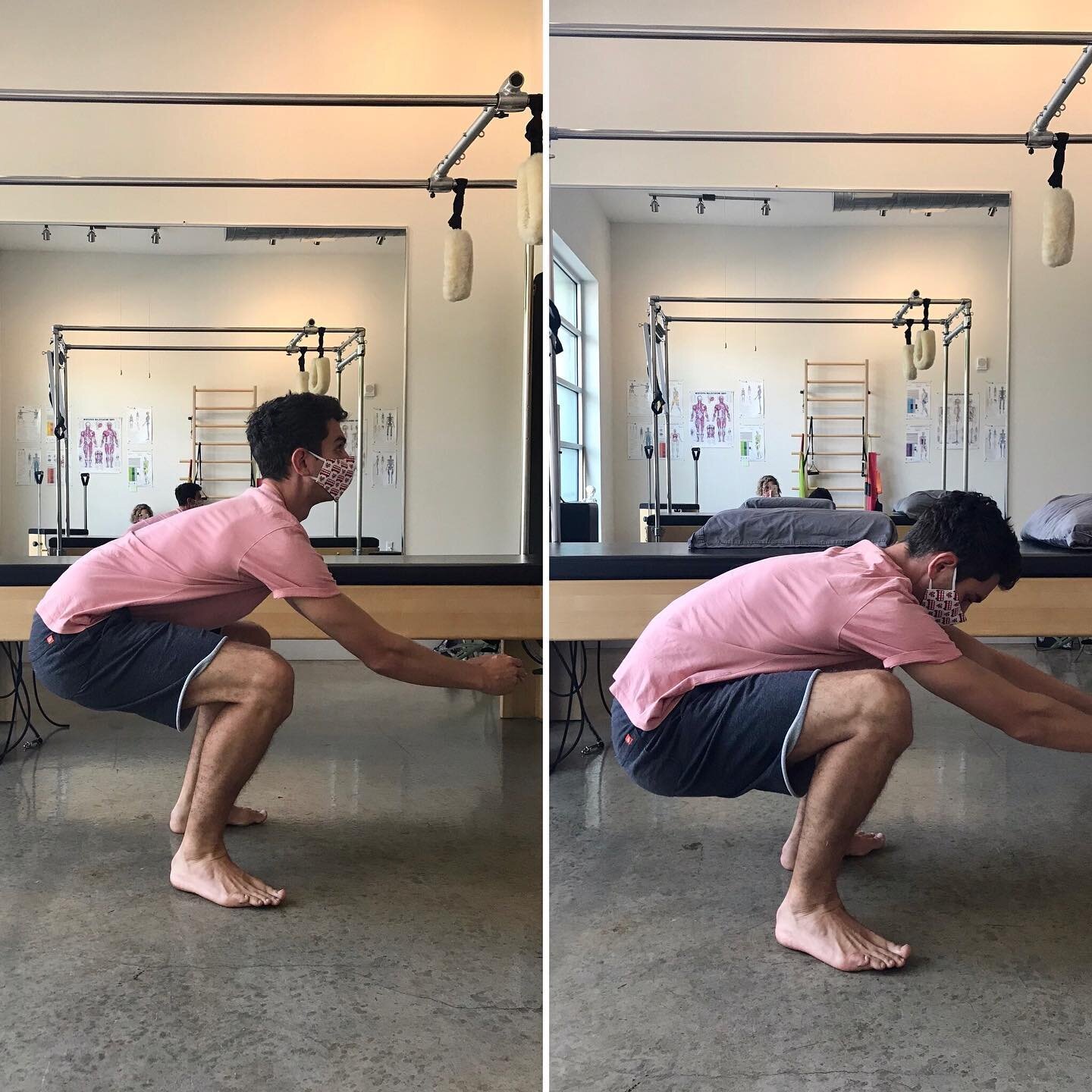
Pilates squats on the reformer for lower body alignment and pelvic floor strength.
Just about every woman out there has had her doctor prescribe Kegel exercises--hold your urine flow for a few seconds to strengthen your pelvic floor. I see Kegels as a constipation view to strengthening the pelvic floor because they encourage bracing and holding in an area that is often too tight. Plus, Kegels are more often emphasized for women over men when we all need strong and flexible pelvic muscles. More about that here. If we all think pelvic floor health=Kegels, we lose the sense of how these muscles are connected to other movement in everyday life. To me, the pelvic floor is more than just your elimination muscles, it includes all the muscles of your pelvis that support your torso and posture--this includes your rear.
One of my favorite pelvic floor exercises is a squat because it works the pelvic floor in a large range-of-motion. This way, you're getting stretching on the way down and strengthening on the way up. Think of squats as coming from the bones of your pelvis to kick these muscles into gear.
Don't feel like you need to go all the way down into a full squat if it doesn't feel good in your body. Many folks can't because of knee or hip pain. Try holding onto something, or putting something underneath your heels, and you may find you can get lower to the floor. As you descend, these muscles are stretching and opening like an umbrella. When you stand up, they contract and come closer together like the closing of an umbrella.
If you think about it, we squat every time we sit down. With a bit of mindfulness and maybe some props, you can reconnect with your pelvic floor and use it to sit down and stand up. No more plopping on the couch!
Pilates is a great modality to strengthen the pelvis for everyday movement. This includes strengthening your inner and outer thighs, which are critical for balance. I love working with clients to rehab their pelvic floors because it's an area of much importance, and for many of us, an area of much trauma. If you've had any abuse in your past, sexual or otherwise, regardless of gender...it may be difficult for you to feel these muscles (read more about this here). This is why I love working one-on-one with clients. In a private session, you're in an environment where it is safe to go here, to connect and to heal, bringing a true sense of self. It brings me to tears when I get to witness this transformation and see my clients discover how much power they have. Love the pelvic floor!!!!
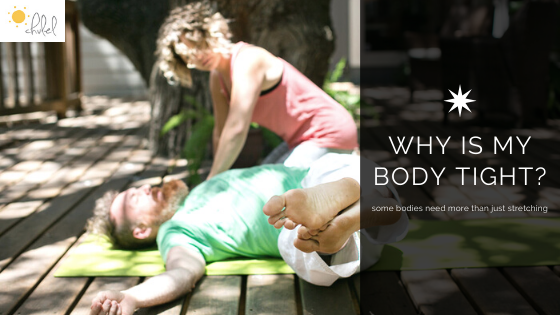
Why is my body tight?

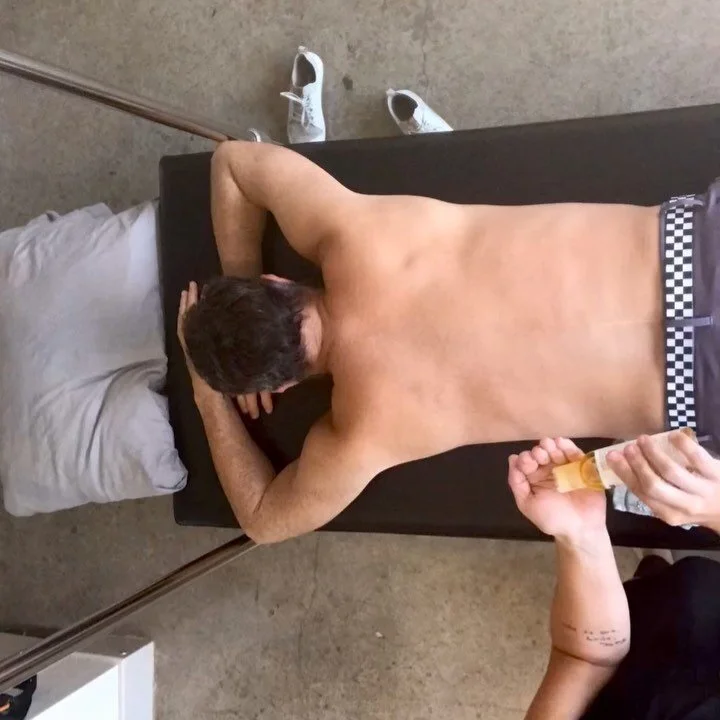
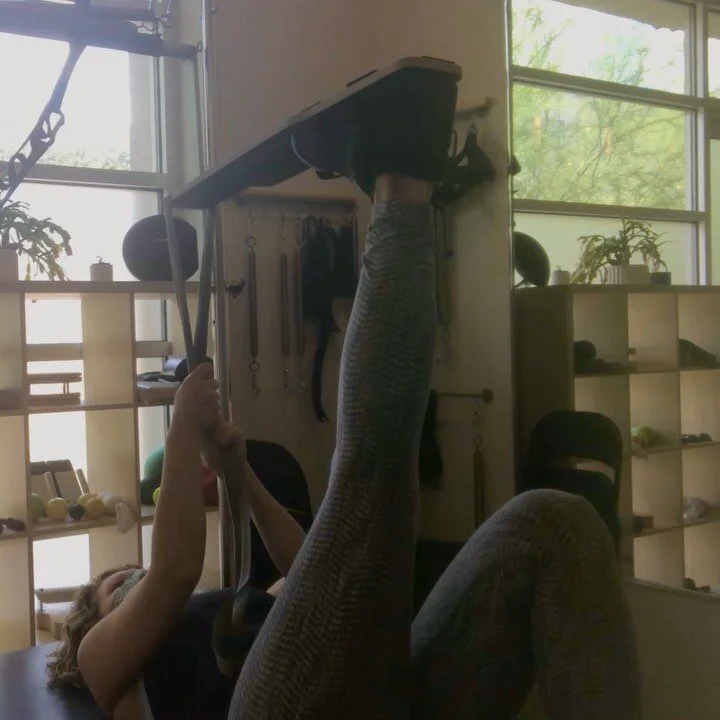
Full body, active Ki Hara stretching! Soooo yummy!
This is a question I'm often asked and believe that we have to look at more than just range-of-motion or trigger points for a good explanation. Some clients immediately tell me that their body is tight because it runs in their family, like they have an inflexiblity gene and traditional stretching just doesn't work for them. I see body tightness that runs in families as a cultural way that the family deals with stress and how we then handle stress as adults. Are things shoved under the rug or not acknowledged? Or, are things discussed and worked through together? Do you feel overwhelmed and overburdened by responsibility? Or, are you able to shift your perspective and carve out some self-care time?
The nervous system automatically charges up to help when we're stressed (sympathetic nervous system). One result when it kicks in is that the muscles tighten to prepare for action--we can see this in animals. When they perceive a threat, the breath cycle shortens, their whole body tightens and is ready to pounce. When we, as humans, hold in this way everyday, it leads to chronic body tightness and fatigue.
To offset this stress from a movement perspective, we most often think exercise. Yet, how many of us hold our breath when we try to burn off some steam? Muscles can't relax if they're being starved of oxygen. As someone who is also prone to this, I've started doing some diaphragm releases to connect with my breath before I intentionally move. This is my favorite diaphragm release to do pre-workout.
Ki Hara active stretching unwinds tension from the body, creating space for more breath. Clients always stand up at the end of a session saying they feel more alive, relaxed and have more blood flowing through their body. We target the areas you personally hold tension and dynamically release muscle tension there. Full body stretching like in the photo above, allows for the body to have a feeling of flow over bracing. To learn more, click here.
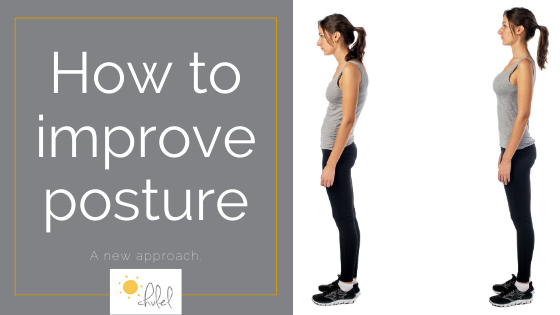
A New Way to Improve Posture
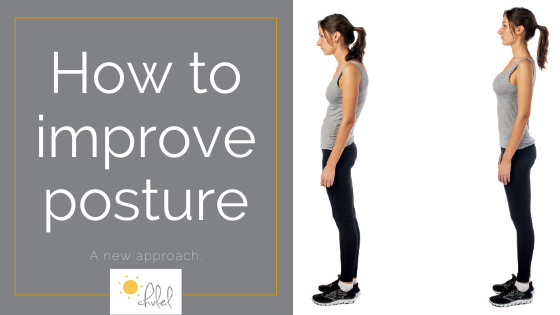
The traditional model of 'good' posture is a 2D approach (e.g. align this bone over this one) when we are 3D beings. We've all seen the poster in the doctor's office of the skeletal system, depicting a skeleton hanging by a hook. We then extrapolate this image to posture thinking we need to stack certain joints on top of one another--feet under hips, hips under ribs, ear lobe over shoulder. Thing is, we don't dangle from hooks, and while we connect to the ground, we're also constantly moving. So, we need a 21st century update to our ideas of posture, including how it connects with the breath and grounding.
How should I stand?
In the past, most of us were taught that good posture means locking our knees, straightening our back, pulling our shoulder blades together and puffing out our chest. How we were supposed to do this and breathe, I'm not sure. Moreover, this model attepts to make the spine straight when it's really shaped more like an S. Tapping into that S idea, and that our body tissues move more like a spring with each step, lends to a more organic posture with greater ease of movement.
What is good posture?
I see the body as a series of archways and that those archways, or diaphragms, act as suspension bridges and shock absorbers.

Strengthening the arch of the foot supports these archways.
- Arch of the foot.
- Arch of the pelvis at the groin.
- Arch of the breath diaphragm at the rib cage.
- Arch of the throat.
- Arch of the eyes/brain.
To me, good posture involves dynamic interaction between each of these areas. I say dynamic, because once again, we're not usually standing (or sitting) completely still. At a minimum, you're breathing, which means one of these diaphragms is always moving.
If you begin to stand and move with the visual of a bunch of suspension bridges instead of a sky hook, stacked bricks or stiff rods, your movement will be easier with alignment. You can practice this while standing and pretend like you're internally lifting your rib cage (on an inhalation) off of your pelvis--not puffing your chest out, but a 360 degree lift. You should feel your core turn on a bit and support your spine. Maintain that lift and breathe as you walk--can you feel that there's a buoyancy to your movement? That's your body moving through its diaphragms! Over time, not only will you have better posture from a state of ease rather than holding, you'll be using your core how it's supposed to be used--keeping you upright. You may even notice some new ab definition in as little as a couple of weeks.
If you didn't feel that buoyancy, you might be holding some tension at one of those diaphragms. This is where an objective pair of eyes (mine) can help you figure out where you're unconsciously holding tension, loosen things up and then you can feel more flexible and move from your core all day!
For a 3D explanation of posture (instead of just text). Here's a video for you:
Take this new feeling into your walk!
Once you feel your diaphragms, you can then tap into that buoyancy in the body as you walk. The ground becomes another 'diaphragm' and we sort of float or even gently bounce forward instead of pounding the pavement. I call it the Tigger Effect. It feels lovely! Here's an eplanation of that sensation and how to feel it when you walk. Using equipment that is spring-based, like Pilates, helps immensely to feel this and integrate it into your body. Contact me for an appointment for more personalized help on improving your posture and gait.
Latest Instagram Posts