Your Custom Text Here
Fix Your Plantar Fasciitis-Episode 8 How to Improve Your Gait
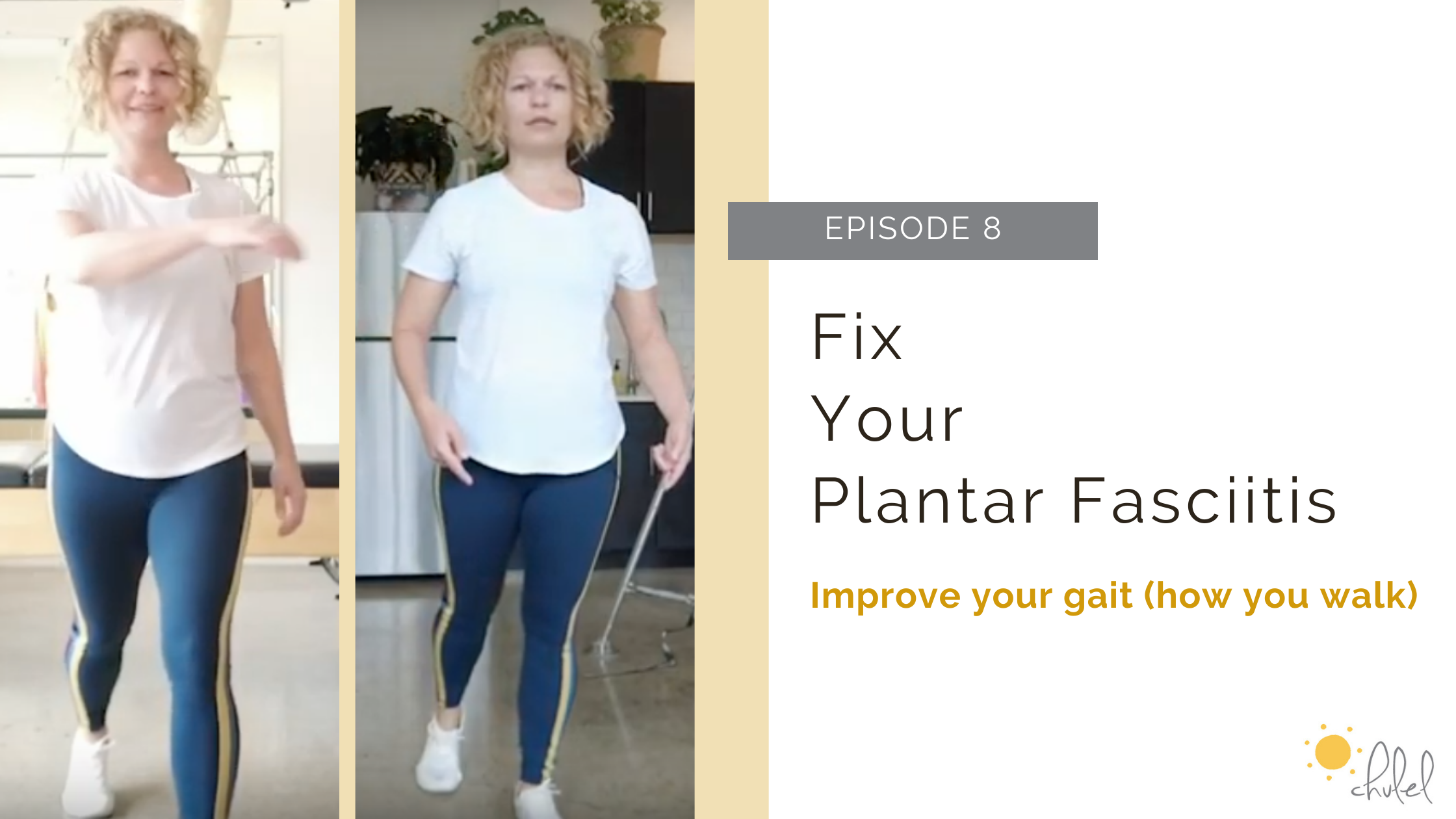
Over the years I’ve taken several workhops and read many books on how to fix your gait (how you walk/run) to correct several injuries I’ve had to my lower leg—including being hit by a car in a crosswalk.
This video highlights some of my favorite exercises I’ve learned that can be done from anywhere.
The first is from an Aston Patterning workshop that trains your body how to transfer weight from one leg up through the pelvis to the other leg. I always liken it to feeling like you have a slinky momentum as you walk. I’ve noticed that those with plantar fasciitis, tight feet, even bunions and Morten’s neuroma don’t fully roll through their midarch when they roll through their foot. It’s more of a heel-toe clomp. This simple exercise can help your body improve balance and change that pattern.
The next couple of exercises are from a workshop I took with James Earls who wrote a book called Born to Walk. They emphasize a fascial spring to walking and really hone in on the rotation aspect of walking. This is another plantar fasciitis thing—that gait pattern can often be more of a waddle instead of there being a subtle twist of the upper body on the lower body with each stride.
Lastly, we look to deepening the feeling of that twist with a connection to the diaphragm. This is a good, little balance challenge.
I recommend doing these on a longer walk or a run to let your tissues get into the flow and so that the new pattern can set into your tissues.
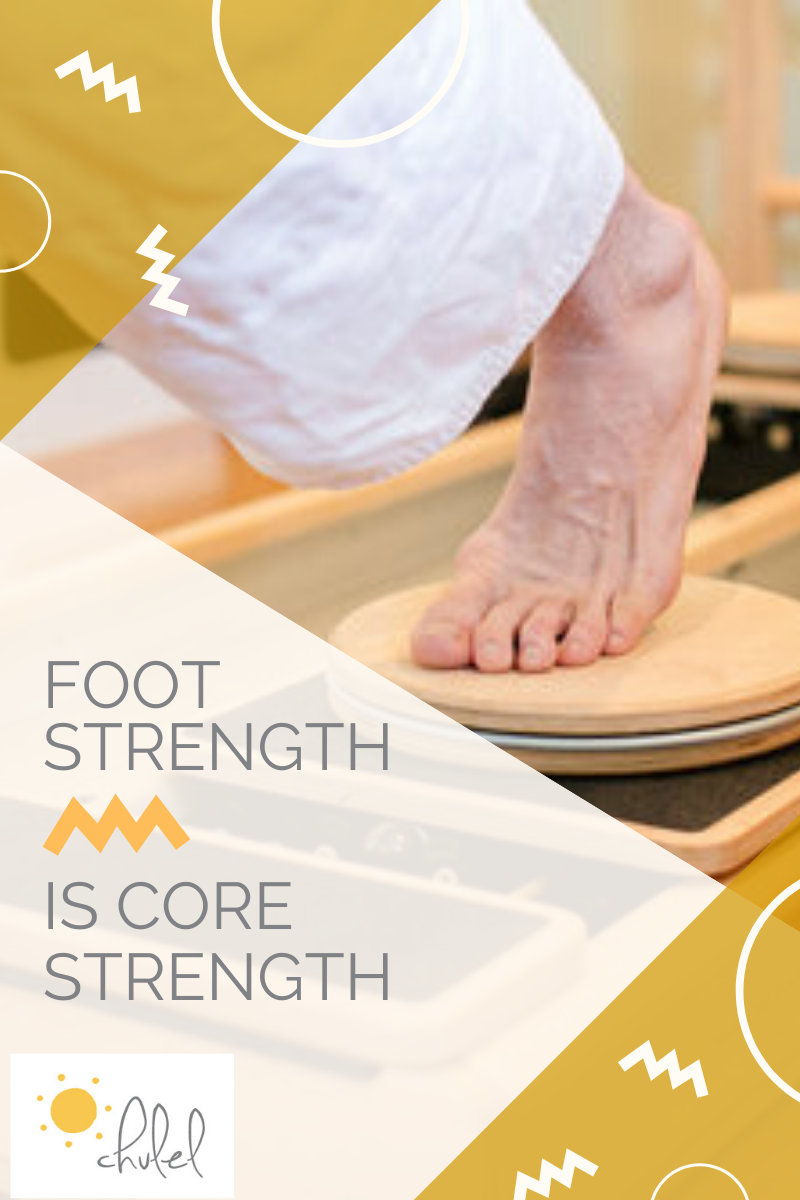
Flexible, Grounded Feet=A Strong Core
Until I got really nerdy about my running stride 10 years ago, I was quite foot phobic. We pay for others to touch our feet or hope for a little love from our significant other on the couch, but most of us don't consciously massage our feet like we foam roll our legs or actively strengthen our feet like we do our arms. It's funny because our feet are our main mode of transport yet they're low on the self-care totem pole.
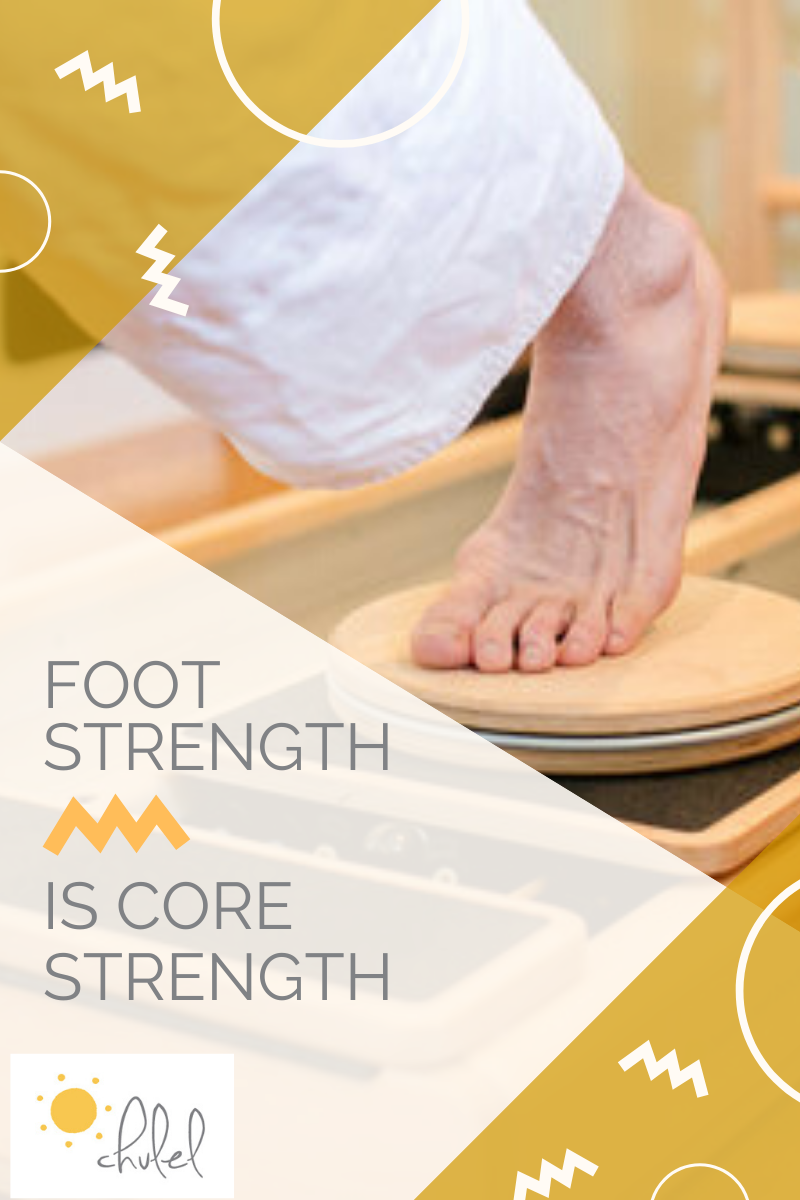
Grounded feet help with balance.
How are the feet related to core stability and strength?
The feet aren't what I call Hollywood Muscles. No one is going to eye you up at the pool for your toe muscles. Yet, the feet mirror our core muscles and help to support deep, instrinsic movement from the core with every step. The feet are the first in a series of archways to the body that act as suspension bridges and shock absorbers as we move. Two of those other archways, or diaphragms, are the pelvic (read: pelvic floor) and breathing diaphragms. If you've read some of my other posts, you already know how much I love talking about these diaphragms, more about that here and here...because, they are the real foundation to core strength! Yes, people, I know most of you out there probably hate ab exercises. Good news is, if you keep your feet relaxed and open, you're always exercising your core muscles.
The feet should act as little trampolines as we walk, but they often become more like bricks of ice because of the types of shoes we wear (more about that here) and from breath holding--once again, you hold in one diaphragm, the others are affected.
Open feet are grounded feet.
Keeping the feet loose and open, has an impact on shoulder tension as well. When our body feels supported by the earth, we cease to put the weight of the world on our shoulders. All of that goes into the ground, also known as grounding or earthing. :)
Here is a simple way to open your feet, even while you watch tv.
Once your feet are relaxed, you can get even deeper into strengthening them. I love this set of exercises, because it helps to restore the motions our feet most often forget, spreading and using the sole of the foot. Kind of like how our pelvic muscles atrophy sitting in a chair all day, the sole of the foot weakens from wearing shoes all the time. This is a small sample of a series of exercises I do with my clients to wake up their feet and consciously connect that feeling to their core as they walk and move. Afterward my clients often say they feel like their feet are wider and that they can sense the pads of their feet. I call it Frodo feet!
The new sensory awareness from open feet will not just help you ground, it will also help your balance in other activities like yoga, martial arts and dance, not to mention walking. For a more personalized connection to those activities, including gait, make an appointment to come to the studio. In the meantime, opening and grounding your feet will have you using your core in a deep and profound way without even trying!
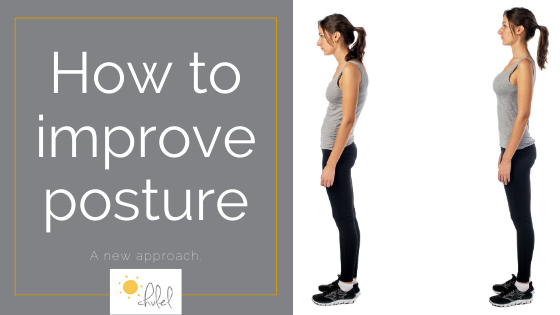
A New Way to Improve Posture
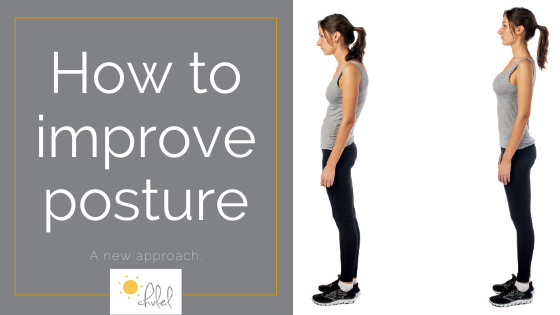
The traditional model of 'good' posture is a 2D approach (e.g. align this bone over this one) when we are 3D beings. We've all seen the poster in the doctor's office of the skeletal system, depicting a skeleton hanging by a hook. We then extrapolate this image to posture thinking we need to stack certain joints on top of one another--feet under hips, hips under ribs, ear lobe over shoulder. Thing is, we don't dangle from hooks, and while we connect to the ground, we're also constantly moving. So, we need a 21st century update to our ideas of posture, including how it connects with the breath and grounding.
How should I stand?
In the past, most of us were taught that good posture means locking our knees, straightening our back, pulling our shoulder blades together and puffing out our chest. How we were supposed to do this and breathe, I'm not sure. Moreover, this model attepts to make the spine straight when it's really shaped more like an S. Tapping into that S idea, and that our body tissues move more like a spring with each step, lends to a more organic posture with greater ease of movement.
What is good posture?
I see the body as a series of archways and that those archways, or diaphragms, act as suspension bridges and shock absorbers.

Strengthening the arch of the foot supports these archways.
- Arch of the foot.
- Arch of the pelvis at the groin.
- Arch of the breath diaphragm at the rib cage.
- Arch of the throat.
- Arch of the eyes/brain.
To me, good posture involves dynamic interaction between each of these areas. I say dynamic, because once again, we're not usually standing (or sitting) completely still. At a minimum, you're breathing, which means one of these diaphragms is always moving.
If you begin to stand and move with the visual of a bunch of suspension bridges instead of a sky hook, stacked bricks or stiff rods, your movement will be easier with alignment. You can practice this while standing and pretend like you're internally lifting your rib cage (on an inhalation) off of your pelvis--not puffing your chest out, but a 360 degree lift. You should feel your core turn on a bit and support your spine. Maintain that lift and breathe as you walk--can you feel that there's a buoyancy to your movement? That's your body moving through its diaphragms! Over time, not only will you have better posture from a state of ease rather than holding, you'll be using your core how it's supposed to be used--keeping you upright. You may even notice some new ab definition in as little as a couple of weeks.
If you didn't feel that buoyancy, you might be holding some tension at one of those diaphragms. This is where an objective pair of eyes (mine) can help you figure out where you're unconsciously holding tension, loosen things up and then you can feel more flexible and move from your core all day!
For a 3D explanation of posture (instead of just text). Here's a video for you:
Take this new feeling into your walk!
Once you feel your diaphragms, you can then tap into that buoyancy in the body as you walk. The ground becomes another 'diaphragm' and we sort of float or even gently bounce forward instead of pounding the pavement. I call it the Tigger Effect. It feels lovely! Here's an eplanation of that sensation and how to feel it when you walk. Using equipment that is spring-based, like Pilates, helps immensely to feel this and integrate it into your body. Contact me for an appointment for more personalized help on improving your posture and gait.
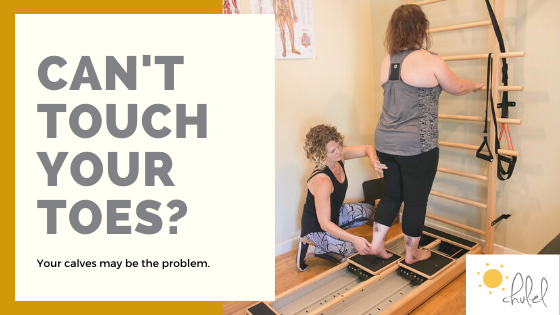
Can You Touch Your Toes? Your Calves May Be the Culprit.

Gait re-patterning to rehab injury and chronic pain.
When was the last time you thought about stretching your calves? Our body awareness typically gets pulled to the places where we hurt or where we want to create more muscle tone leaving the calves a bit lonely. They're just...there. Thing is, calf tightness can correspond with pain in other areas of the body including foot pain, knee pain, back pain and neck pain, even headaches! The fascial or connective tissue line runs up the entire back side of the body--sole of foot, calves, hamstrings, piriformis (deep muscle in the butt), up that respective side of the spine, neck and then stops at the browline of the forehead. This is the connective tissue line that also contacts a chair most of the day, so no wonder there would be some tightness. It can also remain constricted due to our walking pattern.
Why are my calves tight?
Unless you live in San Francisco or in a national park, you're walking on flat surfaces all day long. That's a pretty small range of motion for the ankle so the calf muscles tighten because they aren't being worked in their full, anatomical range. This means that in general, most people have tight and weak calf muscles. Why should you care? Calf and ankle strength affect posture all the way up the body and is critical for balance. Plus, due to the connective tissue line, your calf tightness could be a major culprit in your knee, back and neck pain.
Do my shoes make my calves tight?
Absolutely. High heels are an obvious example because the calf muscles are contracted or shortened all of the time. That said, every Austinite who wears flip flops and cowboy boots year round isn't faring much better. Flip flops cause people to become toe grippers, meaning they're always clawing at the ground, or really the shoe, just to keep it on. When the heel isn't cupped in the back of a shoe, our gait pattern (how we walk) shifts so we stop using our whole foot and calf to take a step. If you love flip flops, look down at your toes and you may even see them scrunched up a bit rather than nice and open. Boots keep the ankle at a fixed, right angle, so this also makes for tight calf muscles--once again, because the full range of motion of the ankle is limited. I'm not suggesting that there's the perfect shoe, or that you should never wear your boots again, but try regularly changing up your footwear. Flip flops on the other hand...if you have any pain or tension along this fascial line, you may want to consider swapping your flip flops for sandals that have a strap around the back to support your ankle. This usually keeps folks from doing the toe grip motion to take a step.
How do I stretch my calves?
I have several options on YouTube, foam rolling and stretching the shins, but this is my favorite:
From an energetic or emotional perspective, I find that when people have tight calves, they can't feel the ground, meaning they don't feel supported by the earth. When someone walks into my studio with chronic neck and shoulder pain, I will often do a deep calf stretch in the first session so that they relax their lower leg. I always stretch one leg first, then have the client stand to feel the difference. About 90% of the time, they feel more relaxed and lighter on that side, plus their shoulder on that side, will lower. Lack of grounding, or feeling supported from below, puts all of the energy into the shoulders and head. This looks more like someone who holds the weight of the world on his/her shoulders instead of feeling relaxed and connected. Try this at home on one side and see if you feel what I'm talking about.
If you know that you have pain along this back, fascial line, and that you may walk a little funny, schedule an appointment and we'll shift your gait a bit so that you aren't reinforcing tension along the back side of your body with every step!
Latest Instagram Posts