Your Custom Text Here
Why is my body tight?

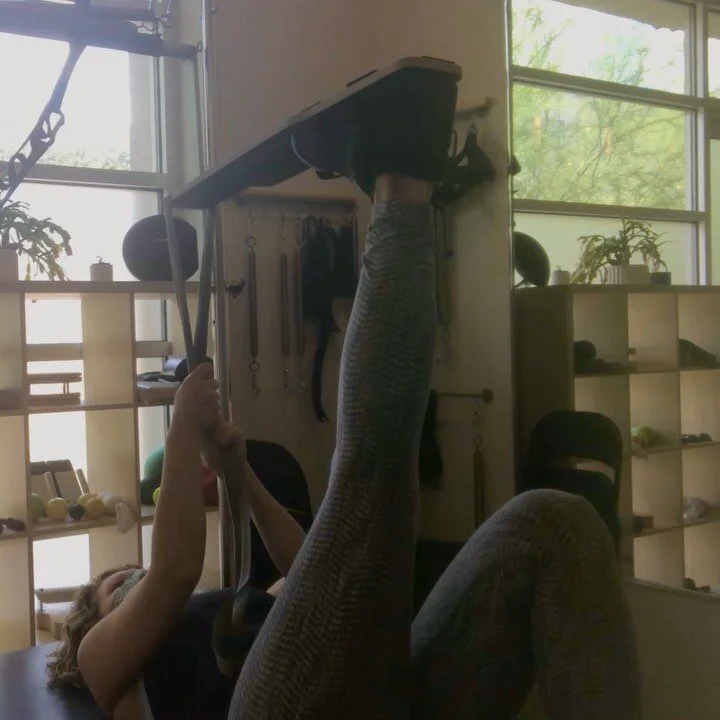
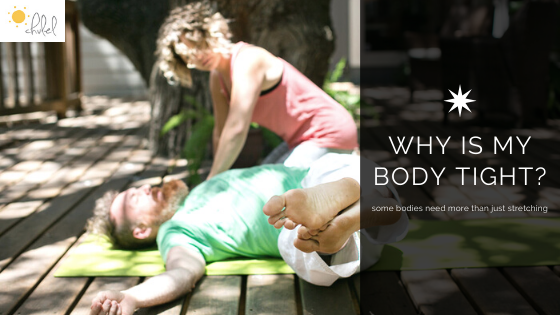
Full body, active Ki Hara stretching! Soooo yummy!
This is a question I'm often asked and believe that we have to look at more than just range-of-motion or trigger points for a good explanation. Some clients immediately tell me that their body is tight because it runs in their family, like they have an inflexiblity gene and traditional stretching just doesn't work for them. I see body tightness that runs in families as a cultural way that the family deals with stress and how we then handle stress as adults. Are things shoved under the rug or not acknowledged? Or, are things discussed and worked through together? Do you feel overwhelmed and overburdened by responsibility? Or, are you able to shift your perspective and carve out some self-care time?
The nervous system automatically charges up to help when we're stressed (sympathetic nervous system). One result when it kicks in is that the muscles tighten to prepare for action--we can see this in animals. When they perceive a threat, the breath cycle shortens, their whole body tightens and is ready to pounce. When we, as humans, hold in this way everyday, it leads to chronic body tightness and fatigue.
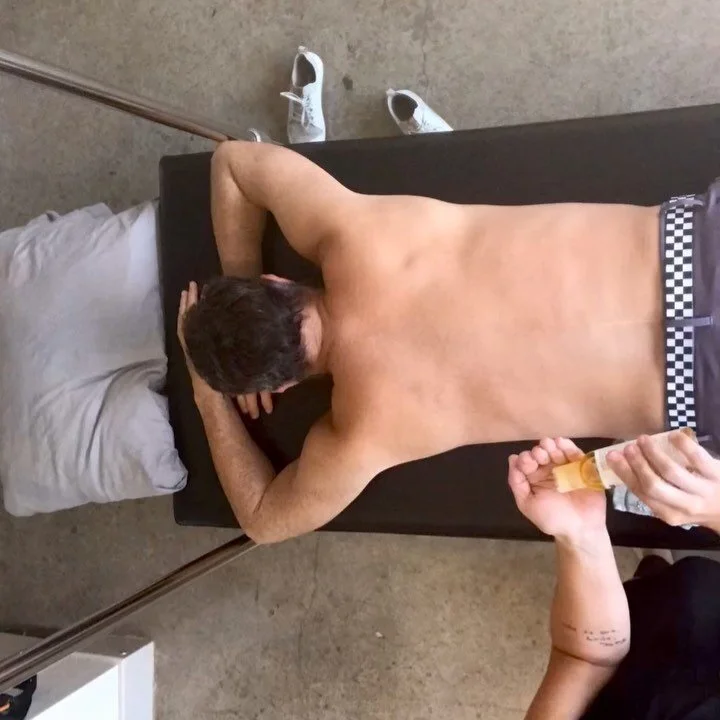
To offset this stress from a movement perspective, we most often think exercise. Yet, how many of us hold our breath when we try to burn off some steam? Muscles can't relax if they're being starved of oxygen. As someone who is also prone to this, I've started doing some diaphragm releases to connect with my breath before I intentionally move. This is my favorite diaphragm release to do pre-workout.
Ki Hara active stretching unwinds tension from the body, creating space for more breath. Clients always stand up at the end of a session saying they feel more alive, relaxed and have more blood flowing through their body. We target the areas you personally hold tension and dynamically release muscle tension there. Full body stretching like in the photo above, allows for the body to have a feeling of flow over bracing. To learn more, click here.
Are you a tightass?
Most of us are, and the funny part is, we're completely unaware.
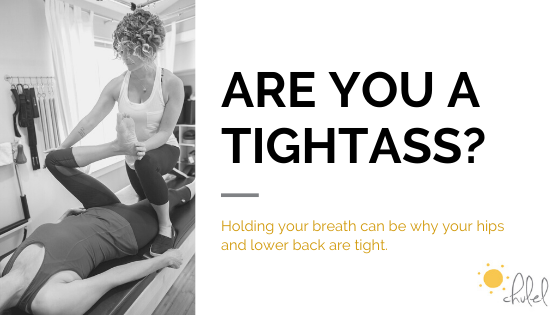
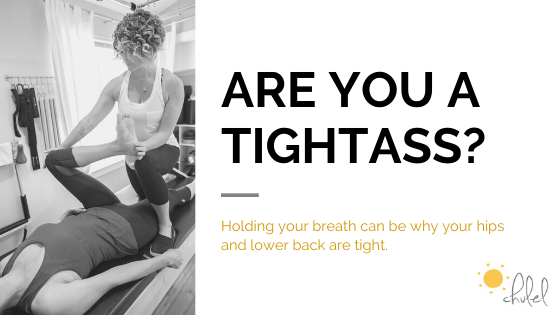
Ki Hara Active Hip Stretch
What is a tightass?
I define it as one who perpetually grips in their pelvis, specifically in the urinary and anal sphincters. Clenching here tightens muscles in the pelvic floor, which pull on the hips, which pull on the lower back.
How does one become a tightass?
Stress
Our bodies (nervous systems) are wired to process stress with fight or flight. Evolutionarily, if something threatened our survival, we fought or we ran. In the 21st century reality, it's usually not possible to discharge stress at the moment we're feeling it. Plus, we usually have multiple stressors hitting us simultaneously. We are then left with a freeze response, so the body goes on lockdown, as do our bums.
Breath
Building on the above, shortening our breath is a top physical holding response when we freeze. Unfortunately, this is where we spend the bulk of our time--barely breathing, which, only keeps our nervous system in a hightened state of stress. So the stress/breath cycle snowballs. Right now, take an inventory of your breath. Can you even out your inhalation and exhalation time? How many seconds does it take you to do an inhale/exhale? Can you increase that duration by 1 second, or maybe even 2 seconds? Does your body (pay attention to your pelvis, in particular) relax a little bit with this slightly longer breath cycle? Now pause and hold your breath...do you feel your sphincters tighten again?
Digestive Issues There's a greater awareness now about food sensitivities and allergies. When our digestive system is upset on a regular basis, it can lead to chronic clenching of the digestive sphincters. I also think sitting for long periods and the subsequent slowing of our metabolism can let things feel stuck in our digestive tract.
Sucking in the Stomach/Wearing Restrictive Clothing This usually applies more to women than men. Wearing restrictive clothing or sucking the stomach in, once again means the breath is affected so the tightass tendency follows.
Energetic/Emotional Component The area we're talking about in the body corresponds to the root chakra. This chakra, or energy center, represents our foundation, sense of safety, financial stability and tribal (family of origin) identity. Pretty much everyone has some emotional crap involving at least one of these issues. Emotional holding patterns surrounding fear, in particular, contribute to chronic clenching in the pelvis.
Why does it matter?
Tightening your holes pulls on your hip rotation muscles (especially the obterator internus), locking your femur (thigh bone) in a shortened range of motion. Chronic holding in this area of the pelvis directly affects not just hip rotation but also low back pain. The femur is a ball and socket, a super mobile joint. When we restrict its full range of motion (most of us don't even work the hips in their full range of motion on a regular basis, that will be another blog post) the sacral area of the low back gets pissed off because it's having to do the work that the ball and socket should be doing. Then we have low back pain. I'm not saying this is the exclusive reason for lower back pain, but it is a significant one.
What should you do about it?
Wear clothing that doesn't restrict your breathing and try to relax these muscles with your breath. For more information, check here on how to do that:
Pay attention to which foods your body is happy and nourished by and try to eat more of those. One of my favorite go-tos for eating more vegetables is eating 5 different vegetables each day. I find that the goal becomes the center-point of my meal planning because the focus is how I give my body nutrients rather than a thou-shalt-not-eat __ approach.
Do something for you throughout each day...even if it's just 5 minutes. As a movement person, let me suggest this be something movement-related. Not just because you're taking care of your body, it will also help aid your digestion and kick in your parasympathetic (calming) nevous system. Maybe it's taking a timer-motivated break for 5 mintues in which you just focus on your breathing or on your favorite cup of tea. Maybe it's repeating a favorite mantra each time you look in the mirror or take a bathroom break.
Start looking at your fear patterns and letting those fears go. We often hold onto fears that took root in our childhood that are no longer relevant and necessary in adulthood. A good place to start is noticing when you're triggered by something someone says or does and ask yourself why you had a reaction at all. Did it highlight a fear you have? Was it a way your parents/sibling/family member spoke to you growing up? Are you reacting to that trigger now the same as when you were younger? How does your body feel? Where do you feel tightness or restriction?
Trying a multi-faceted approach, meaning looking at your back pain (or maybe just your tight ass) from a physical as well as emotional perspective can lead to greater and longer-lasting pain relief...and help you grow as a person.
Double-click to edit...
Latest Instagram Posts