Your Custom Text Here
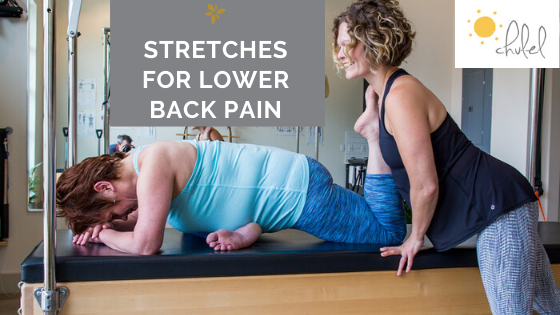
Stretches to Relieve Lower Back Pain
Lower back pain can have many different causes. Muscle weakness, poor posture, disc/spinal issues, leg length differential or an old injury can all factor into back pain. That said, this chronic pain can be helped by stretching certain areas and building hip strength.

From a fascial (connective tissue) line perspective, the tension you feel in the lower back could be coming from anywhere along that posterior side of your body. So a tight foot or calf on that side could also be a tight sacrum. Below is a simple foot fascia stretch you could do while watching tv or before a walk/run. If you know you have tight calves, this is my favorite stretch to release the muscles as well as the fascial line.
For a more active approach, anyone with a tight lower back has tight quad muscles (front of thighs). This version integrates a yoga pose with some turbo options for stretching. Your front leg doesn't need to be crossed in front of the opposite thigh, you can just tuck that knee underneath you. You can also place a pillow underneath the glute that is stretching. Just being here may be intense enough. If so, breathe and visualize new space in your hips. You may also feel this more in your butt than in your quad. Try to bend the elongated leg for the thigh stretch. If your hamstring cramps, scroll up and do the calf stretch first. If you can bend the knee, this stretch is a great twofer for the thigh and rear.
Another area that can pull on the lower back is the groin. Most of us never think to stretch here yet it can really compound tension in the lumbar spine. This is a pretty intense stretch, so here is a more gentle stretch.
When you're out of the pain or as a preventative measure, you want to build hip strength. If you've recently had pain, doing this may not feel good, so listen to your body. If you feel a sharp pain, this is not for you right now. You may need more individualized help, so gimme a call! Or, reach out to your trusted chiropractor, massage therapist or physical therapist.
I find that lower back pain perhaps more than any other chronic pain area always has an emotional or stress-holding connection. I already wrote about how lower back pain connects with breath holding here. Some things to explore for the emotional connection would be: When did this pain start? What else was going on in your life around that time? Does the pain tend to get worse during certain times of the day? If it's in the morning, are you happy in your work/relationship? In the evening, are you feeling burdened by your responsibilities? Does it hurt more when you speak to a certain person? Are you holding or internalizing anger, frustration or another emotion with regard to that person?
Noticing your personal patterns can help you start to process some of these underlying aspects that are keeping this pain chronic. I believe this is a big reason why a massage or even a stretching routine doesn't keep the pain from coming back. If some of this resonates for you, visualize these emotions/memories leaving your body via your breath. Let it go!
Stretch Out Your Sciatica!

Active (Ki Hara) hamstring stretching.
For non-severe cases of sciatica (i.e. not having foot drop or incontinence) a holistic approach of regular stretching and shifting your body's biomechanics can not only lessen your pain levels, but help it from coming back. The sciatic nerve runs from the lower back all the way down to the foot on either side of the body. Sciatica can be a result of several spinal issues, so it is important to consult with your doctor to ensure that this is not the underlying cause of your lower back pain. Deep stretching of the back and hips with follow up care to strengthen the pelvic floor and shift your gait (walking) can all help your sciatica no matter if you choose a doctor-recommended approach such as a cortizone shot/epidural or a holistic approach of chiropractic/acupuncture.
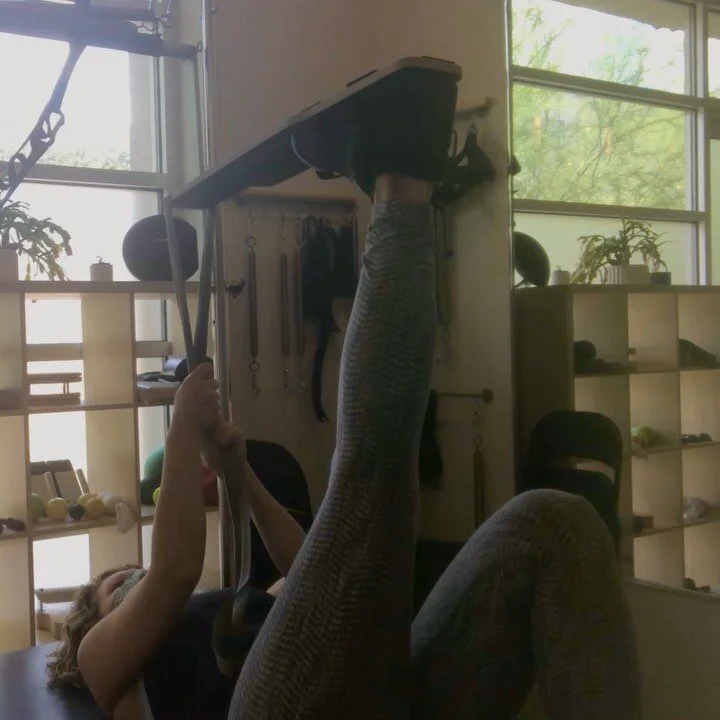
Deep stretching of the hips can take pressure off of the sciatic nerve, particularly by stretching the piriformis muscle. The piriformis connects the lower back to the hip and acts as a rotational muscle for the thigh. The sciatic nerve passes through this muscle for some of us, so when the muscle gets tight, it cuts off the nerve. Ki Hara active stretching is particularly effective for loosening these muscles, because we take the muscle from its shortened length and then actively pull it long. This means that flexbility isn't coming from a ligament or the joint, we're actually creating longer muscles--kind of like stretching taffy. You can see an example of this and its effectiveness here:
I find that another contributor in back pain is that we hold our breath from stress and become 'tightasses'. Read more about this here.
After getting more space in the pelvis, we can reengage the pelvic floor muscles and strengthen the glutes that should have been doing more work before sciatica came along. After sitting for so many years--even think back to being in school, the chair ends up supporting our weight most of the day instead of our pelvic musculature, including our bums. We end up with flat behinds while the muscles in the pelvis tighten and weaken. They then tug on the sacrum or lower back, forcing it to move in ways that it shouldn't, so it rightfully gets angry. By consciously reconnecting with the pelvic floor, which is the base of our core, and pumping the butt back up, we reactivate the parts of our body that should be holding our torso upright instead of a piece of furniture.
When working with sciatica and lower back pain clients, we not only stretch and strenghten, we also shift how you walk. If you've had that seizing pain or constant aching for a while, I guarantee you've walked weird to protect yourself from feeling it. So, another way to prevent you from having a future episide is to make sure you don't keep walking in a way that supports your body's holding of that pain. Addressing sciatica, and back pain in general, from this progressive approach helps my clients' back pain improve, it also lessens the severity/duration of future episodes In many cases, it helps keep the pain from coming back all together.
Latest Instagram Posts