Your Custom Text Here
Cross Training for Runners
We are deep in marathon-training season here in Texas thanks to temperatures that make outdoor activity easier. It's also a season when logging high mileage can lead to poor movement patterns and then injury. Using a combination of massage, trigger point therapy, stretching and strength training can not only keep you inury-free, it can also improve time and performance on the road.
This is a collection of some of my favorite stretches and exercises for runners, particularly for folks who stare at a screen for a living and love running for cardiovascular and mental health. As someone who is a bit 'Type A' I love my exercise and stretching routines to have twofers or threefers meaning you're getting multiple benefits from each. We're all busy so we might as well feel like we're accomplishing a few things at once from our stretching routines.
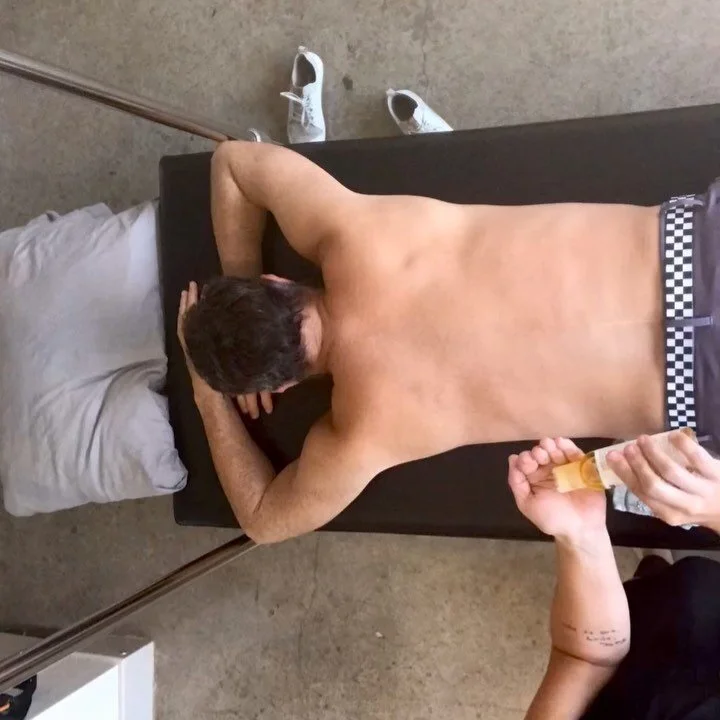
Massage & Trigger Point Release
We could all use to take better care of our feet, especially if you're out pounding the pavement for miles every week. Consider this massage like foam rolling for your feet. It only takes a couple of minutes and is easy to do while watching tv or before you pop on those shoes for a jog. Check and see if your foot changes color after you do it!
Trigger Point
The gist of trigger point work, if you have not heard of it before, is that you find a tender spot and apply consistent pressure until the muscle starts to relax. This can take minutes and can be confusing at first if you can't feel the muscles releasing. The more you practice the easier it is to know when the muscle is letting go. You can use a ball, foam roller or other trigger point therapy tool--my only reminder is to breathe! Below are two different releases you can do with a ball and a foam roller.
Piriformis (hip rotation) Trigger Point Release
Gluteal (butt) Muscle Trigger Point
Calf Trigger Point Release
Stretching
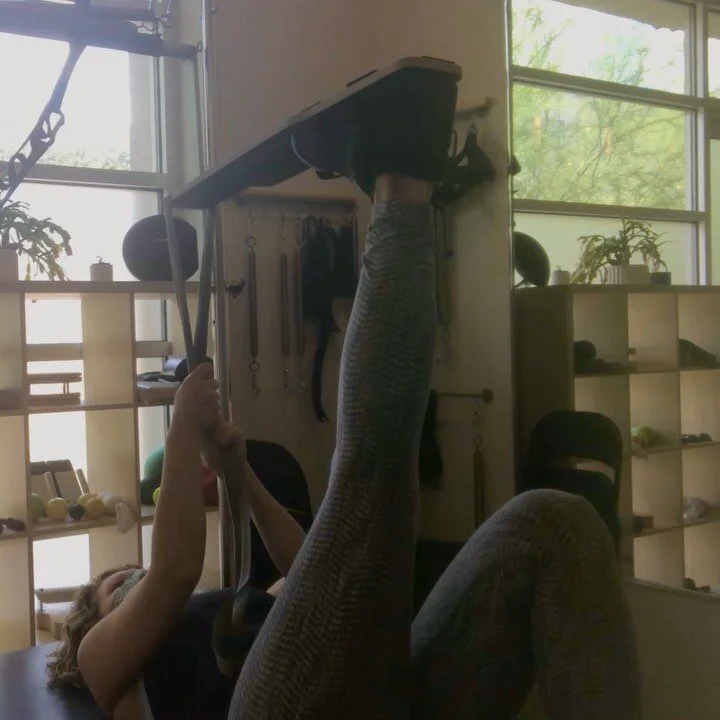
If you want to up your stretching routine and do something beyond the basic quad and calf stretch you learned in grade school, these are my favorites for stretching multiple places at one time. They incorporate stretching muscles as well as facial or connective tissue lines. Many runners may be aware that their calves and hamstrings could use a stretch (find my favorite version here), but knowing how to stretch the front of the shins is a bit more complicated. Click here for my suggestion for a good shin stretch.
Strengthening Exercises
When you're spending so much time on the road just trying to get your mileage in, stretching may be the only thing you may take time to do. Cross training exercises are soooo important for runners as you're doing a highly repetitive action. This plus long hours potentially looking at a screen usually means the hip muscles become weak because they're being supported by a chair most of the day. Hip weakness combined with high mileage is a recipe for chronic pain or an injury. Most runners I've worked with need more lateral (abductor) strength, inner thigh (adductor) strength as well as core stability via the obliques.
Strengthen You Rear
Inner Thigh Stretch and Strengthening
When looking at a screen most hours of the day and then participating in exercise that is also very forward-oriented, the obliques and the cross body stability muscles become weak. Improving these means improving balance so your energy can carry you forward. An added bonus is that you may even see your waistline shrink if you work on these muscles. Here's a simple, yet super challenging one using a foam roller.
Core Strengthening and Stability
How I can help
Ki Hara active stretching (see example here) is super effective in creating flexibility and strength at the same time. Having this muscular dexterity not only allows you to run longer, but also faster. Many professional athletes and sports teams across the country use this technique as their secret weapon.
I also use a piece of equipment called the CoreAlign that is phenomenal for gait training and orienting the body to the core in a running motion (see more about it here). I've helped many marathoners streamline their gait patterns so they can lower their per mile time. If you've ever, even as a teen, had an injury to the lower half of your body, you may have established some compensation patterns in your walk. Running with these compensation patterns can be an underlying component to chronic pain and injury. Peeling back those patterns will give you more agility and speed as you run. You have more power than you realize!!
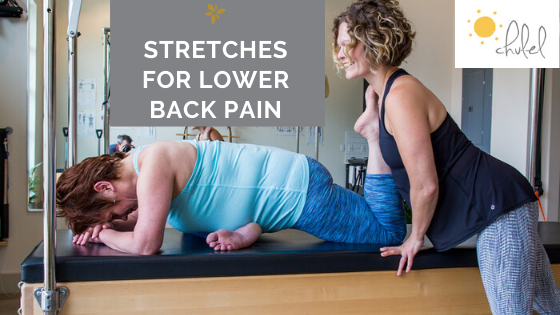
Stretches to Relieve Lower Back Pain
Lower back pain can have many different causes. Muscle weakness, poor posture, disc/spinal issues, leg length differential or an old injury can all factor into back pain. That said, this chronic pain can be helped by stretching certain areas and building hip strength.

From a fascial (connective tissue) line perspective, the tension you feel in the lower back could be coming from anywhere along that posterior side of your body. So a tight foot or calf on that side could also be a tight sacrum. Below is a simple foot fascia stretch you could do while watching tv or before a walk/run. If you know you have tight calves, this is my favorite stretch to release the muscles as well as the fascial line.
For a more active approach, anyone with a tight lower back has tight quad muscles (front of thighs). This version integrates a yoga pose with some turbo options for stretching. Your front leg doesn't need to be crossed in front of the opposite thigh, you can just tuck that knee underneath you. You can also place a pillow underneath the glute that is stretching. Just being here may be intense enough. If so, breathe and visualize new space in your hips. You may also feel this more in your butt than in your quad. Try to bend the elongated leg for the thigh stretch. If your hamstring cramps, scroll up and do the calf stretch first. If you can bend the knee, this stretch is a great twofer for the thigh and rear.
Another area that can pull on the lower back is the groin. Most of us never think to stretch here yet it can really compound tension in the lumbar spine. This is a pretty intense stretch, so here is a more gentle stretch.
When you're out of the pain or as a preventative measure, you want to build hip strength. If you've recently had pain, doing this may not feel good, so listen to your body. If you feel a sharp pain, this is not for you right now. You may need more individualized help, so gimme a call! Or, reach out to your trusted chiropractor, massage therapist or physical therapist.
I find that lower back pain perhaps more than any other chronic pain area always has an emotional or stress-holding connection. I already wrote about how lower back pain connects with breath holding here. Some things to explore for the emotional connection would be: When did this pain start? What else was going on in your life around that time? Does the pain tend to get worse during certain times of the day? If it's in the morning, are you happy in your work/relationship? In the evening, are you feeling burdened by your responsibilities? Does it hurt more when you speak to a certain person? Are you holding or internalizing anger, frustration or another emotion with regard to that person?
Noticing your personal patterns can help you start to process some of these underlying aspects that are keeping this pain chronic. I believe this is a big reason why a massage or even a stretching routine doesn't keep the pain from coming back. If some of this resonates for you, visualize these emotions/memories leaving your body via your breath. Let it go!
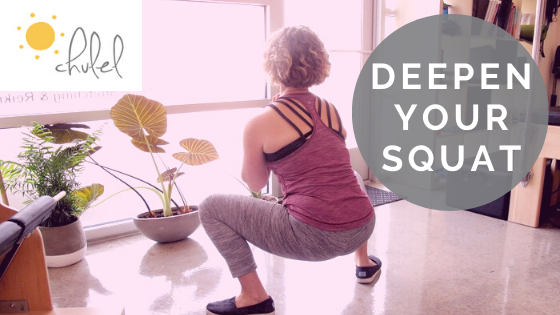
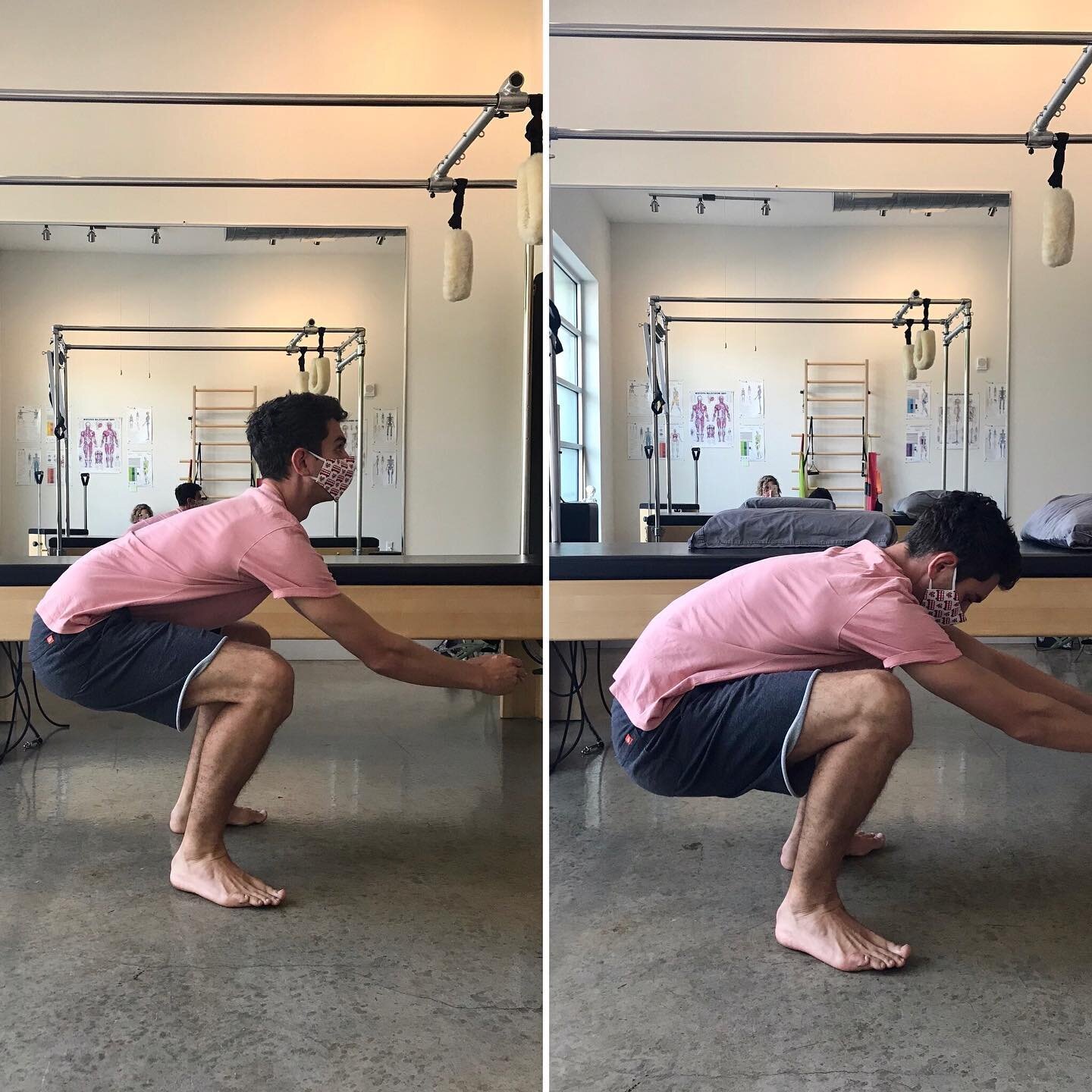
Improve your Squat Form
A few years ago I visited Japan and enountered my first non-Western toilet on a regional train. Not only did I struggle at using 'squatty potty', it was even harder in a moving train. Perfecting and holding a full, deep squat with heels on the floor became my physical focus of that year. The deeper my squat became, the more I felt new muscles in my pelvis that I had no idea existed!
Squatting is a fundamental human movement and helps to maintain a healthy pelvic floor with core stability. As we squat, the pelvic floor has to expand like a suspension bridge to support us, meaning we have to let go of stress-holding in that area. Regularly practicing a full squat is a great way to release tension in the pelvic floor. It's also a great way to build hip strength if you have ever been pregnant.
As we spend more time in chairs with our knees and ankles fixed at 90 degree angles, squats become important for foot and knee health so that our body understands it can still move those joints deeply. We can forget about this until small children come into our lives and we realize that we don't feel confident squatting down to pick up the child from the floor. Not only are we lacking hip strength, there's a general inflexiblity in the lower joints of the body.
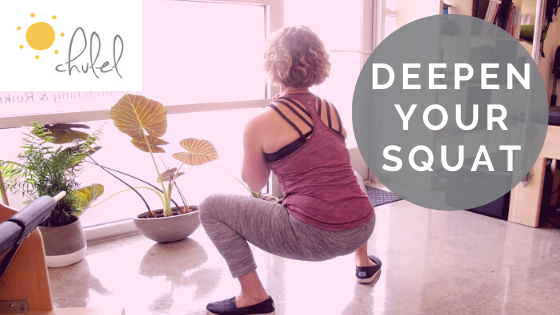
Squatting, and the muscles required to do one are important for aging well and not succumbing to a 'falling-and-I-can't-get-up' scenario. I'm an advocate of an unweighted squat, meaning just your body weight on these joints is sufficient. We're all shaped differently with different movement pasts, so I'm also more free form on how wide the feet are and if the legs are turned out or not. If your ankles are tight and you have a hard time keeping your heels down, hold onto something and place a towel or wedge under your heels. You can also try stretching your calves first to see if that helps your heels stay down. My favorite way:
You can deepen your squat if you understand that your bones spiral as you descend and ascend. If these bones didn't pivot and move, we would just toppple over. Feeling them move, and even coaxing your muscles with your hands, can remind your body that we're always in rotation and that twisting can allow for deeper movement and more core engagement.
Squatting is a phenomenal way to ground yourself and feel like you're connecting downward instead of holding the weight of the world on your shoulders. It doesn't matter how deep or how perfect your squat is, just try to drop down towards the earth and feel how you are supported. Feeling this sensation can help alleviate stress and relax the body. Feel how much your life can improve by doing a squat a day!
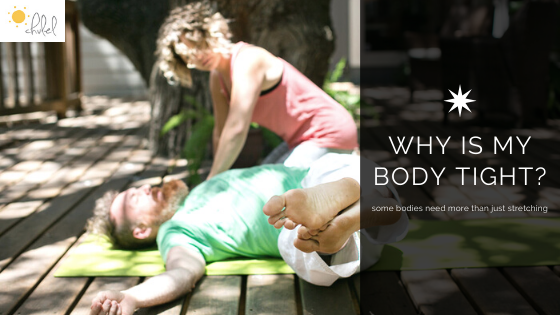
Why is my body tight?

Full body, active Ki Hara stretching! Soooo yummy!
This is a question I'm often asked and believe that we have to look at more than just range-of-motion or trigger points for a good explanation. Some clients immediately tell me that their body is tight because it runs in their family, like they have an inflexiblity gene and traditional stretching just doesn't work for them. I see body tightness that runs in families as a cultural way that the family deals with stress and how we then handle stress as adults. Are things shoved under the rug or not acknowledged? Or, are things discussed and worked through together? Do you feel overwhelmed and overburdened by responsibility? Or, are you able to shift your perspective and carve out some self-care time?
The nervous system automatically charges up to help when we're stressed (sympathetic nervous system). One result when it kicks in is that the muscles tighten to prepare for action--we can see this in animals. When they perceive a threat, the breath cycle shortens, their whole body tightens and is ready to pounce. When we, as humans, hold in this way everyday, it leads to chronic body tightness and fatigue.
To offset this stress from a movement perspective, we most often think exercise. Yet, how many of us hold our breath when we try to burn off some steam? Muscles can't relax if they're being starved of oxygen. As someone who is also prone to this, I've started doing some diaphragm releases to connect with my breath before I intentionally move. This is my favorite diaphragm release to do pre-workout.
Ki Hara active stretching unwinds tension from the body, creating space for more breath. Clients always stand up at the end of a session saying they feel more alive, relaxed and have more blood flowing through their body. We target the areas you personally hold tension and dynamically release muscle tension there. Full body stretching like in the photo above, allows for the body to have a feeling of flow over bracing. To learn more, click here.
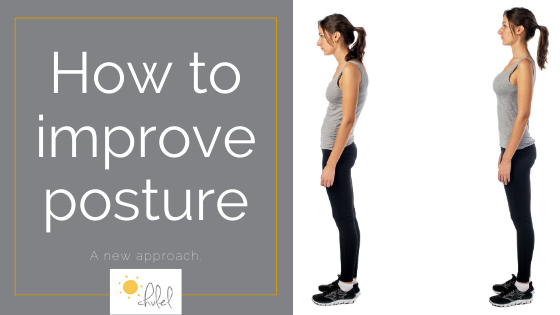
A New Way to Improve Posture
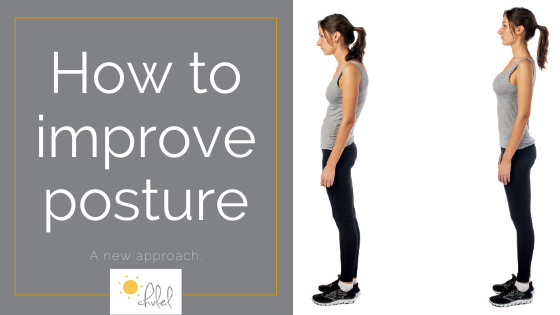
The traditional model of 'good' posture is a 2D approach (e.g. align this bone over this one) when we are 3D beings. We've all seen the poster in the doctor's office of the skeletal system, depicting a skeleton hanging by a hook. We then extrapolate this image to posture thinking we need to stack certain joints on top of one another--feet under hips, hips under ribs, ear lobe over shoulder. Thing is, we don't dangle from hooks, and while we connect to the ground, we're also constantly moving. So, we need a 21st century update to our ideas of posture, including how it connects with the breath and grounding.
How should I stand?
In the past, most of us were taught that good posture means locking our knees, straightening our back, pulling our shoulder blades together and puffing out our chest. How we were supposed to do this and breathe, I'm not sure. Moreover, this model attepts to make the spine straight when it's really shaped more like an S. Tapping into that S idea, and that our body tissues move more like a spring with each step, lends to a more organic posture with greater ease of movement.
What is good posture?
I see the body as a series of archways and that those archways, or diaphragms, act as suspension bridges and shock absorbers.

Strengthening the arch of the foot supports these archways.
- Arch of the foot.
- Arch of the pelvis at the groin.
- Arch of the breath diaphragm at the rib cage.
- Arch of the throat.
- Arch of the eyes/brain.
To me, good posture involves dynamic interaction between each of these areas. I say dynamic, because once again, we're not usually standing (or sitting) completely still. At a minimum, you're breathing, which means one of these diaphragms is always moving.
If you begin to stand and move with the visual of a bunch of suspension bridges instead of a sky hook, stacked bricks or stiff rods, your movement will be easier with alignment. You can practice this while standing and pretend like you're internally lifting your rib cage (on an inhalation) off of your pelvis--not puffing your chest out, but a 360 degree lift. You should feel your core turn on a bit and support your spine. Maintain that lift and breathe as you walk--can you feel that there's a buoyancy to your movement? That's your body moving through its diaphragms! Over time, not only will you have better posture from a state of ease rather than holding, you'll be using your core how it's supposed to be used--keeping you upright. You may even notice some new ab definition in as little as a couple of weeks.
If you didn't feel that buoyancy, you might be holding some tension at one of those diaphragms. This is where an objective pair of eyes (mine) can help you figure out where you're unconsciously holding tension, loosen things up and then you can feel more flexible and move from your core all day!
For a 3D explanation of posture (instead of just text). Here's a video for you:
Take this new feeling into your walk!
Once you feel your diaphragms, you can then tap into that buoyancy in the body as you walk. The ground becomes another 'diaphragm' and we sort of float or even gently bounce forward instead of pounding the pavement. I call it the Tigger Effect. It feels lovely! Here's an eplanation of that sensation and how to feel it when you walk. Using equipment that is spring-based, like Pilates, helps immensely to feel this and integrate it into your body. Contact me for an appointment for more personalized help on improving your posture and gait.
Latest Instagram Posts