Your Custom Text Here
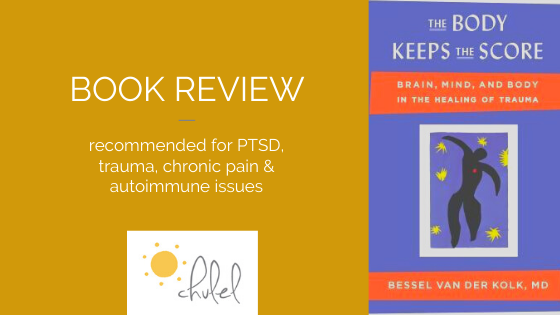
The Body Keeps Score

Did you know that if you (or someone you know) have suffered through abuse, a traumatic event or upbringing that the brain actually shifted as you (they) attempted to process the pain? This book has rocked my world the past couple of weeks in learning how amazing the body is and how healing from trauma is a layered process.
What is trauma?
In short, something that was stressful in which you felt alone. Obvious examples here include abuse, natural disaster, loss, terrorism and war. In looking at the behavioral patterns that can arise from trauma, I can't help but think most of us could cite some form of traumatic event(s)/relationship(s) in our lives.
How does the brain shift?
Trauma can actually change the brain's alert system and responding hormones in addition to leaving a mark on the brain similar to a stroke. The author, Bessel Van der Kolk, conducted a study where he showed participants images to trigger their trauma while monitoring their brain hemispheres. When participants were exposed to traumatic images, the right side of the brain that impacts how we perceive the world around us was activated, while the left, organizational side deactivated. The brain itself is in response mode to the trigger without real context of time or place. Moreover, the brain's response to trauma is pre-verbal so this explains why recounting what happened in a logical or coherent manner may be difficult or garbled.
While one may consciously choose not to respond to a trauma trigger, the body systems are still reacting, including hormones, which don't return back to normal levels after being in fight or flight or freeze mode. Because of this there is an internal disconnect so one may suffer from addiction or self-mutilation as well as illness, adrenal fatigue, fibromyalgia/chronic fatigue, poor sleep, memory issues, autoimmune disorders and irritability. (If you're super geeky about this stuff, as I am, he spends a good 10 pages going into brain chemistry specifics...but does so in a very approachable way for the brain science novice.)
What are some symptoms of trauma?
Hyper-vigilance-Because of the brain shift, one can be in a perpetual state of hyper-vigilance. This goes back to the perception lens--the brain is constantly surveying for a potential threat. This also means that one may project past traumas onto current life events.
Social isolation-Not wanting to engage with others because this could set off a trigger, so it's better to avoid interaction. On the flip side, fraternizing with those who have suffered the same trauma may feel safe (e.g. other veterans) yet this can also be limiting over time as one's identity shifts.
Loss of identity-You may more commonly know this as survivor's guilt as well as confusion if the person who abused you was supposed to be your caretaker/loved one.
Emotionally numb-A way to deal with the trauma is to disassociate from one's body and feelings, leaving one devoid of feeling.
Loss of imagination-If raised in an unsafe environment, all of the body's systems are in self-preservation (hyper-vigilance) mode so there's no room for imagination or exploration.
Risk-taking-The body releases endorphins which are like morphine, so one can become addicted to risks or even find pleasure in pain. The body seeks this out to overcome anxiety.
How does one heal?
The author suggests 3 approaches to be used in tandem as needed.
- Top down with talk therapy, specifically EMDR, Internal Family Systems and Neurofeedback. If you're in Austin, there's a great clinic that uses these approaches. Find out more about them here.
- Medications that will turn off the body's alarm systems.
- Bottom up through the physical so that the body can experience something other than helplessness and rage which gets held in the viscera (i.e. having a broken heart, stomach in knots). He suggests this in particular for those who suffer from musculo-skeletal pains that may have an emotional root. Since that is my bag and this is my blog, I'm going to spend a bit more time on this and his suggestions.
Heal trauma with mindfulness.

Ki Hara Active Stretching for mindfulness and flexibility.
The first step in releasing the past is reconnecting with and establishing ownership of the body to feel, find peace and focus so that when things trigger the past, one can maintain internal calm. When we can connect with how we feel, we can begin to change perspective. If we can't feel, we are incapable of figuring out what our body needs and how we can best take care of it. By being present in our bodies, it is safe to revisit the past without being overwhelmed by it. We can start to have words for things we may have hidden from ourselves and reintegrate the pieces of ourselves that we've lost along the way. A way of coping with trauma is disassociating from our bodies, so mindfulness and breath work reaffirm who we are as a whole being.
The author recommends yoga as an avenue to mindfully connect with the body. A former client of his specifically cited that Pilates helped her heal from a traumatic event to her pelvis. I love both of these modalities, yet I don't think I learned to be deeply connected to my own body until I encountered Ki Hara Resistance Stretching (aka yoga on steroids). It has been amazing for helping myself and my clients reconnect with areas of the body that have been forgotten and then integrating them to the whole. It's particularly effective because when I'm working with a client, it becomes a partner effort to rediscovery. In other words, it's not someone alone in their own stretching practice (though this is another component for establishing ownership of one's body). I can be an objective pair of eyes for how your body is moving when there could be a more efficient way. If you haven't connected to a part of your body in a long time, how are you even supposed to know it's there?
I found this book to be incredibly insightful both for my own understanding of some areas I need to work on and to have more compassion for others who have are trying their best to heal. If you're one who is better with video over books, here's an interview with the author with some similar themes.
What can you let go of in 2017?
As we begin another year, many of us take this time to reflect on our health. Wellness resolutions are made and often not adhered to after a few days or weeks. If we start to look at what we're ready to let go of over adding another thing to the list, those resolutions stick and we have longer-lasting health benefits.
When you start to see your physical health is also your emotional health is also your mental health, you'll have more profound results in your overall wellbeing. When life stress happens, we can mentally acknowledge what's going on, we emotionally feel a response, and the physical body goes into self-protection mode even if we don't consciously realize it. Mindfully connecting to your movement gives you greater dexterity in your physical body, while showing you which stressors and emotions you hold where so you can let that old stuff go!
I had my own journey making these mind-body connections after I had a stabbing pain in my left hip so intense (10 out of 10 pain) that it locked out my lower back. I wrote about this more here. I studied and figured out the muscular imbalances, but that didn't fully eradicate the pain. Unfortunately, it wasn't until more than a year later that I started to notice when my hip pain increased. It initially surfaced when my father unexpectedly died of a heart issue. So, anytime I felt threatened or afraid of losing someone, those muscles tensed. As I addressed this duality of emotion (fear) with my muscular imbalance, my hip got better. It has since reared its head a few other times, most abruptly and intensely when I had a miscarriage. So, same death and loss trigger.
Each time the pain has returned, it has been less instense or has not lasted as long because now I'm working through the root triggers. We often don't realize how much we're internalizing minute-to-minute until something hurts. In my case, the grief was so overwhelming I couldn't even process what I was or was not internalizing. Now when my hip starts to 'talk' to me, it's my reminder to take stock of what is going on in my life...what am I afraid of? Is there another emotion my body is responding to? Can I shift my mental perspective?
In my work with clients, we try to explore which emotions you're experiencing and holding onto in your injured and chronically stuck spots. You may not completely let go of something you're holding onto, there are layers to process, particularly for intense or tragic life experiences. At least in letting go, we allow more space for healing and more of us is freed up to be present and more authentic. We have more ability to create the life we want over physically carrying around the past.
What are you ready to let go of this year?
For the month of January, I'm offering a New Year's package for new clients. For more information, click here.
Why is my body tight?

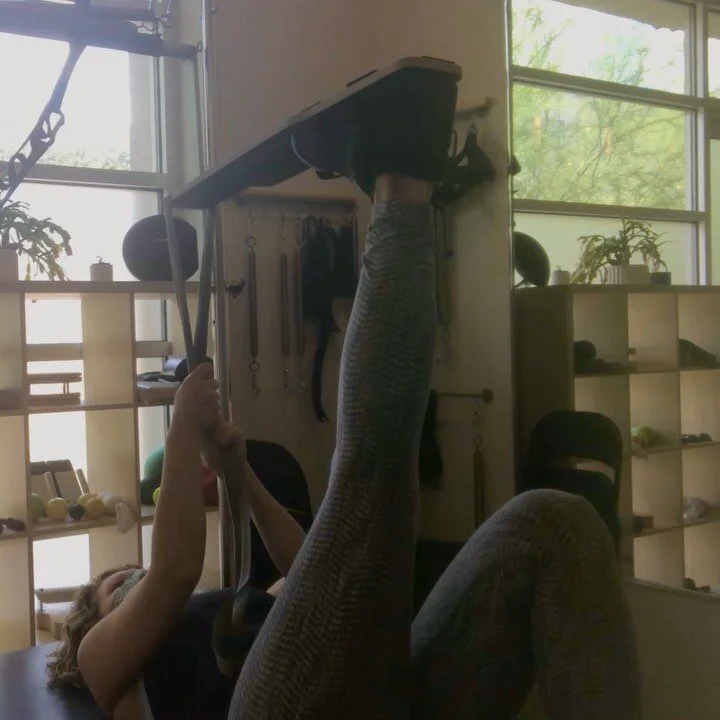
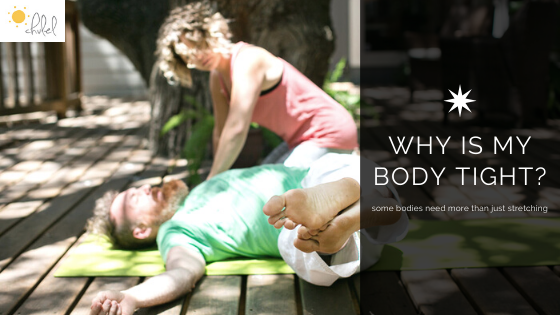
Full body, active Ki Hara stretching! Soooo yummy!
This is a question I'm often asked and believe that we have to look at more than just range-of-motion or trigger points for a good explanation. Some clients immediately tell me that their body is tight because it runs in their family, like they have an inflexiblity gene and traditional stretching just doesn't work for them. I see body tightness that runs in families as a cultural way that the family deals with stress and how we then handle stress as adults. Are things shoved under the rug or not acknowledged? Or, are things discussed and worked through together? Do you feel overwhelmed and overburdened by responsibility? Or, are you able to shift your perspective and carve out some self-care time?
The nervous system automatically charges up to help when we're stressed (sympathetic nervous system). One result when it kicks in is that the muscles tighten to prepare for action--we can see this in animals. When they perceive a threat, the breath cycle shortens, their whole body tightens and is ready to pounce. When we, as humans, hold in this way everyday, it leads to chronic body tightness and fatigue.
To offset this stress from a movement perspective, we most often think exercise. Yet, how many of us hold our breath when we try to burn off some steam? Muscles can't relax if they're being starved of oxygen. As someone who is also prone to this, I've started doing some diaphragm releases to connect with my breath before I intentionally move. This is my favorite diaphragm release to do pre-workout.
Ki Hara active stretching unwinds tension from the body, creating space for more breath. Clients always stand up at the end of a session saying they feel more alive, relaxed and have more blood flowing through their body. We target the areas you personally hold tension and dynamically release muscle tension there. Full body stretching like in the photo above, allows for the body to have a feeling of flow over bracing. To learn more, click here.
Latest Instagram Posts