Your Custom Text Here
Why is my body tight?

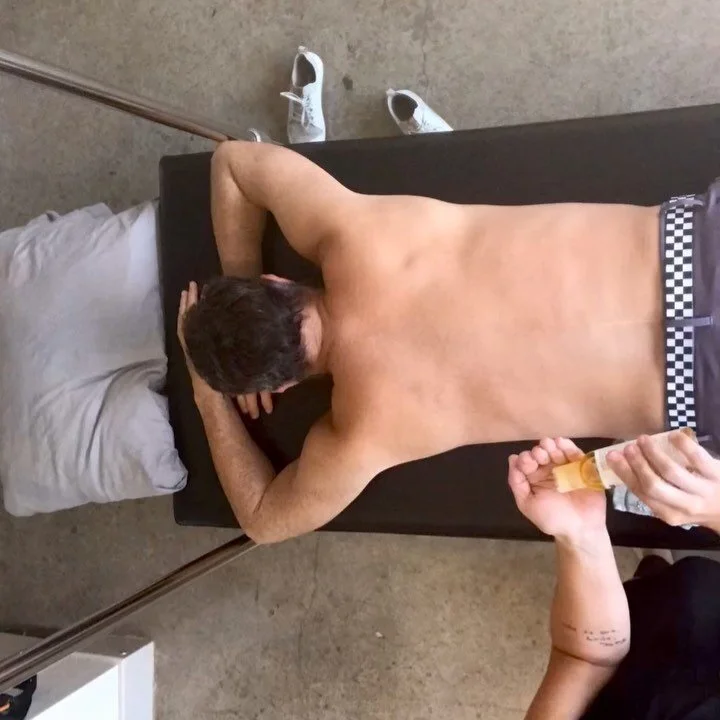
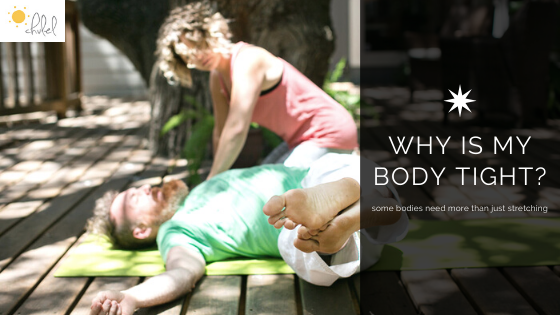
Full body, active Ki Hara stretching! Soooo yummy!
This is a question I'm often asked and believe that we have to look at more than just range-of-motion or trigger points for a good explanation. Some clients immediately tell me that their body is tight because it runs in their family, like they have an inflexiblity gene and traditional stretching just doesn't work for them. I see body tightness that runs in families as a cultural way that the family deals with stress and how we then handle stress as adults. Are things shoved under the rug or not acknowledged? Or, are things discussed and worked through together? Do you feel overwhelmed and overburdened by responsibility? Or, are you able to shift your perspective and carve out some self-care time?
The nervous system automatically charges up to help when we're stressed (sympathetic nervous system). One result when it kicks in is that the muscles tighten to prepare for action--we can see this in animals. When they perceive a threat, the breath cycle shortens, their whole body tightens and is ready to pounce. When we, as humans, hold in this way everyday, it leads to chronic body tightness and fatigue.
To offset this stress from a movement perspective, we most often think exercise. Yet, how many of us hold our breath when we try to burn off some steam? Muscles can't relax if they're being starved of oxygen. As someone who is also prone to this, I've started doing some diaphragm releases to connect with my breath before I intentionally move. This is my favorite diaphragm release to do pre-workout.
Ki Hara active stretching unwinds tension from the body, creating space for more breath. Clients always stand up at the end of a session saying they feel more alive, relaxed and have more blood flowing through their body. We target the areas you personally hold tension and dynamically release muscle tension there. Full body stretching like in the photo above, allows for the body to have a feeling of flow over bracing. To learn more, click here.
Loosen Your Pelvic Floor, Open Your Root Chakra!

When we hear "pelvic floor" it's usually with regard to women who have had children and how their pelvic floors become weak or distended. Years go by and then there's a new wave of pelvic floor awareness with prostate issues or pelvic organ prolapse. Based on my work with clients, I find tight pelvic floors to be super common due to stress and prolonged hours of sitting which contribute to lower back and hip pain/tightness.
What is the pelvic floor, exactly?
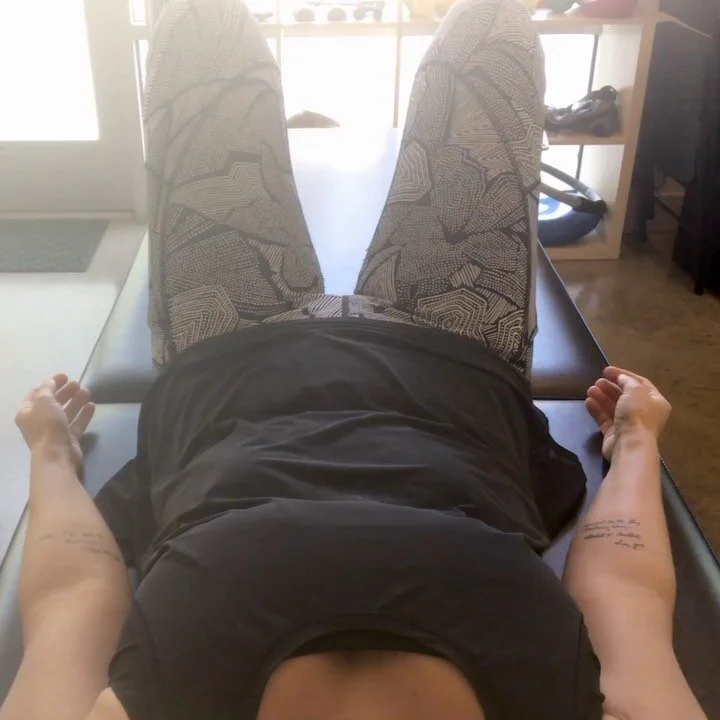
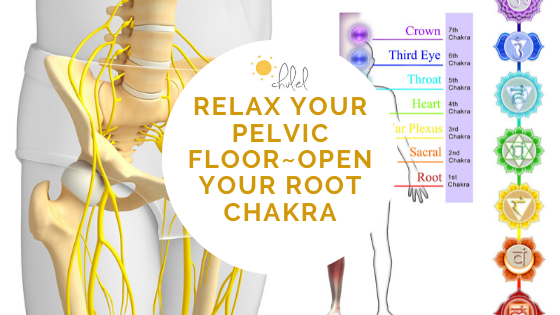
I see it as more than just our elimination muscles. If you were wearing brief underwear as in the photo, your pelvic muscles are in contact with fabric. So, there's three main sections:
- Front-lower abs, the little triangle between your hip sockets and pubic bone
- Undercarriage-elimination muscles and connective tissue
- Back-hip rotational muscles, gluteals
How does the pelvic floor tighten?
Sitting, feeling stressed and holding our breath. I wrote more about this in detail here. If you're prone to sucking in your stomach or have suffered from digestive issues, these muscles would also become chronically tense.
In addition to stress-holding, we can also have some unresolved emotional issues that can cause these muscles to restrict and hold.
What the heck is a 'root chakra'?

You can look at chakras as being areas of the body that emotionally (energetically) represent certain things we all face in life. In the case of the root chakra, it correlates to things that are foundational to our being--safety, security (including financial), family/clan identity and physical health. Issues here can come from not just our personal experience, but from the experiences of our family members. SO, pretty much everyone has crap to work through in this chakra.
Fear is a big factor in holding patterns here including, pelvic floor tightness. If we're constantly bracing for something to happen or afraid that there won't be enough, the muscles of the pelvis respond to that emotional outlook. Origins of that fear can include:
- Abuse, including abandonment or neglect
- Poverty, war
- Major personal illness or in your family
- Not having good personal boundaries so we're constantly at the whim of others' actions
- Inherited trauama and issues from our families
How can you shift these patterns?
Physically, you can practice relaxing these muscles.
In my one-on-one sessions with clients we discover where you're holding physically and emotionally and then intentionally create space there. I construct a series of exercise sequences to reinforce a new pattern in your body that doesn't involve bracing or restriction. With repetition, your body generates a new neurological pattern via flow instead of holding. To reconnect with your root chakra and maintain a relaxed pelvic floor day-to-day, try these tips.
- Breathe and feel the breath connect down to your pelvic floor. I wrote more about that here.
- Do things that honor your body and its health.
- Celebrate what you already have in your life--these things may not be material or tangible.
- Find and connect with a community to feel a sense of belonging.
- Go outside and put your bare feet in the ground. Feel how you are a living being!
A New Way to Improve Posture
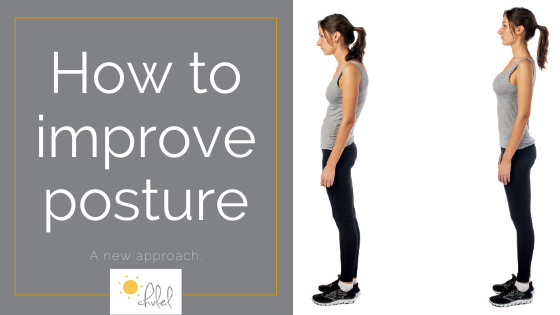
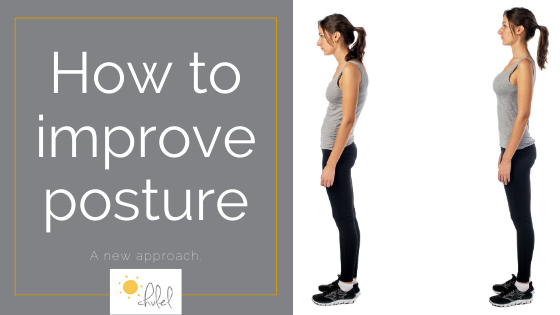
The traditional model of 'good' posture is a 2D approach (e.g. align this bone over this one) when we are 3D beings. We've all seen the poster in the doctor's office of the skeletal system, depicting a skeleton hanging by a hook. We then extrapolate this image to posture thinking we need to stack certain joints on top of one another--feet under hips, hips under ribs, ear lobe over shoulder. Thing is, we don't dangle from hooks, and while we connect to the ground, we're also constantly moving. So, we need a 21st century update to our ideas of posture, including how it connects with the breath and grounding.
How should I stand?
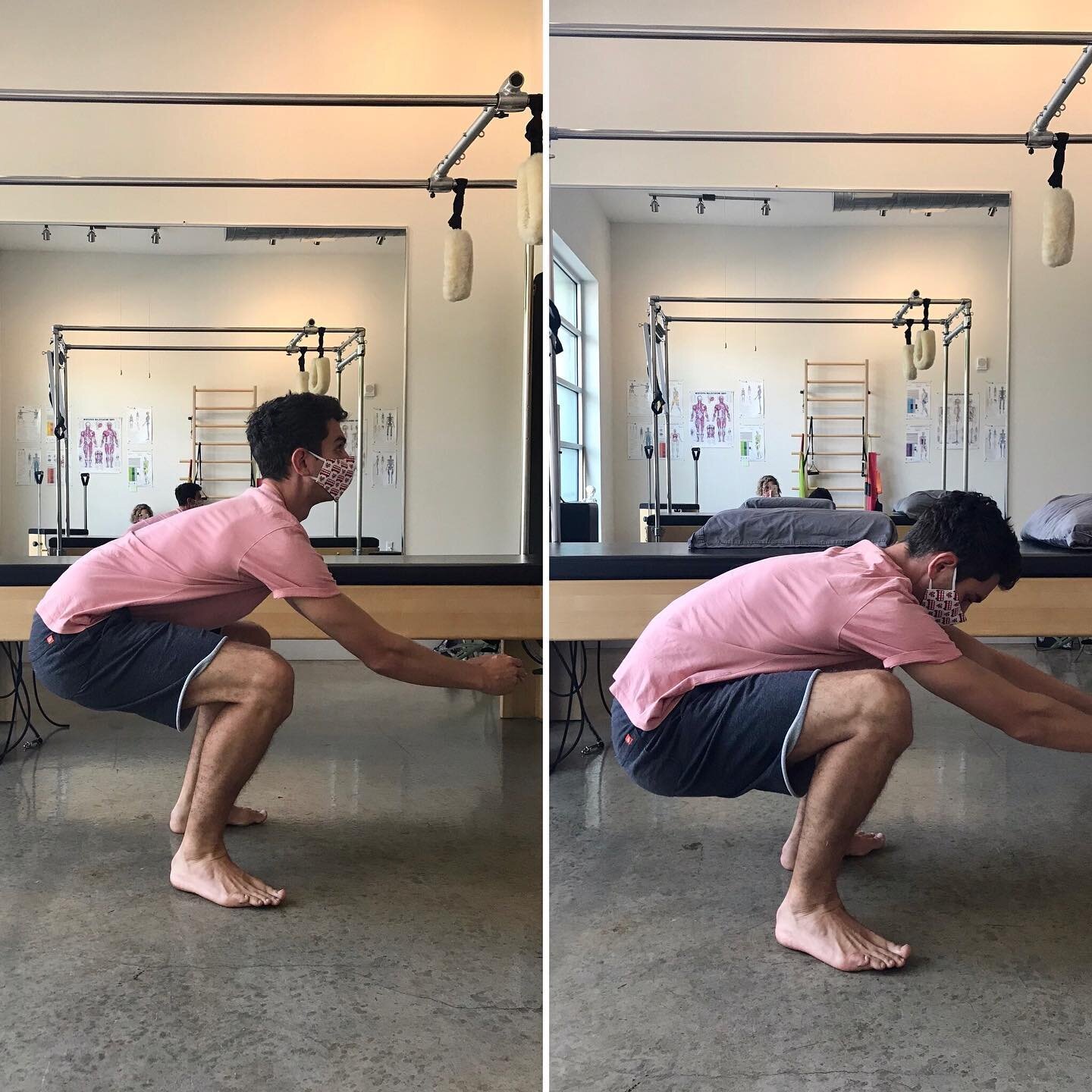
In the past, most of us were taught that good posture means locking our knees, straightening our back, pulling our shoulder blades together and puffing out our chest. How we were supposed to do this and breathe, I'm not sure. Moreover, this model attepts to make the spine straight when it's really shaped more like an S. Tapping into that S idea, and that our body tissues move more like a spring with each step, lends to a more organic posture with greater ease of movement.
What is good posture?
I see the body as a series of archways and that those archways, or diaphragms, act as suspension bridges and shock absorbers.

Strengthening the arch of the foot supports these archways.
- Arch of the foot.
- Arch of the pelvis at the groin.
- Arch of the breath diaphragm at the rib cage.
- Arch of the throat.
- Arch of the eyes/brain.
To me, good posture involves dynamic interaction between each of these areas. I say dynamic, because once again, we're not usually standing (or sitting) completely still. At a minimum, you're breathing, which means one of these diaphragms is always moving.
If you begin to stand and move with the visual of a bunch of suspension bridges instead of a sky hook, stacked bricks or stiff rods, your movement will be easier with alignment. You can practice this while standing and pretend like you're internally lifting your rib cage (on an inhalation) off of your pelvis--not puffing your chest out, but a 360 degree lift. You should feel your core turn on a bit and support your spine. Maintain that lift and breathe as you walk--can you feel that there's a buoyancy to your movement? That's your body moving through its diaphragms! Over time, not only will you have better posture from a state of ease rather than holding, you'll be using your core how it's supposed to be used--keeping you upright. You may even notice some new ab definition in as little as a couple of weeks.
If you didn't feel that buoyancy, you might be holding some tension at one of those diaphragms. This is where an objective pair of eyes (mine) can help you figure out where you're unconsciously holding tension, loosen things up and then you can feel more flexible and move from your core all day!
For a 3D explanation of posture (instead of just text). Here's a video for you:
Take this new feeling into your walk!
Once you feel your diaphragms, you can then tap into that buoyancy in the body as you walk. The ground becomes another 'diaphragm' and we sort of float or even gently bounce forward instead of pounding the pavement. I call it the Tigger Effect. It feels lovely! Here's an eplanation of that sensation and how to feel it when you walk. Using equipment that is spring-based, like Pilates, helps immensely to feel this and integrate it into your body. Contact me for an appointment for more personalized help on improving your posture and gait.
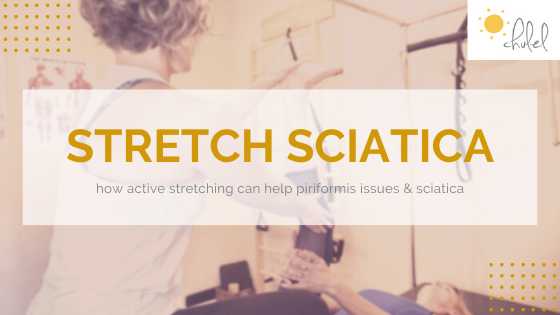
Stretch Out Your Sciatica!

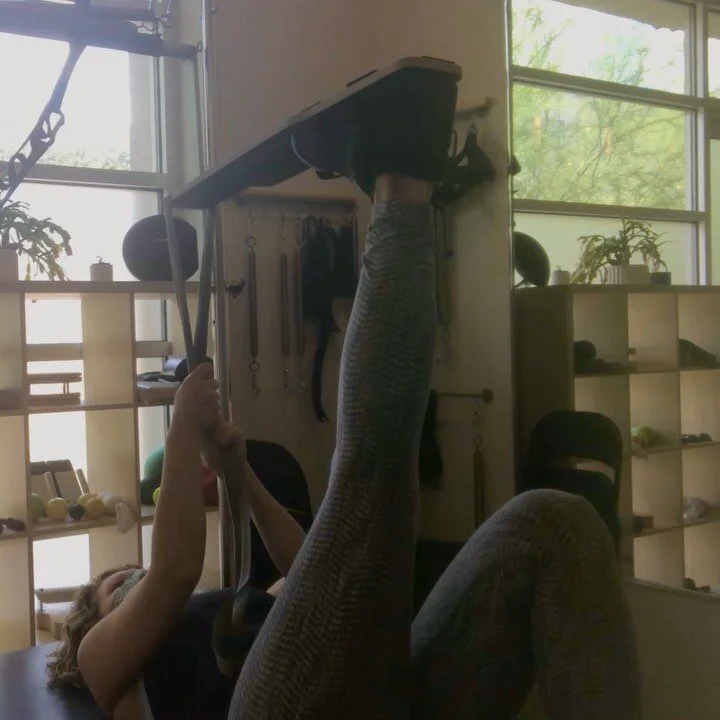
Active (Ki Hara) hamstring stretching.
For non-severe cases of sciatica (i.e. not having foot drop or incontinence) a holistic approach of regular stretching and shifting your body's biomechanics can not only lessen your pain levels, but help it from coming back. The sciatic nerve runs from the lower back all the way down to the foot on either side of the body. Sciatica can be a result of several spinal issues, so it is important to consult with your doctor to ensure that this is not the underlying cause of your lower back pain. Deep stretching of the back and hips with follow up care to strengthen the pelvic floor and shift your gait (walking) can all help your sciatica no matter if you choose a doctor-recommended approach such as a cortizone shot/epidural or a holistic approach of chiropractic/acupuncture.
Deep stretching of the hips can take pressure off of the sciatic nerve, particularly by stretching the piriformis muscle. The piriformis connects the lower back to the hip and acts as a rotational muscle for the thigh. The sciatic nerve passes through this muscle for some of us, so when the muscle gets tight, it cuts off the nerve. Ki Hara active stretching is particularly effective for loosening these muscles, because we take the muscle from its shortened length and then actively pull it long. This means that flexbility isn't coming from a ligament or the joint, we're actually creating longer muscles--kind of like stretching taffy. You can see an example of this and its effectiveness here:
I find that another contributor in back pain is that we hold our breath from stress and become 'tightasses'. Read more about this here.
After getting more space in the pelvis, we can reengage the pelvic floor muscles and strengthen the glutes that should have been doing more work before sciatica came along. After sitting for so many years--even think back to being in school, the chair ends up supporting our weight most of the day instead of our pelvic musculature, including our bums. We end up with flat behinds while the muscles in the pelvis tighten and weaken. They then tug on the sacrum or lower back, forcing it to move in ways that it shouldn't, so it rightfully gets angry. By consciously reconnecting with the pelvic floor, which is the base of our core, and pumping the butt back up, we reactivate the parts of our body that should be holding our torso upright instead of a piece of furniture.
When working with sciatica and lower back pain clients, we not only stretch and strenghten, we also shift how you walk. If you've had that seizing pain or constant aching for a while, I guarantee you've walked weird to protect yourself from feeling it. So, another way to prevent you from having a future episide is to make sure you don't keep walking in a way that supports your body's holding of that pain. Addressing sciatica, and back pain in general, from this progressive approach helps my clients' back pain improve, it also lessens the severity/duration of future episodes In many cases, it helps keep the pain from coming back all together.
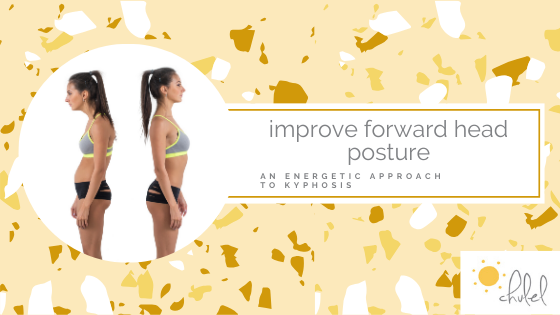
Tips to Improve Forward Head Posture
Forward head posture is pretty ubiquitous in the 21st century. There's plenty of resources online about how to fix it from a purely physical approach, but I think the long-term solution is much more of a personal one.
Some common suggestions for correcting forward head posture include simply moving the head backward, which I feel does more immediate harm than good. If the head is forward, the shoulders are usually rounded as well (aka kyphosis). So, shifting the head back with this type of body shape collapses the breath by cutting off air flow through the throat. Another 'fix' is bringing the shoulder blades together, which most people find by arching their mid back in a way that the spine is not shaped, generating a lot of unnecessary tension and/or pain in their back and neck. I find that apporaching alignment from an energetic perspective brings faster change without ticking off another part of the body.
How does forward head posture have an energetic connection?
As the head drops forward, there's also a fold at the diaphragm or solar plexus (where the rib cage splits). From an Eastern perspective, this is where the third chakra is located. This area represents our personal power and autonomy, our sense that we have volition and agency in our life.
What causes restriction at the third chakra?

Pretty much anything that compromises our ability to truly be ourselves and love ourselves. This can be events in our past and it can also be aspects of our present life. You may have not have grown up in a family culture of complete love and acceptance for your true self. Maybe you now feel burdened by responsibility and you're unhappy in your job/relationship/life. If this rings true, you may not feel like you have personal power or ability to change the parts of your life you're dissastisfied with.
Shame shuts off flow through the third chakra and limits our ability to fully embody our power. It wasn't until coming across Brene Brown's work several years ago that I realized how much shame I've held onto--I don't think I fully understood what that word meant before reading her book. Shame=all of the ways you don't feel like you're enough. For me this came in sneaky ways....maybe I didn't say 'I'm not attractive,' when looking in the mirror, but I did hold myself to a super high standard and compared myself to my percpetion of others. Shame lies on the other side of all of that because I could never be or do enough. Finding self-love has been a beautiful thing!
Some of us self-sabotage as a part of being constricted in this area. Maybe we put too many things on our plate and have a tough time saying 'no' to commitments. Others procrastinate and feel shame for doing so. Regardless of our personal habits, we can find ourselves in the midst of a big ol' shame snowball.
So how does all this connect to posture again?
Basically, forward head posture, just like everything else in the body, is more than just you looking at your phone too much. It's also a relfection of feeling burdened and not enough.
What helps?
The third chakra is located at the diaphragm, so doing more things to connect with your breath and lift through that space will help. Here's a video to help explain that in a seated position.
In addition to connecting with your breath, start noticing how you treat yourself. Do you belittle yourself or have a harsh inner critic? Do you take on more than you can reasonably accomplish without feeling stressed? How do you approach your responsibilities? Is there a way to visualize the best possible outcome over feeling overwhelmed?
Allow yourself to feel more over thinking. We value thought over feeling as a culture and that contributes to the head falling forward--we decapitate ourselves from the rest of the body. Taking a moment to feel and appreciate something in your day can show you how much power you already have.
And that's always a good place to start. :)
Latest Instagram Posts