Your Custom Text Here
Fix Your Frozen Shoulder 4-The Stress Connection
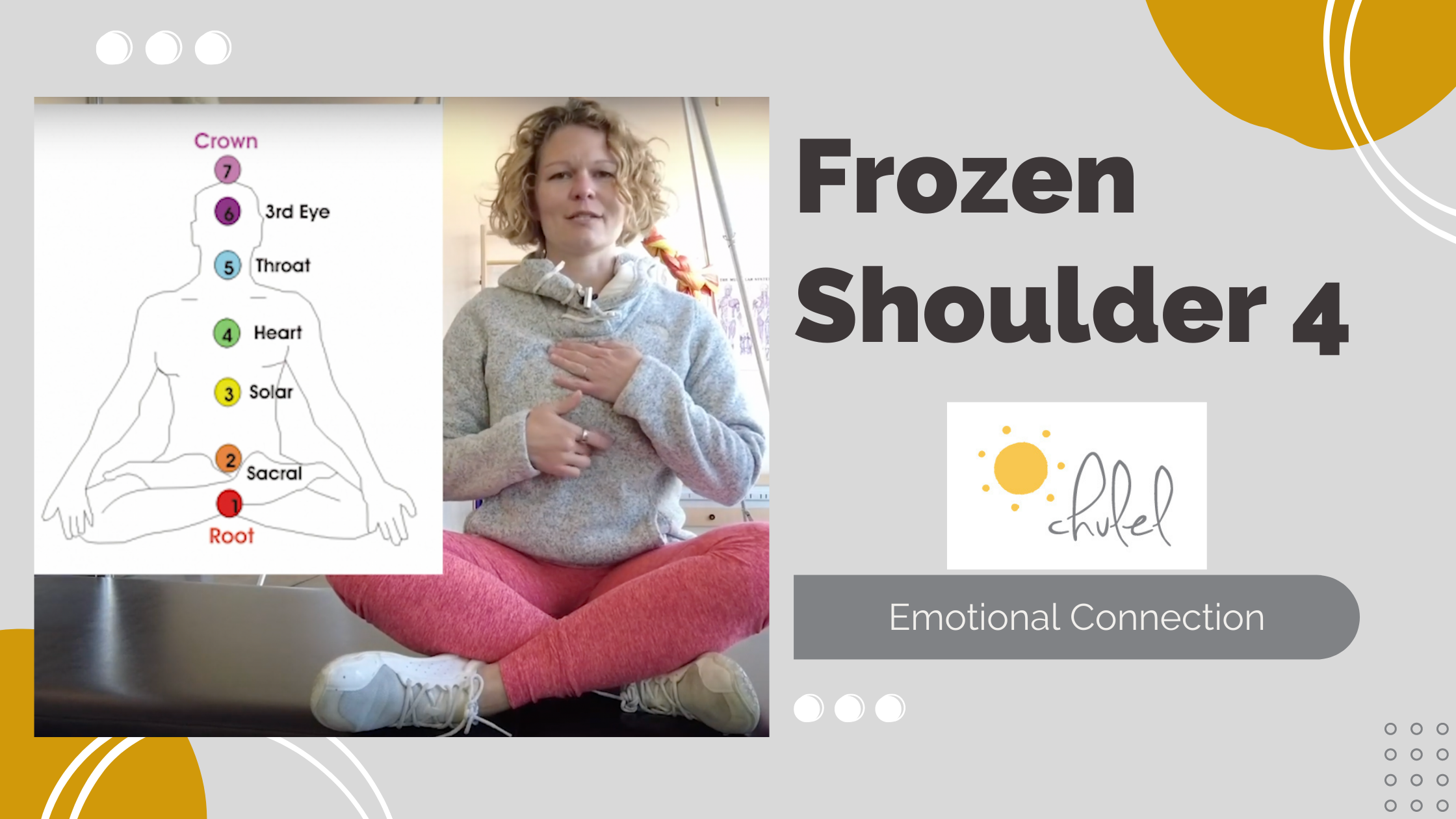
Of all of the common musculoskeletal conditions I’ve worked with, frozen shoulder seems to be the most stress-related one. I say this because as soon as it gets fixed on one side, it almost always moves to the other shoulder. So, to make sure we’re looking at all aspects of how a shoulder impingement happens, we also need to consider the emotional aspect.
I’m not inherently a woo person, but the chakra system has had some interesting overlap with common themes I’ve seen with frozen shoulder over the last decade+. Nearly everyone I’ve worked with who has frozen shoulder, has a lot of tension at the throat and jaw—like they’ve spent time experiencing a situation where they felt stifled from expressing their voice. This could be growing up, a relationship or a work environment. Moving down the chakra system, I see the arms as an extension of the heart with little energy centers in the hands. You may feel this as you hug someone or even pet an animal or touch something soft. And then we have the yellow portion, the solar plexus, which is represented as the career center and center of power/agency/volition. The way I’ve seen this all interplay in frozen shoulder is that there’s an incongruency between what someone feels like they should be doing with their life, their power being taken away, and what their heart knows it wants. The throat area then locks down in a must-do fashion and erego we have a arm/shoulder girdle that gets frozen as stuck as the person feels trapped.
Frozen shoulder is a breath issue. The third chakra area is the diaphragm. The heart and the throat are bisected by the collar bone, which is how the shoulders attach to the body—crazy, right? The shoulders on your back literally float on the back of your ribs (or, they’re supposed to) and the only place they attach in a fixed way to the rest of the skeleton is at the sternum, or heart area. When you breathe, muscles should be lowering and lifting your collar bone to make room so that your rib cage and expand all around, kind of like the opposite of pushing an umbrella open. As this happens, your shoulders should gently move up and to the sides of your back and then settle back down. When this can’t happen, the shoulder girdle gets stuck, and then we have frozen shoulder. So, to help unfreeze the shoulders, we have to open up the breathing muscles.
This video contains 3 opportunities for opening the breath and diaphgram. I offer several variations depending on how much pain you have in shoulder shoulders. Since I love that cupping set, another option you have is cupping along the ribs, stomach and sternum to help open the breath in a way that should be frozen shoulder-friendly.
As you do these exercises, see if any feelings, thoughts or memories come to mind. They may offer an entryway to seeing what you’re holding in this area or things in your life that need to change to make the pain move its way out of you. Don’t forget to breathe. ;)
Why People Don't Heal And How They Can

I first came across Carolyn Myss, the author of this book, about 8 years ago. Since then, I've started this book 3 times and stopped because I saw different aspects of myself in the pages I wasn't yet ready to confront. If you were to put one self-improvement book on your summer reading list, I'd highly suggest this one.
Many of my clients initially come to me because they suffer from chronic pain and chronic fatigue. Naturally, they feel angry at their body and that they can't live their lives to the extent that they would like. Feeling stuck and depressed is an understandable companion to this anger. That said, the more anger we project back onto our bodies, the longer and more fraught the healing process is. A more effective path to healing is seeing the pain as a point of entry to explore deep within ourselves. In Why People Don't Heal and How They Can, Myss offers some ways to identify if we're suffering from what she calls Woundology and belief systems that could stifle our healing process.
These are the author's top 5 belief systems that most people get caught in when they're in pain or are ill. To move forward, we have to detach from the belief.
5 Myths of Healing
1. My life is defined by my wound (Woundology).
Seeing life through the lens of a traumatic experience means projecting that onto every future relationship and experience (though a book I wrote about last year here says the brain naturally will do this after trauma). Those stuck in this pattern will seek out a social support network that will be sympathetic to their experience and then they never have to move past it. Moreover, they connect with others by comparing wounds and feel empowered if they are more wounded than someone else. She specifically mentions survivor and addiction groups and that they are helpful at certain stages. To continue healing, however, one has to move past that identity of survivor or addict.
In short, we can get stuck in the healing process if we define our identity and live our lives through our wounds rather than evolving past them. It can be a tricky process because someone may think they're addressing their wounds, but what they're really doing is carrying them around like a badge of honor. Over time, our wounds accumulate and gradually suck our energy, leaving us prone to depression, pain and illness. To move past your wounds, focus efforts on things that feed you rather than deplete you. If a current event triggers you to recall all the other times this has happened to you, rather than listing the wounds, look at what you're doing in your life that is creating part of that pattern.
2. Being healthy means being alone.
This is a system that I've personally been guilty of over the last couple of years until I acknowledged that by engaging with others means I have to grow through the things that trigger me. When I envisioned myself as healthy, I was the only one in the room rather than being surrounded by those who I know love and support me. Myss contends healing is an ongoing process that is best done in a community that can help support our changes; "Healing does not represent the closure of the needs of the heart; rather, it is a doorway toward opening your heart." She cites American individualism as a culture block to realizing this yet also acknowledges that sometimes we do need to separate from someone or a community to grow.
3. Feeling pain means being destroyed by pain.
It's normal to believe that pain or illness is negative, yet these feelings can also push us to explore within ourselves and move away from destructive habits and behavioral patterns. She cautions against relying too much on prescription drugs or painkillers in general because they can mask the symptoms of what our body is asking us to heal. She suggests using a mindfulness practice like yoga or meditation to help with healing consciously.
4. All illness is a result of negativity and we are damaged at our core.
Myss encourages readers to not immediately blame a failure to heal on a past experience or negative belief. Illness is complex and there's plenty of toxins in our environment and genes that can be an aspect of illness. Our focus should instead be on our ability to create change over controlling our thoughts. Sometimes it's better to just let go of the negative thoughts or past experiences over trying to dive into them and understand them....that can do more harm than good.
5. True change is impossible.
Most of us don't really like change and to change but healing and change are the same thing. We associate illness with fear and negativity so it can be intimidating to confront the illness and look at how much we really take care of ourselves versus the needs of others. Try shifting the belief that healing will be hard or depressing to relieving and exciting.
This is one of the few books on healing that I've read that actually provides a structure for analyzing one's beliefs and how to better understand and forgive--she actually encourages making a chart/spreadsheet and guides readers on specificially how to structure it. That said, it's a very East meets West, spiritually-minded approach, so if that's not your bag, this may not be for you. If it is, Myss has a unique perspective on understanding how American culture looks at pain and illness that I found to be eye-opening in forgiving myself and others because we're all stuck in some collective, old mindsets that we can let go of reacting to individually.
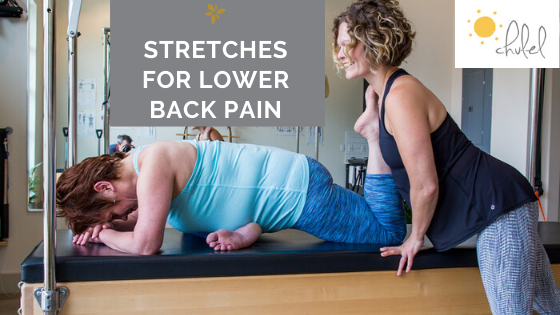
Stretches to Relieve Lower Back Pain
Lower back pain can have many different causes. Muscle weakness, poor posture, disc/spinal issues, leg length differential or an old injury can all factor into back pain. That said, this chronic pain can be helped by stretching certain areas and building hip strength.

From a fascial (connective tissue) line perspective, the tension you feel in the lower back could be coming from anywhere along that posterior side of your body. So a tight foot or calf on that side could also be a tight sacrum. Below is a simple foot fascia stretch you could do while watching tv or before a walk/run. If you know you have tight calves, this is my favorite stretch to release the muscles as well as the fascial line.
For a more active approach, anyone with a tight lower back has tight quad muscles (front of thighs). This version integrates a yoga pose with some turbo options for stretching. Your front leg doesn't need to be crossed in front of the opposite thigh, you can just tuck that knee underneath you. You can also place a pillow underneath the glute that is stretching. Just being here may be intense enough. If so, breathe and visualize new space in your hips. You may also feel this more in your butt than in your quad. Try to bend the elongated leg for the thigh stretch. If your hamstring cramps, scroll up and do the calf stretch first. If you can bend the knee, this stretch is a great twofer for the thigh and rear.
Another area that can pull on the lower back is the groin. Most of us never think to stretch here yet it can really compound tension in the lumbar spine. This is a pretty intense stretch, so here is a more gentle stretch.
When you're out of the pain or as a preventative measure, you want to build hip strength. If you've recently had pain, doing this may not feel good, so listen to your body. If you feel a sharp pain, this is not for you right now. You may need more individualized help, so gimme a call! Or, reach out to your trusted chiropractor, massage therapist or physical therapist.
I find that lower back pain perhaps more than any other chronic pain area always has an emotional or stress-holding connection. I already wrote about how lower back pain connects with breath holding here. Some things to explore for the emotional connection would be: When did this pain start? What else was going on in your life around that time? Does the pain tend to get worse during certain times of the day? If it's in the morning, are you happy in your work/relationship? In the evening, are you feeling burdened by your responsibilities? Does it hurt more when you speak to a certain person? Are you holding or internalizing anger, frustration or another emotion with regard to that person?
Noticing your personal patterns can help you start to process some of these underlying aspects that are keeping this pain chronic. I believe this is a big reason why a massage or even a stretching routine doesn't keep the pain from coming back. If some of this resonates for you, visualize these emotions/memories leaving your body via your breath. Let it go!
The Body Keeps Score

Did you know that if you (or someone you know) have suffered through abuse, a traumatic event or upbringing that the brain actually shifted as you (they) attempted to process the pain? This book has rocked my world the past couple of weeks in learning how amazing the body is and how healing from trauma is a layered process.
What is trauma?
In short, something that was stressful in which you felt alone. Obvious examples here include abuse, natural disaster, loss, terrorism and war. In looking at the behavioral patterns that can arise from trauma, I can't help but think most of us could cite some form of traumatic event(s)/relationship(s) in our lives.
How does the brain shift?
Trauma can actually change the brain's alert system and responding hormones in addition to leaving a mark on the brain similar to a stroke. The author, Bessel Van der Kolk, conducted a study where he showed participants images to trigger their trauma while monitoring their brain hemispheres. When participants were exposed to traumatic images, the right side of the brain that impacts how we perceive the world around us was activated, while the left, organizational side deactivated. The brain itself is in response mode to the trigger without real context of time or place. Moreover, the brain's response to trauma is pre-verbal so this explains why recounting what happened in a logical or coherent manner may be difficult or garbled.
While one may consciously choose not to respond to a trauma trigger, the body systems are still reacting, including hormones, which don't return back to normal levels after being in fight or flight or freeze mode. Because of this there is an internal disconnect so one may suffer from addiction or self-mutilation as well as illness, adrenal fatigue, fibromyalgia/chronic fatigue, poor sleep, memory issues, autoimmune disorders and irritability. (If you're super geeky about this stuff, as I am, he spends a good 10 pages going into brain chemistry specifics...but does so in a very approachable way for the brain science novice.)
What are some symptoms of trauma?
Hyper-vigilance-Because of the brain shift, one can be in a perpetual state of hyper-vigilance. This goes back to the perception lens--the brain is constantly surveying for a potential threat. This also means that one may project past traumas onto current life events.
Social isolation-Not wanting to engage with others because this could set off a trigger, so it's better to avoid interaction. On the flip side, fraternizing with those who have suffered the same trauma may feel safe (e.g. other veterans) yet this can also be limiting over time as one's identity shifts.
Loss of identity-You may more commonly know this as survivor's guilt as well as confusion if the person who abused you was supposed to be your caretaker/loved one.
Emotionally numb-A way to deal with the trauma is to disassociate from one's body and feelings, leaving one devoid of feeling.
Loss of imagination-If raised in an unsafe environment, all of the body's systems are in self-preservation (hyper-vigilance) mode so there's no room for imagination or exploration.
Risk-taking-The body releases endorphins which are like morphine, so one can become addicted to risks or even find pleasure in pain. The body seeks this out to overcome anxiety.
How does one heal?
The author suggests 3 approaches to be used in tandem as needed.
- Top down with talk therapy, specifically EMDR, Internal Family Systems and Neurofeedback. If you're in Austin, there's a great clinic that uses these approaches. Find out more about them here.
- Medications that will turn off the body's alarm systems.
- Bottom up through the physical so that the body can experience something other than helplessness and rage which gets held in the viscera (i.e. having a broken heart, stomach in knots). He suggests this in particular for those who suffer from musculo-skeletal pains that may have an emotional root. Since that is my bag and this is my blog, I'm going to spend a bit more time on this and his suggestions.
Heal trauma with mindfulness.

Ki Hara Active Stretching for mindfulness and flexibility.
The first step in releasing the past is reconnecting with and establishing ownership of the body to feel, find peace and focus so that when things trigger the past, one can maintain internal calm. When we can connect with how we feel, we can begin to change perspective. If we can't feel, we are incapable of figuring out what our body needs and how we can best take care of it. By being present in our bodies, it is safe to revisit the past without being overwhelmed by it. We can start to have words for things we may have hidden from ourselves and reintegrate the pieces of ourselves that we've lost along the way. A way of coping with trauma is disassociating from our bodies, so mindfulness and breath work reaffirm who we are as a whole being.
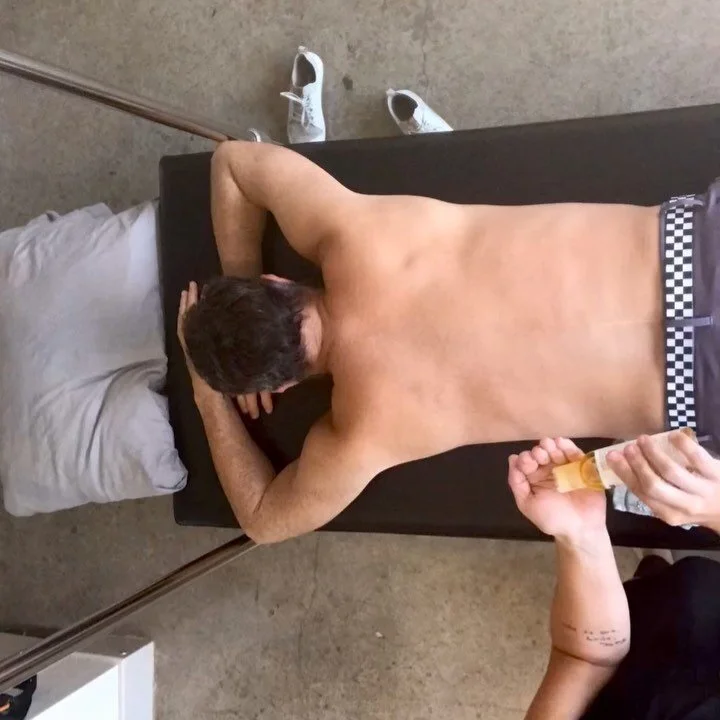
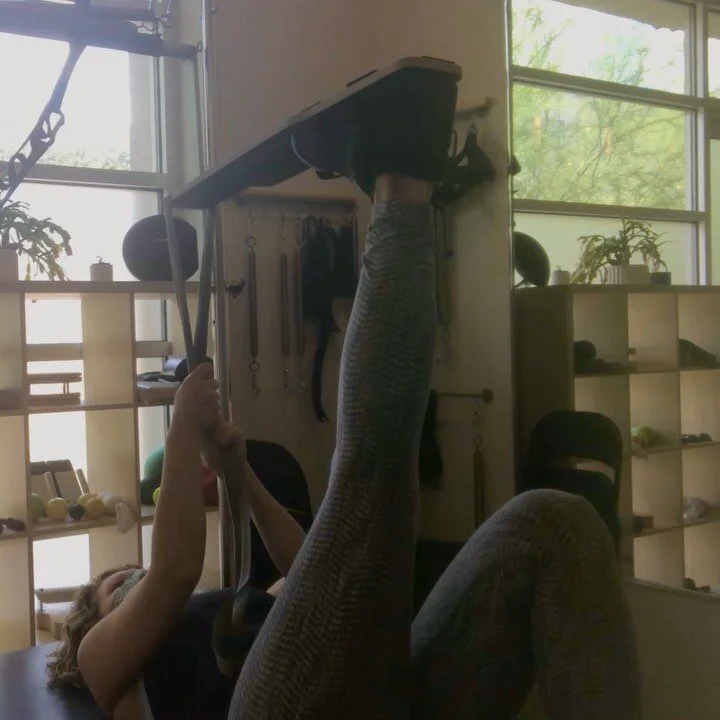
The author recommends yoga as an avenue to mindfully connect with the body. A former client of his specifically cited that Pilates helped her heal from a traumatic event to her pelvis. I love both of these modalities, yet I don't think I learned to be deeply connected to my own body until I encountered Ki Hara Resistance Stretching (aka yoga on steroids). It has been amazing for helping myself and my clients reconnect with areas of the body that have been forgotten and then integrating them to the whole. It's particularly effective because when I'm working with a client, it becomes a partner effort to rediscovery. In other words, it's not someone alone in their own stretching practice (though this is another component for establishing ownership of one's body). I can be an objective pair of eyes for how your body is moving when there could be a more efficient way. If you haven't connected to a part of your body in a long time, how are you even supposed to know it's there?
I found this book to be incredibly insightful both for my own understanding of some areas I need to work on and to have more compassion for others who have are trying their best to heal. If you're one who is better with video over books, here's an interview with the author with some similar themes.
An Energetic Approach to Movement

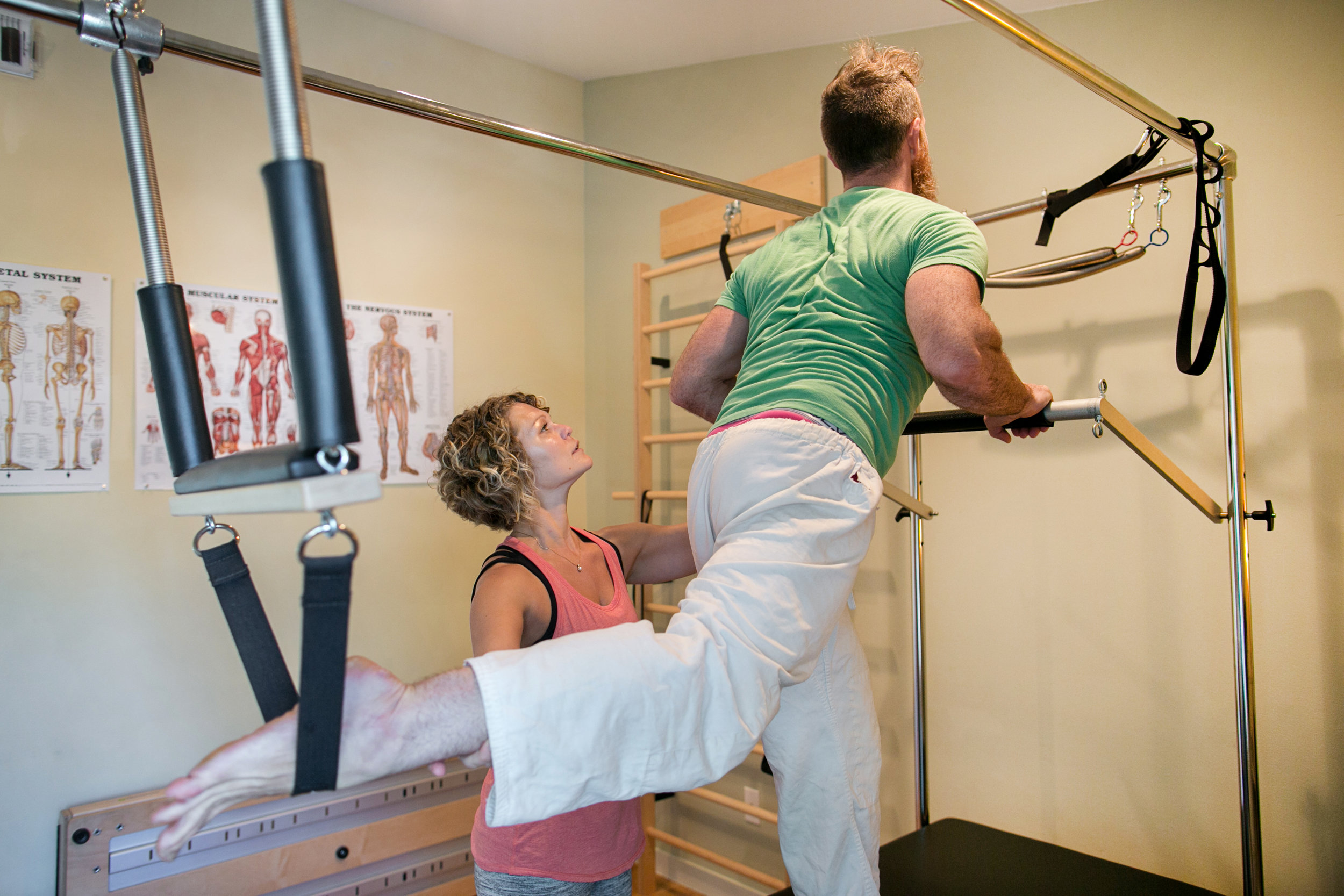
Movement is more than just muscles contracting to make bones move like we see in the gym machine pictures. Our body is a whole unit in which everything participates to create movement. For this reason, I approach the body from a fascial or connective tissue perspective which informs how various parts of the body work in conjunction to make the body shift and move. As I studied the human body, I observed subtle patterns of how things worked together and I could feel someone's jaw release as I stretched their quads (front thigh muscles). Imagine my excitement when I read Anatomy Trains in which Thomas Myers details all of these connections I was feeling. Even more neat is how these fascial lines also mirror Traditional Chinese Medicine/Acupuncture meridians or energetic pathways.

When someone steps into my studio, I immediately begin observing how these fascial lines may be locked too tight or too loose and how that is impacting their movement as well as contributing to pain they could be having. This means that your neck tension, for example, could be coming from a tight IT band. We then stretch and strenghten these other pulleys that could be pulling on a spot where the pain is felt.
This leads to more than just a muscular contraction approach to what is going on in the body both in terms of pain and improving athletic performance. Yoga and martial arts have understood this fluidity in movement approach for centuries. The cool part is you can actually become so connected to your body that you'll be able to feel how your foot tightening on one side is causing your shoulder blade to brace which may be impacting your tennis swing.
Employing the insight of fascial lines/acupuncture meridians and consciously moving through them helps to shift and move energy though the body. For some this may just feel like a muscular release or even a greater mindy body connection. This can also mean that you feel lighter on your feet as you walk and run, or maybe more relaxed and supported by the earth. You may find breathing easier or that you have more power. Some days this means that you can have an emotional release or even feel euphoria as you 'exercise'.
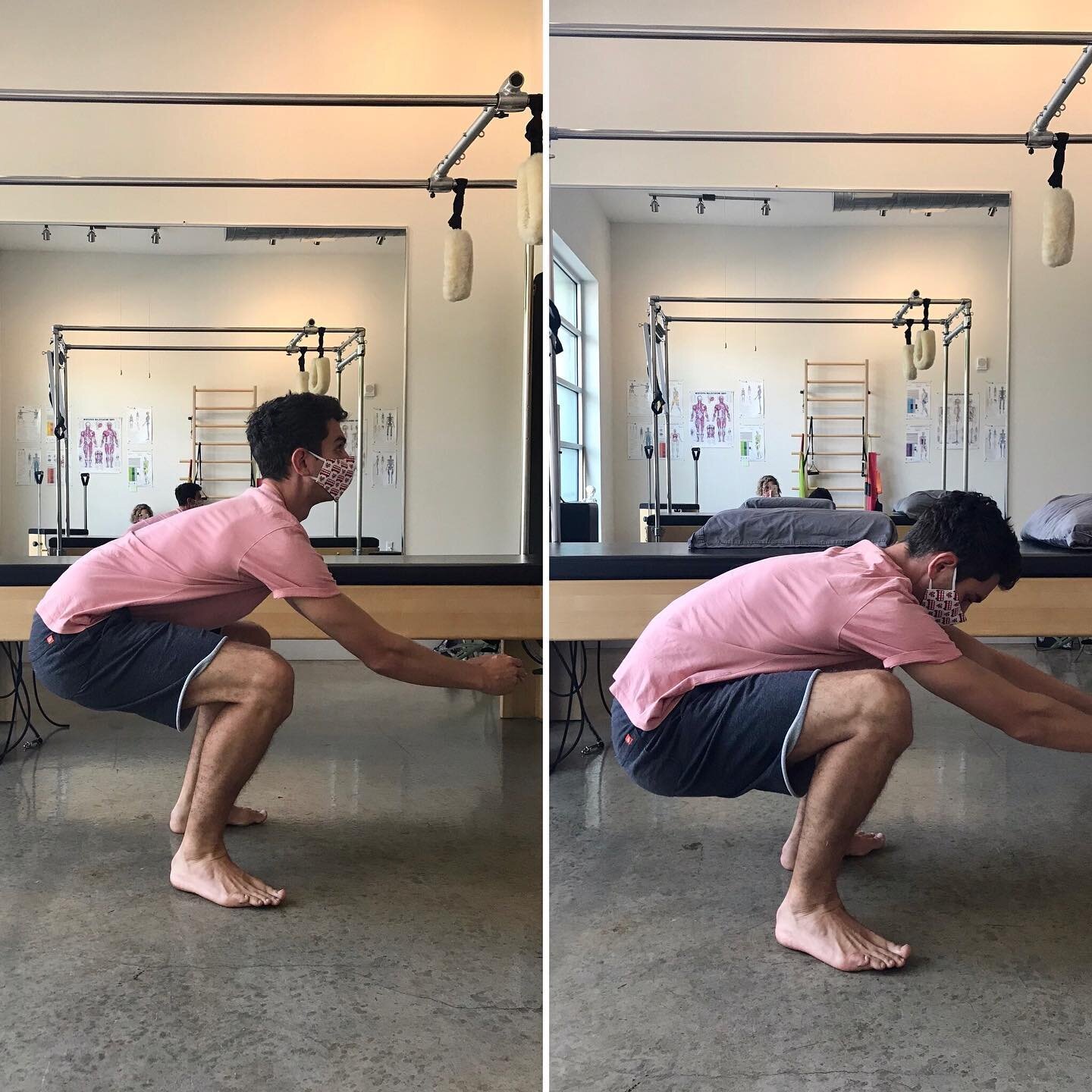
One of the beginnning concepts I teach is that we walk from the front of our low abs/pelvic muscles and that our shoulders balance into our solar plexus. So, it's kind of like we have a triangle from the pelvis to our legs and then if you flip that triangle up-side-down, your shoulders drop into your diaphragm. From an eastern perspective, we're walking from the 2nd chakra or lower dantian which also happens to be our pelvic muscles, the base of our core. Our shoulders nestle onto the shelf of our 3rd chakra or our middle dantian which is also our diaphragm, or the top of our core. Feeling these connections automatically means you're using your core in a fluid sense, instead of overly contracting these muscles, restricting the breath and tightening the hips. Connecting to the core in this way also helps to open these lower energy centers where many of us hold our emotional wounds.
An energetic approach to movement will leave you feeling more relaxed, open and supported which means more energy and less fatigue at the end of the day. Tapping into these connections always takes sports performance to a whole new level--you'll feel lighter as well as more agile. Schedule an appointment to learn how to tap more deeply into your personal power!
Latest Instagram Posts