Your Custom Text Here
Fix Your Frozen Shoulder 4-The Stress Connection
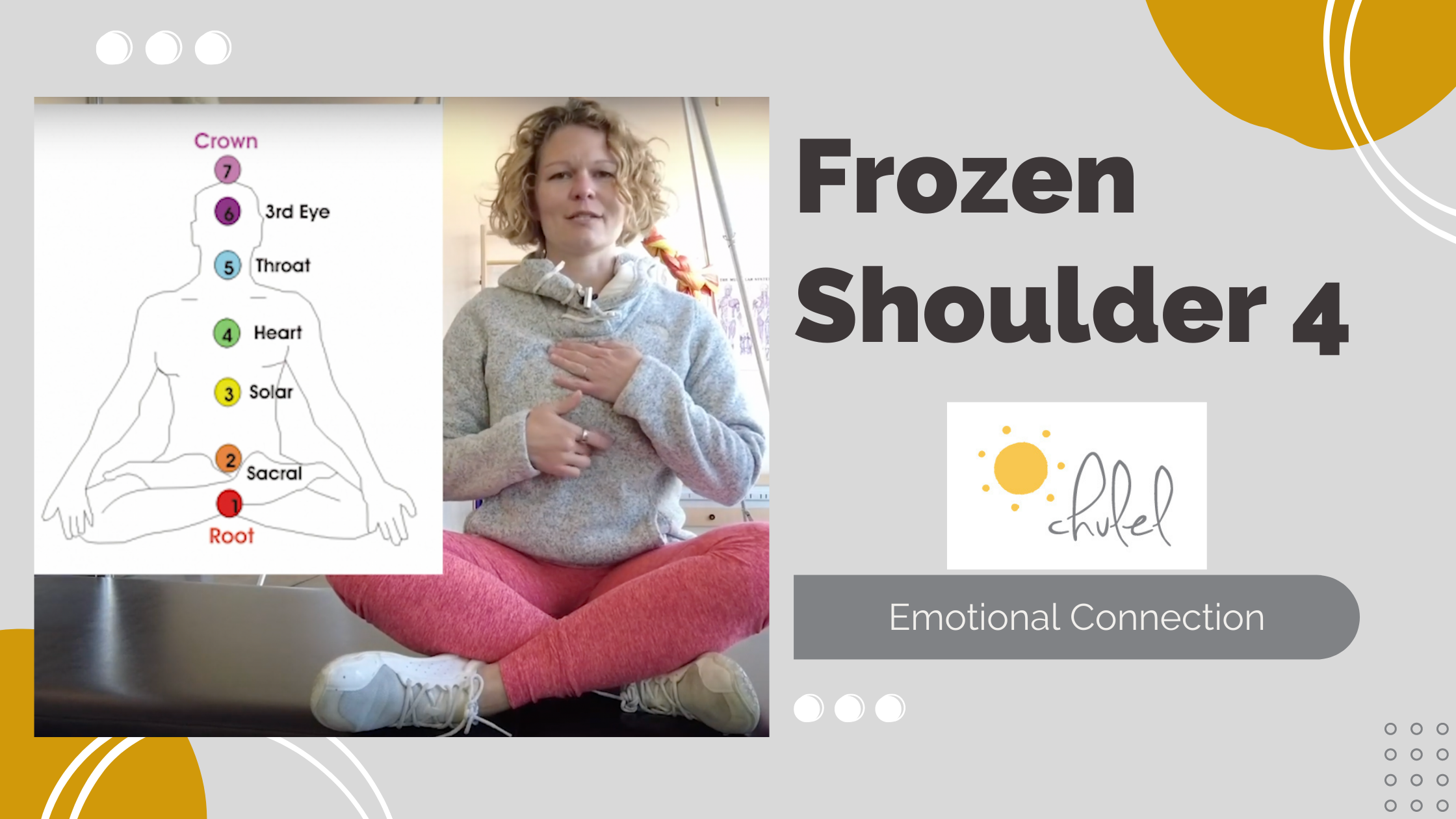
Of all of the common musculoskeletal conditions I’ve worked with, frozen shoulder seems to be the most stress-related one. I say this because as soon as it gets fixed on one side, it almost always moves to the other shoulder. So, to make sure we’re looking at all aspects of how a shoulder impingement happens, we also need to consider the emotional aspect.
I’m not inherently a woo person, but the chakra system has had some interesting overlap with common themes I’ve seen with frozen shoulder over the last decade+. Nearly everyone I’ve worked with who has frozen shoulder, has a lot of tension at the throat and jaw—like they’ve spent time experiencing a situation where they felt stifled from expressing their voice. This could be growing up, a relationship or a work environment. Moving down the chakra system, I see the arms as an extension of the heart with little energy centers in the hands. You may feel this as you hug someone or even pet an animal or touch something soft. And then we have the yellow portion, the solar plexus, which is represented as the career center and center of power/agency/volition. The way I’ve seen this all interplay in frozen shoulder is that there’s an incongruency between what someone feels like they should be doing with their life, their power being taken away, and what their heart knows it wants. The throat area then locks down in a must-do fashion and erego we have a arm/shoulder girdle that gets frozen as stuck as the person feels trapped.
Frozen shoulder is a breath issue. The third chakra area is the diaphragm. The heart and the throat are bisected by the collar bone, which is how the shoulders attach to the body—crazy, right? The shoulders on your back literally float on the back of your ribs (or, they’re supposed to) and the only place they attach in a fixed way to the rest of the skeleton is at the sternum, or heart area. When you breathe, muscles should be lowering and lifting your collar bone to make room so that your rib cage and expand all around, kind of like the opposite of pushing an umbrella open. As this happens, your shoulders should gently move up and to the sides of your back and then settle back down. When this can’t happen, the shoulder girdle gets stuck, and then we have frozen shoulder. So, to help unfreeze the shoulders, we have to open up the breathing muscles.
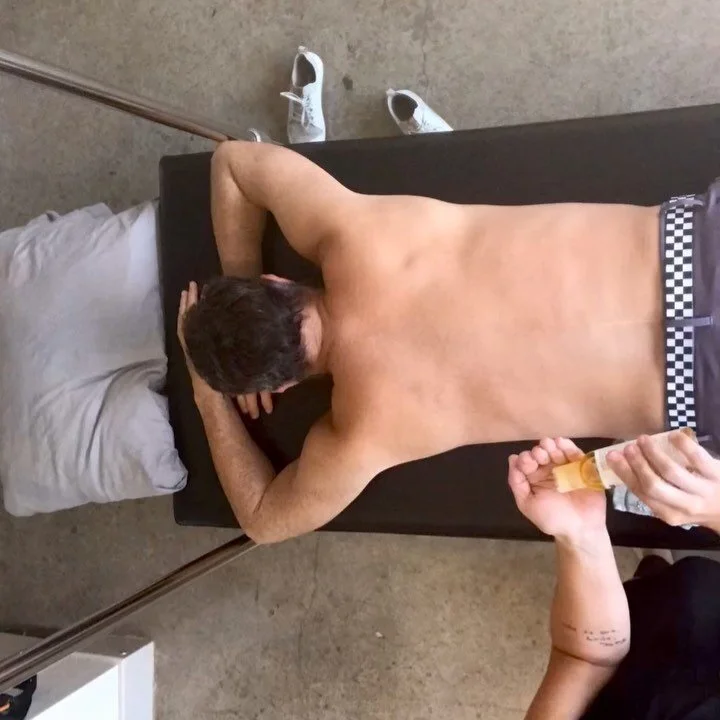
This video contains 3 opportunities for opening the breath and diaphgram. I offer several variations depending on how much pain you have in shoulder shoulders. Since I love that cupping set, another option you have is cupping along the ribs, stomach and sternum to help open the breath in a way that should be frozen shoulder-friendly.
As you do these exercises, see if any feelings, thoughts or memories come to mind. They may offer an entryway to seeing what you’re holding in this area or things in your life that need to change to make the pain move its way out of you. Don’t forget to breathe. ;)
Common Cause of Knee & Ankle Pain
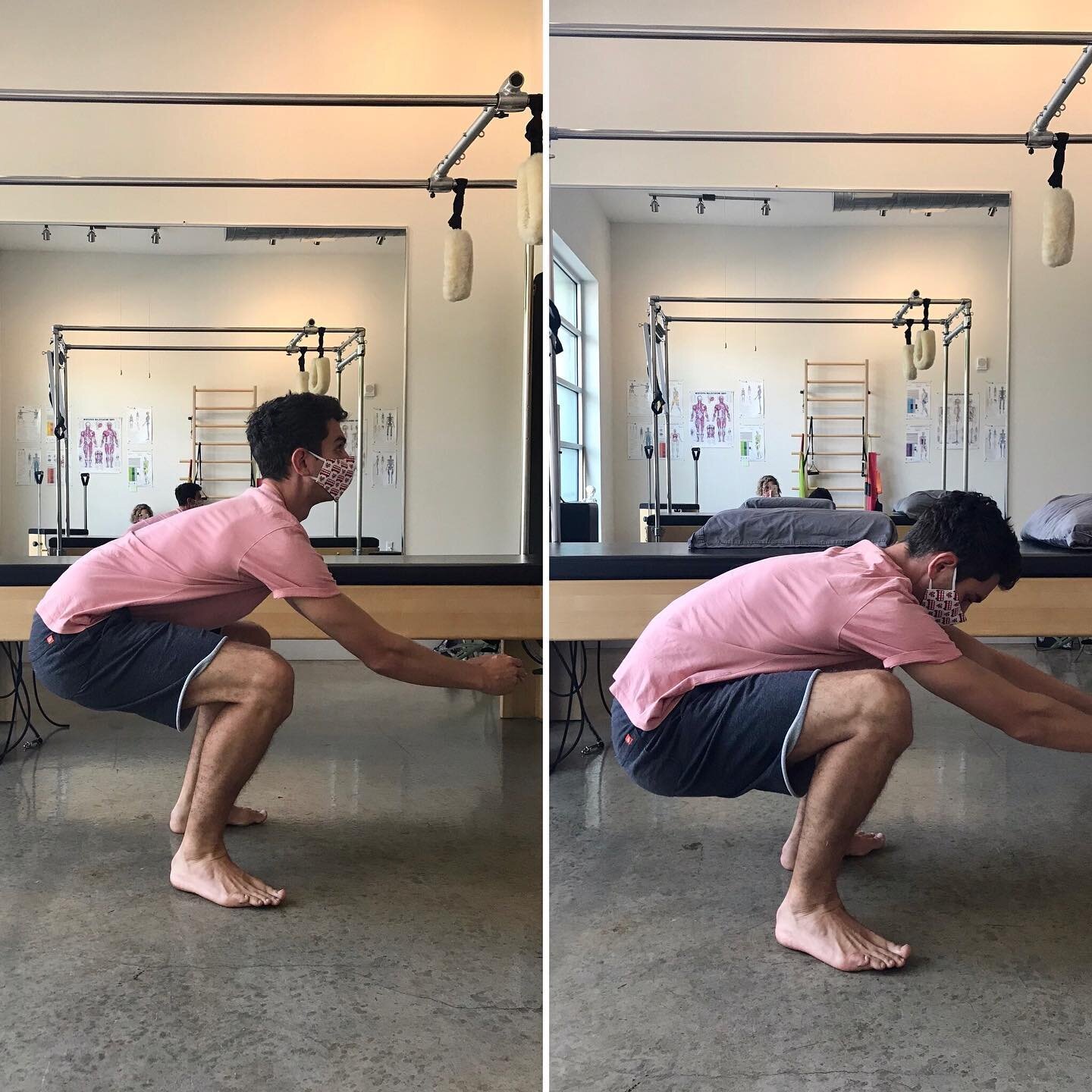
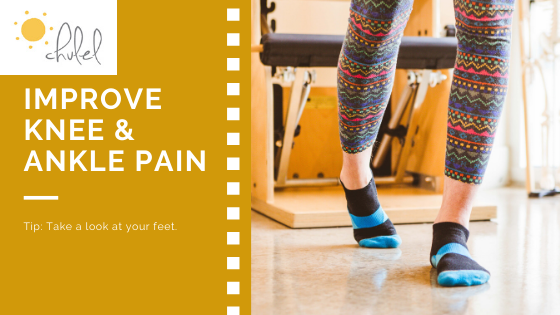
TIGHT TOES! Take a little walk—long enough to get your stride and pace going and notice if you feel your ankle roll out to the side just a little bit as you push off. You may even feel a twinge of pain in your ankle or knee. Another option is to get someone to video you (maybe even in slow motion) and see if you can watch yourself doing it. It will look like a little ankle whip around as you propel forward as in the picture below.

How would the toes get tight?
The top two reasons from my experience with clients are shoe selection and not breathing fully. Any shoe that encourages a toe scrunch would create a situation where your body would start tighten when walking instead of being wide and open (I refer to this preferred state as ‘Frodo Feet’). This isn’t just the easy scapegoat of high heels and pointy shoes, flip flops or any shoe that is so loose that your toes have to work to keep them on would create tight toes. Wearing shoes that are too small or lacing shoes too tightly would cause similar footing.
Next, hold your breath and feel how your feet tighten up a bit (all your muscles, really). We all have a tendency to shallow breathe when we feel stressed, so being under prolonged stress or if you’re in a job/school environment where you heavily focus day-to-day, usually means that you’re holding your breath. I often see that if someone grew up in an environment where they were often afraid or anxious (this could also translate into present-tense adulthood) the toes also scrunch as a response to that fear factor. I call it the Bird-on-a-Wire grip whereas that Frodo Foot is grounded and open…calm.
How should I walk?
This goes with a bit of an * in that we’re all shaped differently and have varied movement/injury backgrounds so there isn’t one for sure right way. That said, the first two toes (big toe and second toe) should more or less line up with your shin bone and thigh bone. This may be difficult if you have flat arches or have had other lower leg injuries. These bones are considered your weight-bearing bones so your body weight is centered over the mid-line of your body. Your weight centered here would naturally allow your core and posture muscles to support you as you walk or run. Lack of weight-centering can cause weight to shift to the outer or lateral lines of the body in walking, which could be a factor in a tight IT band, lower back pain, knee pain and ankle issues.
As you take a step forward, the foot should roll through the mid arch to push off with the ball of foot and then the toes. If you have a tight first or second toe and/or a bunion, you are likely not pushing off of that foot correctly and you may be rolling to the outside of the foot as shown in the picture above.
An exercise to stretch your toes and allow for proper toe push off.
This simple stretch can be done with a rolled up towel or a tennis/lacrosse ball against a wall. In the video, my model is demonstrating it with one of my favorite foot stretching and release tools, the Yamuna Foot Savers. Here’s another way they can be used to release foot tension and help with plantar fasciitis. You can easily purchase them online through Amazon and they last forever. Take them with you when you travel because they take up virtually space and really help loosen the feet after sitting in a car or being in a plane for long periods of time. If you do have a bunion and this stretch feels uncomfortable, you can stretch your big toe off to the side and focus on your second toe. No need to do more than about 10ish repetitions on any given toe and only about once per day at most.
Happy, grounded feet=better balance and core stability!
Why People Don't Heal And How They Can

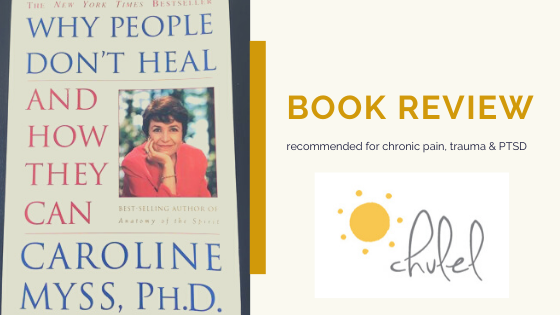
I first came across Carolyn Myss, the author of this book, about 8 years ago. Since then, I've started this book 3 times and stopped because I saw different aspects of myself in the pages I wasn't yet ready to confront. If you were to put one self-improvement book on your summer reading list, I'd highly suggest this one.
Many of my clients initially come to me because they suffer from chronic pain and chronic fatigue. Naturally, they feel angry at their body and that they can't live their lives to the extent that they would like. Feeling stuck and depressed is an understandable companion to this anger. That said, the more anger we project back onto our bodies, the longer and more fraught the healing process is. A more effective path to healing is seeing the pain as a point of entry to explore deep within ourselves. In Why People Don't Heal and How They Can, Myss offers some ways to identify if we're suffering from what she calls Woundology and belief systems that could stifle our healing process.
These are the author's top 5 belief systems that most people get caught in when they're in pain or are ill. To move forward, we have to detach from the belief.
5 Myths of Healing
1. My life is defined by my wound (Woundology).
Seeing life through the lens of a traumatic experience means projecting that onto every future relationship and experience (though a book I wrote about last year here says the brain naturally will do this after trauma). Those stuck in this pattern will seek out a social support network that will be sympathetic to their experience and then they never have to move past it. Moreover, they connect with others by comparing wounds and feel empowered if they are more wounded than someone else. She specifically mentions survivor and addiction groups and that they are helpful at certain stages. To continue healing, however, one has to move past that identity of survivor or addict.
In short, we can get stuck in the healing process if we define our identity and live our lives through our wounds rather than evolving past them. It can be a tricky process because someone may think they're addressing their wounds, but what they're really doing is carrying them around like a badge of honor. Over time, our wounds accumulate and gradually suck our energy, leaving us prone to depression, pain and illness. To move past your wounds, focus efforts on things that feed you rather than deplete you. If a current event triggers you to recall all the other times this has happened to you, rather than listing the wounds, look at what you're doing in your life that is creating part of that pattern.
2. Being healthy means being alone.
This is a system that I've personally been guilty of over the last couple of years until I acknowledged that by engaging with others means I have to grow through the things that trigger me. When I envisioned myself as healthy, I was the only one in the room rather than being surrounded by those who I know love and support me. Myss contends healing is an ongoing process that is best done in a community that can help support our changes; "Healing does not represent the closure of the needs of the heart; rather, it is a doorway toward opening your heart." She cites American individualism as a culture block to realizing this yet also acknowledges that sometimes we do need to separate from someone or a community to grow.
3. Feeling pain means being destroyed by pain.
It's normal to believe that pain or illness is negative, yet these feelings can also push us to explore within ourselves and move away from destructive habits and behavioral patterns. She cautions against relying too much on prescription drugs or painkillers in general because they can mask the symptoms of what our body is asking us to heal. She suggests using a mindfulness practice like yoga or meditation to help with healing consciously.
4. All illness is a result of negativity and we are damaged at our core.
Myss encourages readers to not immediately blame a failure to heal on a past experience or negative belief. Illness is complex and there's plenty of toxins in our environment and genes that can be an aspect of illness. Our focus should instead be on our ability to create change over controlling our thoughts. Sometimes it's better to just let go of the negative thoughts or past experiences over trying to dive into them and understand them....that can do more harm than good.
5. True change is impossible.
Most of us don't really like change and to change but healing and change are the same thing. We associate illness with fear and negativity so it can be intimidating to confront the illness and look at how much we really take care of ourselves versus the needs of others. Try shifting the belief that healing will be hard or depressing to relieving and exciting.
This is one of the few books on healing that I've read that actually provides a structure for analyzing one's beliefs and how to better understand and forgive--she actually encourages making a chart/spreadsheet and guides readers on specificially how to structure it. That said, it's a very East meets West, spiritually-minded approach, so if that's not your bag, this may not be for you. If it is, Myss has a unique perspective on understanding how American culture looks at pain and illness that I found to be eye-opening in forgiving myself and others because we're all stuck in some collective, old mindsets that we can let go of reacting to individually.
Cross Training for Runners
We are deep in marathon-training season here in Texas thanks to temperatures that make outdoor activity easier. It's also a season when logging high mileage can lead to poor movement patterns and then injury. Using a combination of massage, trigger point therapy, stretching and strength training can not only keep you inury-free, it can also improve time and performance on the road.
This is a collection of some of my favorite stretches and exercises for runners, particularly for folks who stare at a screen for a living and love running for cardiovascular and mental health. As someone who is a bit 'Type A' I love my exercise and stretching routines to have twofers or threefers meaning you're getting multiple benefits from each. We're all busy so we might as well feel like we're accomplishing a few things at once from our stretching routines.
Massage & Trigger Point Release
We could all use to take better care of our feet, especially if you're out pounding the pavement for miles every week. Consider this massage like foam rolling for your feet. It only takes a couple of minutes and is easy to do while watching tv or before you pop on those shoes for a jog. Check and see if your foot changes color after you do it!
Trigger Point
The gist of trigger point work, if you have not heard of it before, is that you find a tender spot and apply consistent pressure until the muscle starts to relax. This can take minutes and can be confusing at first if you can't feel the muscles releasing. The more you practice the easier it is to know when the muscle is letting go. You can use a ball, foam roller or other trigger point therapy tool--my only reminder is to breathe! Below are two different releases you can do with a ball and a foam roller.
Piriformis (hip rotation) Trigger Point Release
Gluteal (butt) Muscle Trigger Point
Calf Trigger Point Release
Stretching
If you want to up your stretching routine and do something beyond the basic quad and calf stretch you learned in grade school, these are my favorites for stretching multiple places at one time. They incorporate stretching muscles as well as facial or connective tissue lines. Many runners may be aware that their calves and hamstrings could use a stretch (find my favorite version here), but knowing how to stretch the front of the shins is a bit more complicated. Click here for my suggestion for a good shin stretch.
Strengthening Exercises
When you're spending so much time on the road just trying to get your mileage in, stretching may be the only thing you may take time to do. Cross training exercises are soooo important for runners as you're doing a highly repetitive action. This plus long hours potentially looking at a screen usually means the hip muscles become weak because they're being supported by a chair most of the day. Hip weakness combined with high mileage is a recipe for chronic pain or an injury. Most runners I've worked with need more lateral (abductor) strength, inner thigh (adductor) strength as well as core stability via the obliques.
Strengthen You Rear
Inner Thigh Stretch and Strengthening
When looking at a screen most hours of the day and then participating in exercise that is also very forward-oriented, the obliques and the cross body stability muscles become weak. Improving these means improving balance so your energy can carry you forward. An added bonus is that you may even see your waistline shrink if you work on these muscles. Here's a simple, yet super challenging one using a foam roller.
Core Strengthening and Stability
How I can help
Ki Hara active stretching (see example here) is super effective in creating flexibility and strength at the same time. Having this muscular dexterity not only allows you to run longer, but also faster. Many professional athletes and sports teams across the country use this technique as their secret weapon.
I also use a piece of equipment called the CoreAlign that is phenomenal for gait training and orienting the body to the core in a running motion (see more about it here). I've helped many marathoners streamline their gait patterns so they can lower their per mile time. If you've ever, even as a teen, had an injury to the lower half of your body, you may have established some compensation patterns in your walk. Running with these compensation patterns can be an underlying component to chronic pain and injury. Peeling back those patterns will give you more agility and speed as you run. You have more power than you realize!!
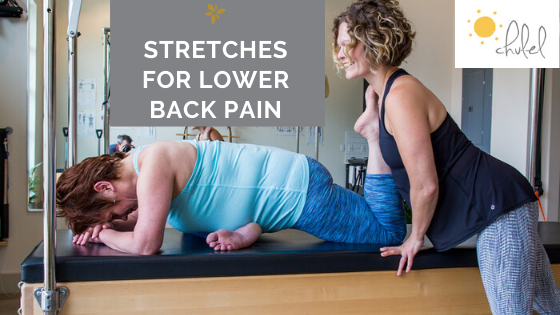
Stretches to Relieve Lower Back Pain
Lower back pain can have many different causes. Muscle weakness, poor posture, disc/spinal issues, leg length differential or an old injury can all factor into back pain. That said, this chronic pain can be helped by stretching certain areas and building hip strength.

From a fascial (connective tissue) line perspective, the tension you feel in the lower back could be coming from anywhere along that posterior side of your body. So a tight foot or calf on that side could also be a tight sacrum. Below is a simple foot fascia stretch you could do while watching tv or before a walk/run. If you know you have tight calves, this is my favorite stretch to release the muscles as well as the fascial line.
For a more active approach, anyone with a tight lower back has tight quad muscles (front of thighs). This version integrates a yoga pose with some turbo options for stretching. Your front leg doesn't need to be crossed in front of the opposite thigh, you can just tuck that knee underneath you. You can also place a pillow underneath the glute that is stretching. Just being here may be intense enough. If so, breathe and visualize new space in your hips. You may also feel this more in your butt than in your quad. Try to bend the elongated leg for the thigh stretch. If your hamstring cramps, scroll up and do the calf stretch first. If you can bend the knee, this stretch is a great twofer for the thigh and rear.
Another area that can pull on the lower back is the groin. Most of us never think to stretch here yet it can really compound tension in the lumbar spine. This is a pretty intense stretch, so here is a more gentle stretch.
When you're out of the pain or as a preventative measure, you want to build hip strength. If you've recently had pain, doing this may not feel good, so listen to your body. If you feel a sharp pain, this is not for you right now. You may need more individualized help, so gimme a call! Or, reach out to your trusted chiropractor, massage therapist or physical therapist.
I find that lower back pain perhaps more than any other chronic pain area always has an emotional or stress-holding connection. I already wrote about how lower back pain connects with breath holding here. Some things to explore for the emotional connection would be: When did this pain start? What else was going on in your life around that time? Does the pain tend to get worse during certain times of the day? If it's in the morning, are you happy in your work/relationship? In the evening, are you feeling burdened by your responsibilities? Does it hurt more when you speak to a certain person? Are you holding or internalizing anger, frustration or another emotion with regard to that person?
Noticing your personal patterns can help you start to process some of these underlying aspects that are keeping this pain chronic. I believe this is a big reason why a massage or even a stretching routine doesn't keep the pain from coming back. If some of this resonates for you, visualize these emotions/memories leaving your body via your breath. Let it go!
Latest Instagram Posts