Your Custom Text Here
Fix Your Plantar Fasciitis-Episode 4
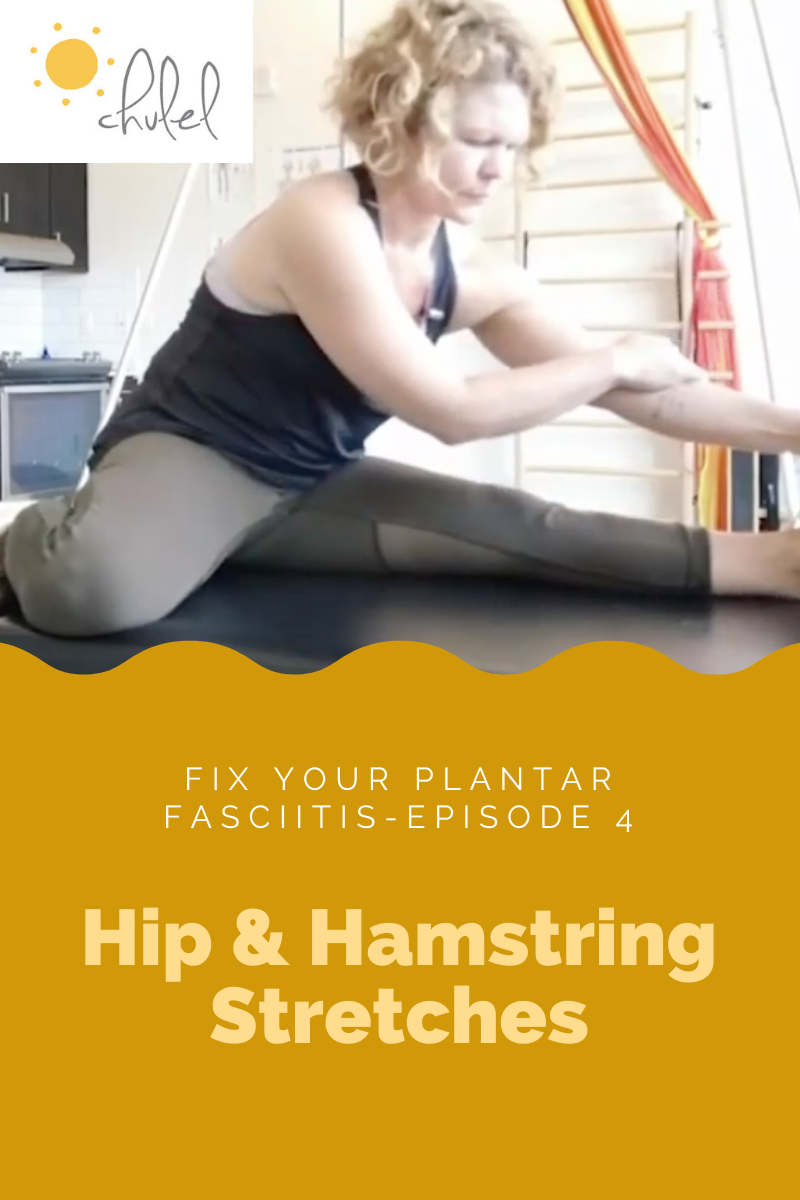
Got some tight hammies?! Tight hamstrings follow the same fascial or connective tissue chain as the calves and hamstrings.
In this episode of Fix Your Plantar Fasciitis, we’ll get into some self- massage techniques for the hips and hamstrings. Lately I’ve been loving this wooden roller as it has ridges that kind of squeeze the hamstrings and calves as you roll. You can also use that groove to kind of separate out the different muscle lines. Another favorite is cupping the IT band and that will help with another fascial line that can be an accomplice in plantar fasciitis.
We then get into some fascial stretches, which are a little different than muscle stretches. An instructor at a training I once took put it beautifully…a muscle stretch is just pulling the muscle the opposite way it contracts, a fascial stretch would be like if you’re wearing jeans or a wetsuit—there would be more pull on the fabric. Since plantar fasciitis is inflammation of the fascia, we’re going to hone in on some deep fascial stretches you can do at the hips.
Lastly, we’ll do some neuromuscular re-activation to make sure the right muscles are kicking on in the right motions. I find that a piece of plantar fasciitis is that the glute max is not working properly and the calves and hamstrings are trying extra hard.
Next episode we’ll get into how to release and properly work the calves. You can subscribe on the channel page to be notified of new episodes!
Fix Your Plantar Fasciitis-Episode 3

In this chapter of the Fix Your Plantar Fasciitis online course, we look at how the foot relates to your (poor) posture and breath.
The body is a series of archways or diaphragms and they all kind of mirror one another. This means that the archway of your foot reflects tension that is in the archway of your breath diaphragm.
In this video we do a simple diaphragm release or breath opener and then look at some simple ways to approach both sitting and standing posture. I find that most people tend to try too hard and that makes them rigid read:tight. By following some simple guidelines around posture and the breath makes finding your best posture for the day, or moment, easier.
Fix Your Plantar Fasciitis-Episode 2

We’re starting the work of this series, as I always do, distal to proximal. In the case of plantar fasciitis, that means starting at the head and even (!) the forearms! Yes, tight triceps can also, sometimes, play a part in tight feet and foot pain.
Massaging your forearms is super simple with this little tool from Amazon for about $10. Then we move into rolling the triceps out, which are the secret gnarly place that no one ever thinks to massage—it helps alleviate shoulder and neck tension. In the video I use this roller, but you can use any other type of roller/massager you like.
From there, there’s a yummy little head massage. The fascial line we’re dealing with in this episode is primarily the upper aspect of the spine and how it wraps around the head into the eyebrows. Therefore, we want to get some head and forehead relaxation so that it flows downward towards the feet.
Top this all off with some stretching of the shoulder blades, (there’s an easy tip in the video to make this common stretch more intense) and then getting some form of whole, spinal stretch. You could lay over a big yoga ball, but I choose to go propless in this video and do a version of yoga plow pose.
Lastly, we do a simple neck stretch with a hand towel. This is a great, simple exercise for training the neck muscles to ‘chillax’ and that they can rest as though cradled in a hammock.
Next episode we’ll get into how plantar fasciits and tight feet are wrapped up with a tight diaphragm. Everything always connects back to the breath!!
Fix Your Plantar Fasciitis-Episode 1

Welcome! This is the first episode of a course designed to help loosen up tight feet, alleviate foot pain and heal plantar fasciitis symptoms. In my decade of experience, there can be reasons for tight feet that arise from other places in the body, including emotional stress.
The top reason I’ve seen over the years is tightness along the backside of the body, what Tom Myers, author of Anatomy Trains, calls the Superficial Back Line. This fascial or connective tissue line goes from the sole of the foot, all the way up that respective side of the spine and connects into the eyebrow. This line primarily gets tight from sitting, but it can also be from lack of rotation in walking and movement (we’ll cover that in a later episode of the course). In other words, your head and forehead tension, is related to your tight feet.
Another aspect to this Superficial Back Line is when people try to hard too have good posture. Pinching your shoulder blades together, a common cue we’re given, tightens the mid-back and can play a part in tensing this line down to the feet. I’ve actually come across this more since the pandemic as people are trying to look a certain way while on screen.
Tightness in the opposite forearm can also (!) be a factor. I see this pattern less from folks typing and more from old sports or injury patterns from childhood. If you played things like golf, tennis, lacrosse, archery or an instrument, that too can play a part in the opposite foot being more tight and prone to plantar fasciitis. The body is crazy.
And, because it’s our body, the breath always plays a part. Short breath cycles or holding the breath, also create tension in the feet. If you try holding your breath now, can you feel that in your own feet? Maybe you feel your head tense? This is always an underlying aspect of plantar fasciitis and contributes to the emotional component of the condition. If you’re stressed, you’re probably holding your breath and then we have the tense, ungrounded feet.
Hope you enjoy and please subscribe on YouTube for alerts on this course as well as future courses and updates on how to improve your body in terms of pain and performance.
Wrist and Forearm Stretches
We’ve all felt that wrist pain and tension from a long day of typing, gaming, working out, cleaning or yard work. I wanted to offer some of my favorite tools and tips for loosening up the hands, wrists and forearms.
Here’s a video for some simple wrist extensor stretches and a forearm massage:
There are also a couple tools from over the years that I find really help (and are worth the investment) in keeping my hands and forearms loose. If your hands are tight, you won’t be able to access the muscles in your upper arms and shoulders correctly. I can’t tell you how many times someone has walked into my studio wanting to be better at planks/push ups and so much of it has to do with tension in their lower arms. We get that loosened up and BOOM, they recruit their core much better and have more stability in the shoulder girdle.
Breo Hand Massager

Breo Hand Massager
This thing can be too intense for people some people—personally, I love it. This hand massager also does trigger point release all over the hand and will size to conform to the shape of your hand. If you have arthritis or an autoimmune/inflammatory condition that affects your hands, I would not purchase. It has a heat function that I love any time, particularly in winter. I actually sleep better on the nights I do this and notice that I’m not as apt to clench my fists when I sleep—yes I do that too. It will leave an imprint in your palms for about 10 minutes, just a heads up.
Armaid
This thing is amazing if you do repetitive gripping—

Bodyworkers
Manual laborers/those who do a lot of work with tools/handiwork
Athletes—golfers, tennis players, weight lifters, climbers, aerialists
Knitters/sewers/crafters
Gamers
Artists
It easily pivots around and so you can do both sides of each arm. You can also purchase more intense trigger point release balls that intensify the experience. That said, you can size this thing really tight, so I feel like I get a good experience without the turbo props. I bring it with me when I do aerials and it helps my forearms from seizing up in between climbs. Relieving tension in the forearms also helps loosen up the shoulders, making proper form and bodmechanics easier.
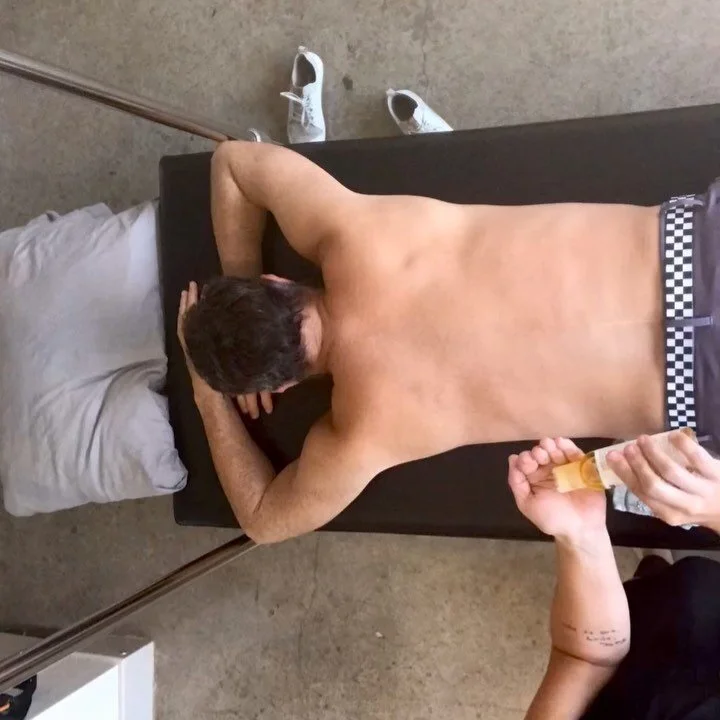
Taking care of our hands is something that we often neglect until we start feeling pain. Keeping your forearms loose will not only help head off some more painful conditions like carpal tunnel pains and tennis elbow, you’ll better access the supporting muscles of your shoulder blades and core as you use your hands. The uncoiling massage I’ve created takes this to a completely new level. I’ve had great success with helping people alleviate various arm pains as well as chronic neck pain and even lessening headaches. I recommend these tools and tips for self-care for my clients in between sessions.
If you purchase from the links provided, I do receive a small percentage as an Amazon affiliate.
Latest Instagram Posts