Your Custom Text Here
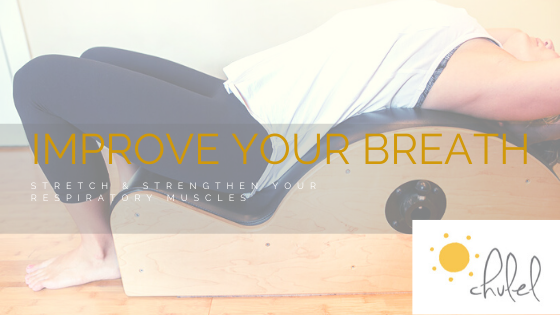
How strong are your respiratory muscles?

Take a moment and start counting the duration of your inhalation and exhalation. Does the pace at which you're breathing feel like your normal? Is it easier to inhale or exhale? Where do you find the breath entering and exiting? Does it most easily move in and out of your belly or your upper chest? Do your lower ribs move when you exhale? I find that most people don't move their lower ribs in the respiratory cycle, which means they're missing out on a full breath. This can go on for years and impacts pretty much every other system in your body, including your digestive and nervous systems.
How does the breath cycle work?
The diaphragm acts as a plunger system, pulling air into our bodies and filling our lungs (fun fact: the lungs are kind of like origami-folded tissue that unfolded are the size of a tennis court). The diaphragm is a muscle, so it has a full range of motion like any other muscle, yet most of us only 'exercise' it in a very short range. We shallowly breathe due to stress and holding a posture that we think is 'good', more on that in a moment. If you consider how the diaphragm typically works in this short cycle, it would be like doing thousands of tiny bicep curls all day long--sounds kind of funny when you think about it that way, right? The diaphragm is the main breathing muscle, yet there are several other secondary muscles that help out. One of my favorite groups is the intercostals. These muscles glide in beteeen each rib and help to expand and contract our rib cage. They are, however, weak for most folks.
How do the intercostals weaken and why should I take ever loving care of them?
As previously mentioned, most of us breathe shallowly as a stress-holding pattern. For some, this means weak and tight intercostals, so it's hard to inhale and expand them. For others, they're weak and puffed out (barrel-chested) and it's harder to exhale. In the latter case, I find that people assume this posture thinking they have good and confident posture--yet you can't breathe. Another way this pattern can occur is from sucking the stomach in or wearing restrictive clothing. Try sucking your stomach in right now and you'll feel your rib cage puff. Either way, we want these guys to be able to expand and contract fully, just like our biceps.
Strong intercostals and respiratory muscles help massage your stomach as you breathe, enabling your digestive system to do its thing. They also help to keep your nervous system at ease and not in fight-or-flight mode. As an added bonus, you're strethening your core muscles, which will give you organic, proper posture. If you're active, tapping into a full breath cycle, including the plunger power of your diaphragm, will take your athletic abilities to the next level.
How do I strengthen my respiratory muscles?
To start, be more conscious of your breath. I love the count breath. Try to equal out your inhalation and exhalation and then gradually add another count. Say you start at a 4 count, can you gradually reach your way to an 8? As you continue to add time, focus on squeezing the air out of your rib cage during the exhalation, contracting your intercostals.
You can also try these exercises over a towel, ball, pillow or foam roller.
I integrate breath work into my sessions with clients so that you can grow these muscles, bettering your digestive and nervous systems, while improving your posture and core. In finding your breath, you find your power!
Start Loving Your Job Today with Career Zen
While writing my post on the Book of Joy, I was struck by the simplicity of the generosity pillar of joy. If we have a sense of purpose, we want to share that with others, which gives us joy. As we begin a new year, many of us may feel frustrated that we're still doing that job/profession that doesn't make us happy. If this sounds like you or someone you know, I'd like to introduce you to my wonderful friend, Dr. Lynn Chang. She helps people shift their perspective in current job while uncovering their life's passion, so you can spend your time sharing something you love and receive joy!
You help others discover their life's purpose, how did you determine this was yours?
At The University of Texas at Austin I taught a class called "Career Planning," which is ironic because you can't really plan a career. Just like you can't plan how life is going to happen, you can't plan how careers are going to happen. It's a delicate dance between knowing who you are and what you want, with what the world needs and what the universe provides. The correct title of the class should have been "Career Unfolding" because it's in the step-by-step decisions you make along with the twists and turns of life that actually chart out your career path.

The clues to one's Life Purpose are all there in front of us. My job is to teach people how to listen from within, how to address the self-doubts when they arise, and how to use their gifts to lift all of us up. When I finally discovered how this life purpose thing actually works, it was like learning a magician's best-kept secret. I couldn't wait to tell everyone!
What makes your approach to career consulting unique?

I'm grateful for all of my years working as a university career counselor at UT. It taught me the fundamentals of helping people discover their path, as well as notice the nuances that each individual brought to the table. Over time I was able to quickly spot patterns and make predictions with pretty good accuracy, which is probably a product of the 10,000 hours rule. Additionally, I was diving more deeply into my yoga and spiritual studies and learning how everything was interconnected. I could intuitively see where people wanted to be in their careers and what was holding them back. Using yoga philosophy I began teaching people how to transcend barriers and reach their purpose more quickly and effortlessly. Unlike counseling or coaching, most people only need one consultation with me to gain insight into getting unstuck and a healthy dose of inspiration to follow their dreams.
Today my business CAREER ZEN is more about teaching people how to listen from within for the answers. I come from a long line of professors and feel a resonance with educators. I love teaching people how to stay open and curious to the answers that are already within them. This is how we ultimately move confidently towards our destiny. People are often curious what a session looks like. I tell them it's a balance between Eastern and Western approaches. It wouldn't be unusual for me to offer an online career assessment and talk about core motivation models, while also infusing meditations, Buddhist and yoga philosophy, and angel cards into our meeting!
What do you love most about your 'job'?
"Choose a job you love and you'll never have to work a day in your life," Confucius.
It's true! My colleagues and friends have often asked me what my secret was to being so happy and fulfilled at work. My entire professional life I have practiced what I preach, which is to follow your curiosity. Your internal guidance system is set up to help you navigate your path. Whenever I felt excited and alive with curiosity, I knew that was the right decision for me. I didn't have to have the next 5 years all mapped out, it didn't have to make practical sense-- t just needed to be clear on how I felt. Each step of the way, from my doctoral studies to my university job to opening my business, I felt divinely guided and supported. I have absolutely no regrets and know that my work has made a positive impact on others. Following your curiosity is the best way to use your talents for the world, and also how to live a juicy life!
I am honored to work with my clients and love briefly sharing our journeys together. What I'm essentially doing is helping them open up to a fuller, more authentic version of themselves. I can feel the world becoming brighter with each person I meet. That glorious feeling is how I know I'm on my path.
What's next for Career Zen that you're excited about?
I'm really excited to be writing my first book! The book is entitled "The 10 Day Career Cleanse." I believe that you can begin today to love your job, regardless of where you are. It's about the moment-to-moment choices we have throughout the workday to choose joy, balance, and fulfillment. It walks people through 10 days of different techniques, all based on mind-body-spirit principles that I've personally found helpful along my journey. The book is an invitation to incorporate wellness principles from the personal development realm into the professional development world. The more we place our attention on joy at work, the more joy we will feel at work.

I'll share with your readers one of my favorite techniques based on neuroscience called the Brain Dump. If you've ever taken work home with you or even had dreams about work, then this one is perfect. At the end of your work day, take a minute or two to observe the contents of your day like an outsider. Close your eyes and imagine watching an old silent black and white movie of your day. Beginning from the start of your work day until this very moment. Watch yourself go through the course of events without narration, judgment, or analysis. Just allow your brain to process what happened. Even place a "The End" sign at the end of your movie. This helps to wipe your slate clean from your work day and leave the rest of your day for you to enjoy!
Dr. Lynn Chang is available for individual meetings, donation classes, workshops, presentations, and retreats. Check out career-zen.com for more information.
Core Strength: More Than the Abs
How strong is your core? Did you just suffer a flashback of sit-ups combined with an internal sigh of how you should do more of them? I have great news for you....you don't need to do crunches to strengthen your core! There is an overemphasis in popular culture that a strong core=strong abs, but this is an outdated view.
What is the core?
I see the core as much more than abs--it's all of the muscles that keep us upright. As we're typically seated, hunched over a screen or steering wheel in the 21st century, the back muscles, pelvic floor (including the butt muscles) and diaphragm are aspects of the core we need to focus on. These other areas help support our spine, encourage good posture as well as give us full breath.
A fascial approach to the core.
When I'm assessing what areas need attention in a client's body, I'm always thinking about fascial, or connective tissue, lines. This means that an area where you feel tension could actually be originating from another spot in the body on a particular fascial line. So it's not always about muscle strength or weakness, but rather, what areas of the body are locked short and which areas are locked long. In other words, what areas need more length and which need more tone? If we take this global apporach to posture, most adults are locked short in the front from being hunched over and locked long, fascially, in the back. So why would we do a ton of sit-ups or flexion-based exercises thinking we're strengthening our core?!

Pilates and the core.
I love Pilates, otherwise I wouldn't have been certified to teach it, yet I feel like the method overemphasizes working the core in spinal flexion (the spine is bent over in a "C" shape). Moreover, much of Pilates is done while laying down, which is great for feeling core connections, yet there needs to be a functional application since we don't go about our day lying down. Joseph Pilates created his method several generations ago when our day-to-day lives were very different. I think an updated approach to his program means building back strength first, which passively stretches that front fascial line, making us straighter. Then, we can look at an abdominal or front-body approach to the core once those muscle tissues are not locked short and scrunched.
A unique approach to core strength.
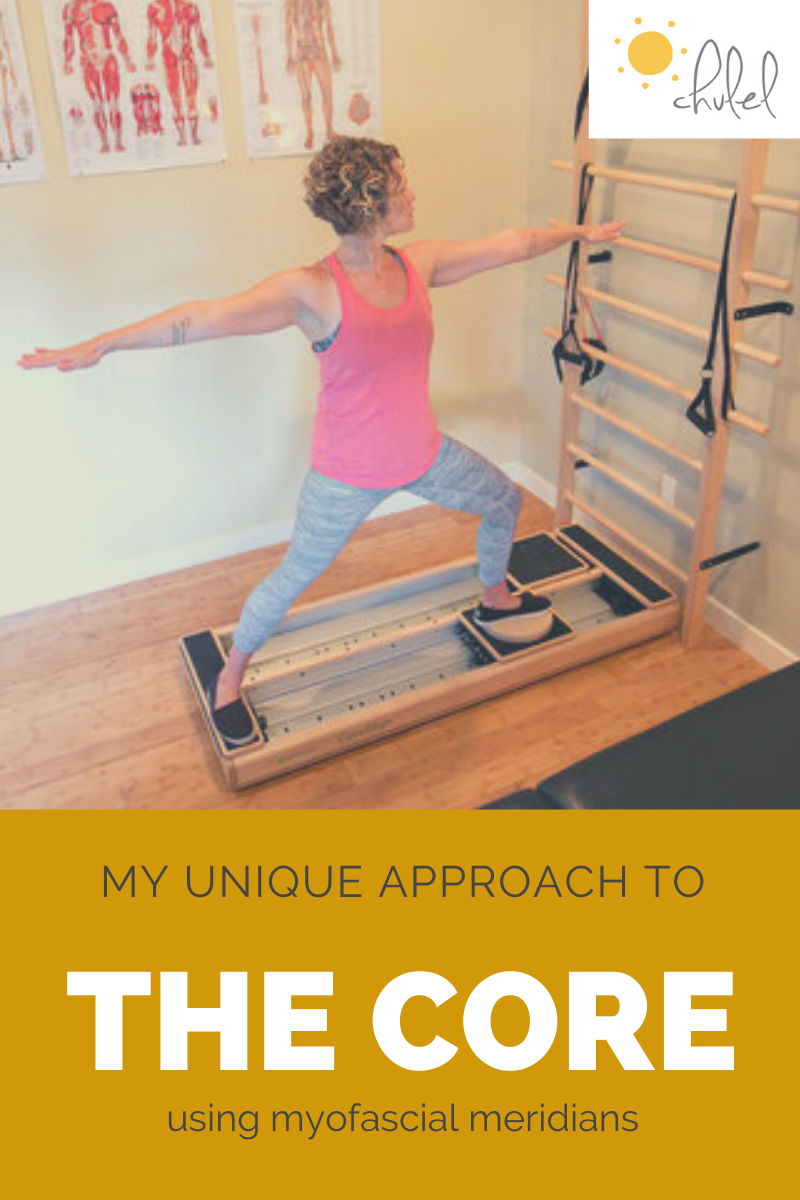
I have my clients do a lot of work that hones in on the diaphragm and pelvic floor as a part of building their core. We also do a lot with the upper back muscles to pull the shoulders out of kyphosis (being rounded forward). I do this with some unique props that force you to balance while working your core and a piece of equipment that incorporates standing movmements so you're learning how your core supports you while upright and walking. This approach is not only more functional, it's more fun!
For the month of January I'm offering a special package for new clients. If you know you need to build core strength but don't know how or want to experience something new, you can learn more here.
What can you let go of in 2017?
As we begin another year, many of us take this time to reflect on our health. Wellness resolutions are made and often not adhered to after a few days or weeks. If we start to look at what we're ready to let go of over adding another thing to the list, those resolutions stick and we have longer-lasting health benefits.
When you start to see your physical health is also your emotional health is also your mental health, you'll have more profound results in your overall wellbeing. When life stress happens, we can mentally acknowledge what's going on, we emotionally feel a response, and the physical body goes into self-protection mode even if we don't consciously realize it. Mindfully connecting to your movement gives you greater dexterity in your physical body, while showing you which stressors and emotions you hold where so you can let that old stuff go!
I had my own journey making these mind-body connections after I had a stabbing pain in my left hip so intense (10 out of 10 pain) that it locked out my lower back. I wrote about this more here. I studied and figured out the muscular imbalances, but that didn't fully eradicate the pain. Unfortunately, it wasn't until more than a year later that I started to notice when my hip pain increased. It initially surfaced when my father unexpectedly died of a heart issue. So, anytime I felt threatened or afraid of losing someone, those muscles tensed. As I addressed this duality of emotion (fear) with my muscular imbalance, my hip got better. It has since reared its head a few other times, most abruptly and intensely when I had a miscarriage. So, same death and loss trigger.
Each time the pain has returned, it has been less instense or has not lasted as long because now I'm working through the root triggers. We often don't realize how much we're internalizing minute-to-minute until something hurts. In my case, the grief was so overwhelming I couldn't even process what I was or was not internalizing. Now when my hip starts to 'talk' to me, it's my reminder to take stock of what is going on in my life...what am I afraid of? Is there another emotion my body is responding to? Can I shift my mental perspective?
In my work with clients, we try to explore which emotions you're experiencing and holding onto in your injured and chronically stuck spots. You may not completely let go of something you're holding onto, there are layers to process, particularly for intense or tragic life experiences. At least in letting go, we allow more space for healing and more of us is freed up to be present and more authentic. We have more ability to create the life we want over physically carrying around the past.
What are you ready to let go of this year?
For the month of January, I'm offering a New Year's package for new clients. For more information, click here.
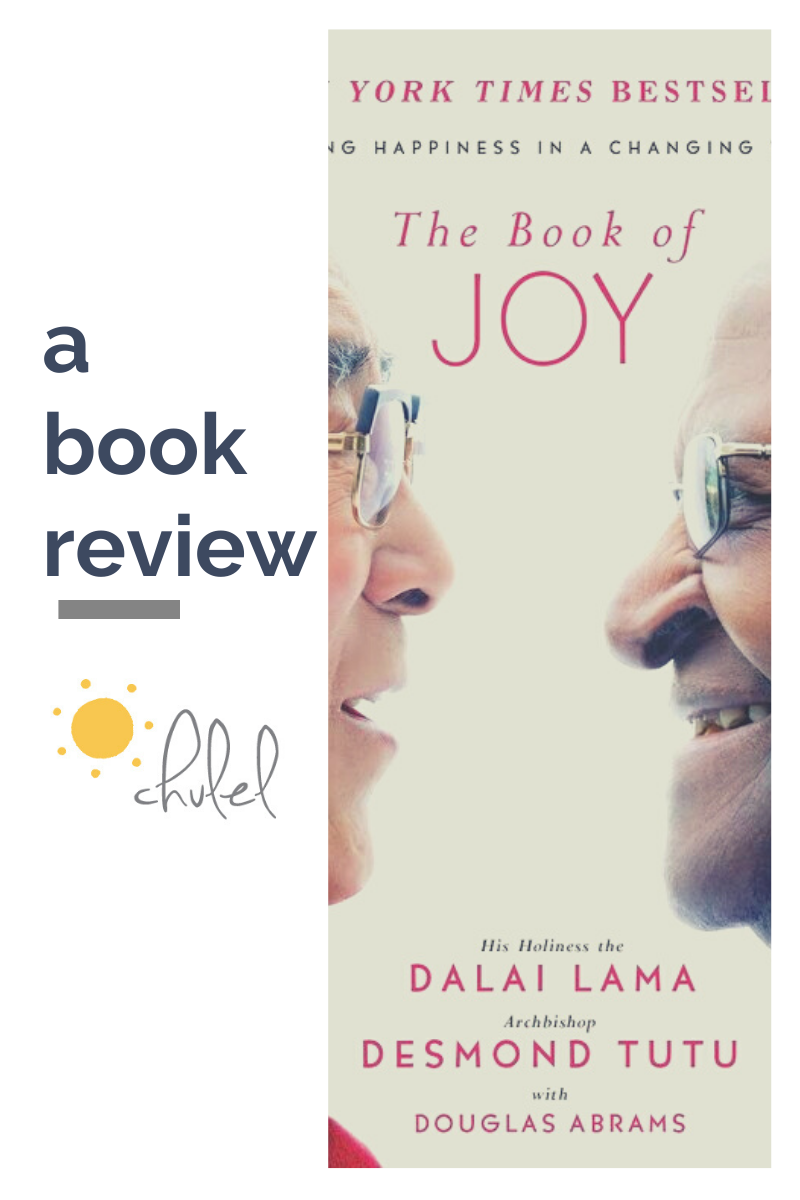
Reflections on the Book of Joy

2016 began with me seeking one thing in my life, joy. It had been a while since I felt not just happiness, but that deep, all-encompassing joy. It has been a crazy year as I have tried to shed some (as many as I could identify day-to-day) of the behavioral patterns and belief systems that stand in the way of joy and embrace a new 'me'. Without joy life seems less alive and there's a youthful vigor to people who have it. So when my friend, Lynn Chang of Career Zen, asked me to join her book club and read the Book of Joy, I was super curious to read and discuss what these wise men had to say about it.
Reading this book turned out to be really intense for me because over the course of this year I have trodded through and traversed pretty much every pillar. Still in the midst of this transformation, I'm not yet in a place to be articulate or provide much perspective...I just sense that I'm acting differently in my life and reacting less. At some points in my reading, I wanted to yell hell yes and there were other points where this book gave me a roadmap of some places I have yet to explore and grow. I suppose there's always 2017...
The Book of Joy is based on five days of conversations between the Dalai Lama and Desmond Tutu about how to have joy, and all of the things in life that can come in the way of it. They offer 8 Pillars of Joy, 4 of the mind and 4 of the heart, to serve as a basic structure. I'll briefly introduce these pillars and give one of my favorite take-aways about each.
Pillars of the Mind
Perspective-How we see the world is how we experience it and therefore how we interact with it. If we're able to shift our perspective, we can more easily come to a creative solution by identifying where another person is coming from. I believe we realize this cognitively as adults, but this can be hard when you feel so strongly about something that it can lead to conflict with a loved one. There have been many conversations this year where I've had to step outside of myself and shift my perspective to maintain an open mind to not just react out of self-defense.
Humility-Once we have perspective, we realize that we can't control anything and that we're all in this thing together. This inherently gives us a sense of humility in that we are all vulnerable, and we will all be dependent upon others in birth and death. I've spent this year saying I don't know with greater frequency. I never expected to encounter some of the things life has put in my path the last few years and those experiences have humbled me immensely. Both because I recognize I don't have control and that there's rarely a single, correct answer on a solution.
Humor-This has been my greatest lesson this year! I found a much deeper sense of humor because half of the time I had no idea what the hell was going on or what to do about it. A case of the giggles would ensue. Turns out humor and humility have the same root word, humus, or dirt. New lessons this year as well on how having a sense of humor will keep you grounded. Boom!
Acceptance-Once we have perspective and a sense of humor that we are not in control, we can accept these things and begin to see how something positive can grow out of something seemingly negative. I ask my clients to see their pain in this way. Rather than being angry at your body and othering your physical self, what is this pain showing and teaching you? A deeper sense of mindfulness can then help alleviate some of the pain if not most of it.
Pillars of the Heart
Forgiveness-Given that these two men have experienced and seen much oppression, they were clear that one can forgive while seeking justice. In forgiveness we can take back our own feelings and liberate ourselves. This is another piece I see a lot in peoples' bodies. When we have chronic body tightness and stiffness, we're lacking space. I believe that lack of forgiveness, often for ourselves, underscores this and that by letting go we reclaim our bodies and free up previously closed off spaces.
Gratitude-The brain naturally tends to focus on the negative or what isn't right. This goes back to body pain as well. Daily, I witness people get better and when I ask how their plantar fasciitis is, for example, they have forgotten that that is why they initially came to see me. When we forgive, we experience more gratefulness in the present moment. I've started writing 1-2 things I'm grateful for every morning and it's incredible how quickly I feel my disposition shift for the day.
Compassion-If there was one thing on this list I would have checked off before this year, it would have been this one. I've spent my career(s) helping people and I love doing it, so that means I have compassion, right? In the epic unfolding of my life this year, I learned to actually love myself for the first time in my life. It was then I realized I didn't truly truly understand compassion. How can we show compassion for others if we're so caught up in criticising ourselves? In some way that self-judgement transfers into how we treat others and perceive what life brings. Life has taught me to be softer, more compassionate towards myself and others this year. Turns out compassion is contagious according to new research, it has a ripple effect from 2-4 degrees of separation. What if we made a conscious effort to do this beyond the holidays? What would the world/your community look like?
Generosity-This one is hard to distinguish from compassion. Essentially, if we have a sense of purpose we can use those qualities to give to others, which in turn, gives us joy. :)
As you wrap up 2016 and reflect on your year, I highly recommend this book as a mental health check-in of ways and areas to integrate more joy and light into your life. Sending love and joy to you in 2017 and beyond!
Latest Instagram Posts